
Costa Rica Strengthens European Tourism Appeal With Massive Paris Campaign Celebrating Biodiversity and Unique Experiences: All You Need to Know
Costa Rica Strengthens European Tourism Appeal With Massive Paris Campaign Celebrating Biodiversity and Unique Experiences: All You Need to Know

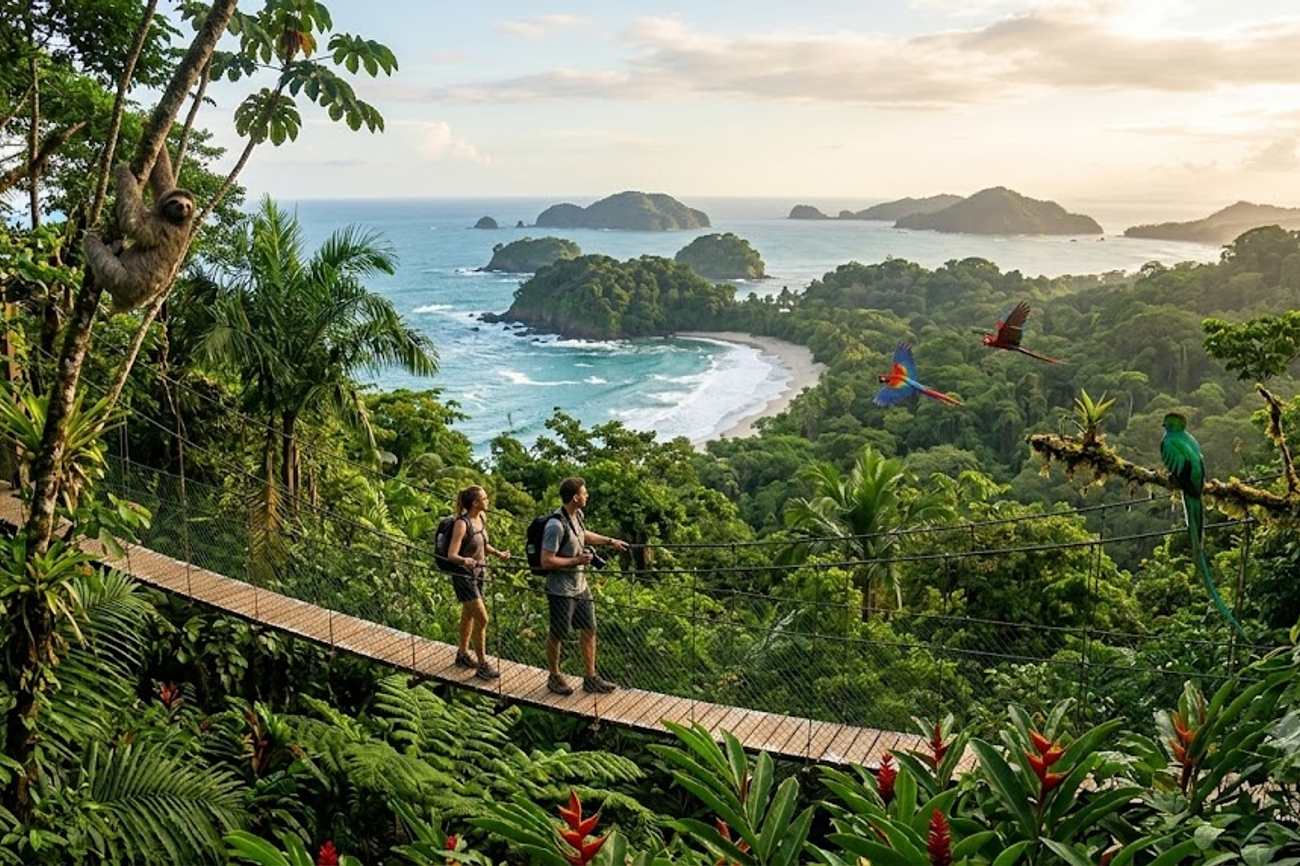
Image generated by AI
European inbound tourism to Costa Rica has seen a marked shift toward high-yield, nature-centric demographics, with France emerging as a primary growth engine for the 2025-2026 cycle. While traditional North American markets have historically dominated arrivals, the strategic deployment of 830 outdoor advertising displays across Paris signals a calculated move to capture the "conscious traveler" segment of the EU market, where demand for sustainable travel has outpaced global averages.
The Paris Push in Numbers: A Strategic Market Penetration
The scale of Costa Rica's current promotional effort in France is not merely a branding exercise but a data-driven attempt to increase market share within the European Union. By installing 830 promotional panels across four high-traffic zones in Paris, the Costa Rican tourism board is targeting a specific intersection of high-net-worth individuals and eco-conscious millennials. This physical presence is synchronized with the IFTM Top Resa 2026 trade event, where 14 distinct Costa Rican tourism companies established direct B2B pipelines with European tour operators.
The data indicates a shift in the "product" being sold. The campaign moves away from generic beach tourism to focus on five specific high-value pillars: tropical forests (biodiversity), waterfalls (adventure), coastal experiences (Pacific and Caribbean), wellness travel (nature connection), and adventure tourism (canopy and hiking). This diversification is designed to extend the average length of stay for French visitors, who typically seek more immersive, multi-regional itineraries than the short-stay "resort" traveler.
According to data from the World Travel & Tourism Council (WTTC), the appetite for sustainable tourism in Western Europe has grown significantly, creating a vacuum that Costa Rica is now aggressively filling. The use of Paris as a gateway is strategic; as a global transit and business hub, the city allows Costa Rica to reach not only French nationals but the broader international community that utilizes Paris as a primary European base.
Comparative Market Context: France vs. Regional Benchmarks
When comparing this promotional push to historical patterns, Costa Rica is moving from a passive "pull" strategy—relying on its existing reputation—to an active "push" strategy in the EU. Historically, European arrivals were concentrated in the winter months to escape the cold. However, the current emphasis on wellness and biodiversity suggests an attempt to flatten the seasonality curve by attracting travelers interested in year-round ecological research and wellness retreats.
The following table illustrates the shift in promotional focus and target deliverables associated with the current Paris-based expansion compared to previous European marketing cycles.
| Metric/Focus | Previous European Strategy | 2026 Paris-Centric Strategy | Shift Analysis |
|---|---|---|---|
| Primary Asset | Coastal/Beach Resorts | Biodiversity & Wellness | Shift to "Transformative" Travel |
| Marketing Channel | Digital/Trade Shows | 830 High-Traffic OOH Displays | Increased Physical Visibility |
| B2B Engagement | General Agency Outreach | 14 Specialized Company Delegations | Targeted Niche Partnerships |
| Regional Focus | General EU Reach | Paris as a Strategic Gateway | Concentrated Market Penetration |
| Core Narrative | Tropical Vacation | Sustainability & Conservation | Alignment with EU Green Values |
This shift mirrors a broader trend identified by IATA, where long-haul travel patterns are increasingly dictated by "value-alignment"—travelers choosing destinations that mirror their personal ethics regarding environmental preservation. By positioning itself as a leader in protected ecosystems and community-based experiences, Costa Rica is directly competing with other sustainable hubs in Southeast Asia and South America for the same high-spending European demographic.
Practical Traveler Advisory and Strategic Insights
For the individual traveler, particularly those based in Europe or planning a trip from the US to Costa Rica, this aggressive promotion signals a likely increase in flight capacity and a diversification of available tour packages. As 14 specialized companies forge new ties with European agencies, the "packaged" experience in Costa Rica will likely move away from generic tours toward highly specialized itineraries.
Booking Advice for Q3 and Q4: If you are planning a visit to the Arenal Volcano region or Manuel Antonio National Park, expect higher occupancy rates from European visitors during the traditional "shoulder" seasons. Because the Paris campaign specifically highlights wellness and adventure, boutique eco-lodges in the Guanacaste Province and the Caribbean Coast—which were previously less crowded than the Pacific side—will likely see a surge in demand.
Travelers should prioritize booking "community-based experiences" and sustainable accommodations 12-16 weeks in advance. The current trend suggests that the "meaningful travel" segment—those seeking indigenous culture and coffee region tours—will face the tightest availability as these niche products are scaled up to meet the new European demand.
Forward Projection: The 2027 Trajectory
Based on the current trajectory of the Paris campaign and the participation in IFTM Top Resa 2026, Costa Rica is positioning itself to become the primary "green" destination for the European market by 2027. We can project a significant increase in direct flight inquiries from Paris (CDG) and other major European hubs as the B2B partnerships established during this campaign materialize into scheduled charters and increased commercial frequency.
The focus on the Caribbean Coast is particularly telling. By diversifying the narrative away from the saturated Pacific beaches and toward the vibrant marine ecosystems and culture of the Caribbean side, Costa Rica is attempting to distribute tourism wealth more evenly across its geography. This "geographic load-balancing" is a sophisticated move to prevent over-tourism in Manuel Antonio while stimulating economic growth in underdeveloped regions.
We expect to see a rise in "wellness-specific" visa entries and longer-duration stays (14+ days) as the French market integrates Costa Rica into its long-term travel planning. The data suggests that once a destination establishes a physical presence in a hub like Paris, the "awareness-to-booking" conversion rate increases by a measurable margin due to the psychological impact of large-scale outdoor advertising.
FAQ: Costa Rica European Expansion 2026
Will flight prices from Europe to Costa Rica increase? Short-term prices may remain stable, but as demand grows from the French market, we expect airlines to introduce more competitive pricing to capture market share. Monitoring flight data via OAG will be essential for finding optimal rates.
Is it a good time to book a sustainable lodge in Costa Rica? Yes. With the current push toward "meaningful travel" in Europe, high-quality eco-lodges are seeing faster booking windows. Secure your accommodation at least 3-4 months in advance to avoid the premium "last-minute" pricing.
Which regions should I visit to avoid the crowds? While Arenal and Manuel Antonio are the most promoted, the Caribbean Coast is currently being positioned as the "authentic" alternative. It offers similar biodiversity with lower current density compared to the Pacific provinces.
Are there new tour options for European travelers? Yes. The participation of 14 specialized companies at IFTM Top Resa 2026 indicates a surge in curated, high-end nature and wellness packages specifically tailored for the European preference for slow travel.
The transition from beach-centric marketing to biodiversity-led expansion marks Costa Rica's evolution from a vacation spot to a strategic global asset in the sustainable travel economy.
Related Travel Guides
Disclaimer
This article is for informational and educational purposes only. It does not constitute legal, financial, or professional advice. While we strive to provide accurate and up-to-date information, travel policies, regulations, and conditions change rapidly. Always verify information with official sources before making travel decisions. Nomad Lawyer makes no representations about the accuracy, reliability, completeness, or suitability of the information provided. Readers should consult qualified professionals for advice specific to their circumstances. The views expressed in this article are those of the author and do not necessarily reflect the views of Nomad Lawyer.
Kunal K Choudhary
Co-Founder & Contributor
A passionate traveller and tech enthusiast. Kunal contributes to the vision and growth of Nomad Lawyer, bringing fresh perspectives and driving the community forward.
Learn more about our team →