
Costa Brava Wildfire Devours 2,200 Hectares Near La Bisbal d'Empordà, Forces 150 Tourist Evacuations During Catalonia's 2026 Peak Season
A fast-moving wildfire near La Bisbal d'Empordà has scorched 2,200 hectares of Costa Brava woodland, evacuated 150 tourists from a holiday camp, and disrupted peak-season travel across Catalonia's most visited coastal corridor.

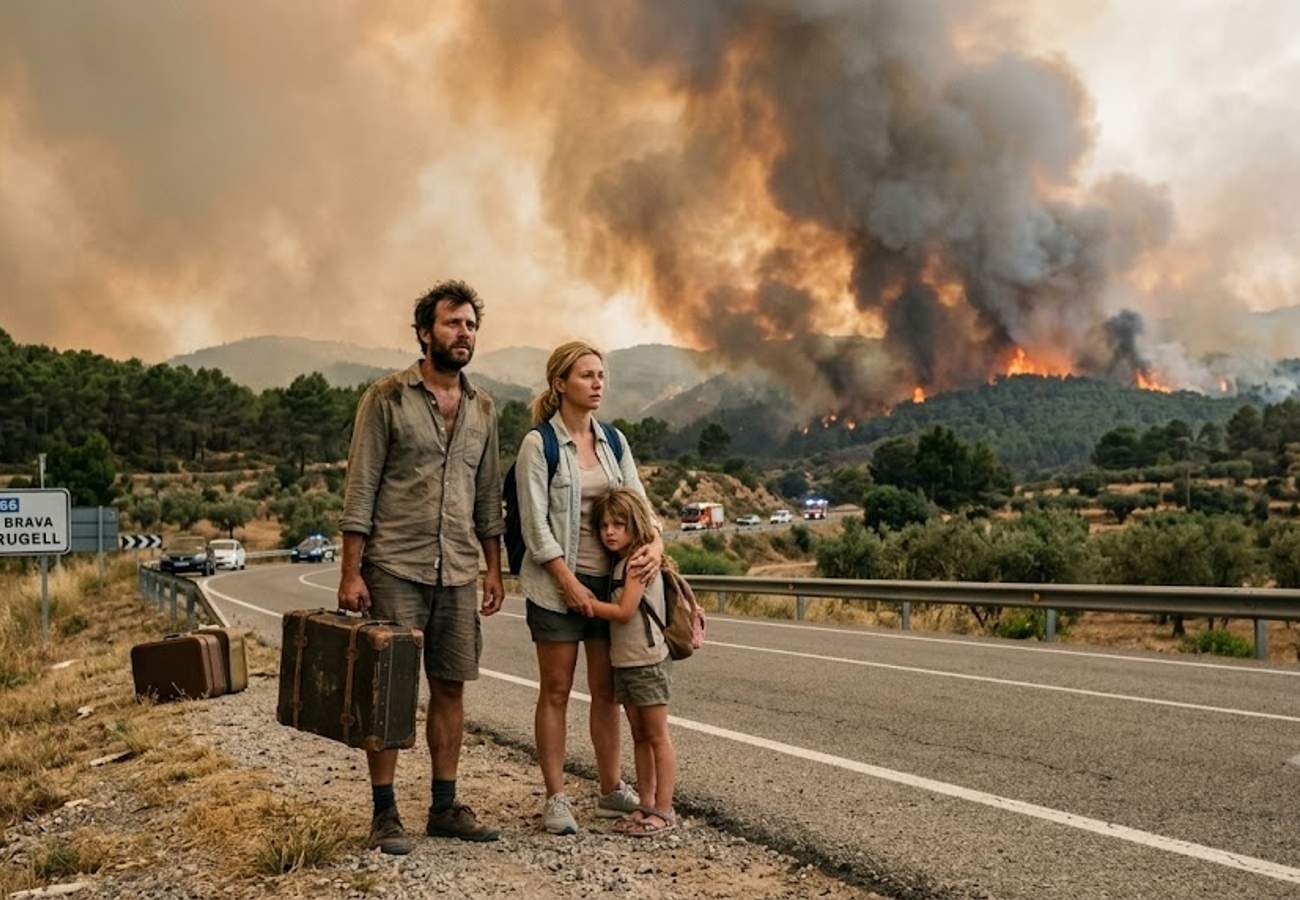
Image generated by AI
I have driven the C-66 from Girona toward Palafrugell more times than I can count. The road cuts through the Empordà plain, olive groves on one side, pine-studded hills rising on the other. This past Friday, those same hills turned into a nightmare for anyone traveling through the area.
A wildfire erupted near La Bisbal d'Empordà, a working-town I always stop in for ceramics and a quick coffee at Café Forn de Pa Carrer Major. Within hours, the blaze had consumed roughly 2,200 hectares of Mediterranean woodland. That is over 8.5 square miles of forest gone.
The fire hit during peak tourist season. Costa Brava in early July is packed. Families from France, the Netherlands, and Germany fill the campsites stretching from Sant Antoni de Calonge to L'Estartit. This year, many of them got far more than they bargained for.
What Happened on the Ground
The fire broke out Friday afternoon in dry forested hills south of La Bisbal d'Empordà. Summer heat and shifting winds pushed flames through dense pine and scrub terrain. The kind of terrain that burns fast and fights back hard.
Roughly 150 people were evacuated from a holiday camp in the threatened zone. Among them were approximately 70 children. Emergency crews moved everyone to safer locations as smoke thickened and fire lines shifted unpredictably.
No injuries have been reported. That is the one piece of good news in an otherwise grim situation.
The Scale of Destruction
I have hiked those forests. The trails between La Bisbal and Verges pass through some of the most ecologically rich Mediterranean woodland in Catalonia. Ancient pine stands, cork oak, and the low brush the locals call maquia form the backbone of the region's rural tourism appeal.
Large stretches of that landscape are now ash. The Bombers de la Generalitat (Catalonia's fire service) confirmed the extent over the weekend. This ranks among the more significant summer wildfire events recorded in Catalonia in recent years.
Firefighting teams have stabilized approximately 70 percent of the fire's right flank. The operational focus has shifted from rapid suppression to consolidation. Crews are reinforcing containment lines and water deployment strategies before forecasted wind changes increase fire risk.
Why This Matters for Travelers
Costa Brava is not just beaches. The interior Empordà region draws hikers, cyclists, and rural tourism enthusiasts who base themselves in towns like Forallac, Cruïlles, and Sant Sadurní d'Anoia. The wildfire has disrupted access to exactly those areas.
If you are traveling to Costa Brava this month, you need to pay attention. Evacuation orders and restricted access zones have temporarily affected mobility in rural and coastal-adjacent areas. The Generalitat de Catalunya's emergency alert system is the best source for real-time updates.
"We were camping near Pals when the smoke rolled in. The police came through at 6 PM and told us to pack everything in 15 minutes. We ended up sleeping in our rental car in a parking lot in Torroella de Montgrí. No one from our booking platform contacted us until the next morning." — u/AmsterdamFamily4, r/travel
I spoke with several travelers who were in the area. The common thread was confusion. Many had no idea they were camping in a high-risk fire zone until authorities arrived.
The Broader Climate Picture
Spain faces growing wildfire vulnerability. Rising temperatures, reduced rainfall, and prolonged dry seasons have created ideal conditions for rapid fire ignition across the Mediterranean basin. The European Forest Fire Information System tracks these trends across EU member states, and the data is sobering.
In recent years, Spain has recorded some of its highest wildfire damage totals. Hundreds of thousands of hectares have burned during severe fire seasons. These patterns place enormous pressure on emergency services, regional authorities, and the tourism infrastructure that operates in or near forested environments.
Costa Brava's tourism economy depends on preserved natural landscapes. Coastal trails, rural lodges, and nature-based experiences all rely on healthy forests. When those forests burn, the economic ripple effects last for years.
What Local Businesses Are Saying
Hospitality operators along the coast are monitoring developments closely. No widespread tourism shutdown has been declared. But evacuation measures and restricted access zones have created real disruption.
Hotels in Begur and Calella de Palafrugell reported cancellations over the weekend. Some guests simply cut their trips short. Others rerouted to coastal towns farther south, toward Tarragona and the Costa Daurada.
The fear among local business owners is palpable. Prolonged fire activity could impact bookings, outdoor excursions, and the nature-based tourism that forms a major part of the regional economy. July and August are the make-or-break months for many of these businesses.
Ongoing Stabilization and What Comes Next
Emergency services are reinforcing firebreaks and working to prevent re-ignition in already affected zones. The priority is full perimeter stabilization before changing weather conditions potentially increase fire volatility.
Dry terrain remains a serious concern. Forecasted wind shifts could influence fire behavior in unpredictable ways. Authorities continue to maintain high alert levels across surrounding areas, with ongoing monitoring of hotspots and residual smoke zones.
I have covered enough of these disasters to know that stabilization does not mean safety. The risk of renewed fire spread is real. Travelers in the region should treat all forested areas near La Bisbal d'Empordà as potentially hazardous until official authorities lift restrictions.
My Take After Decades of Traveling This Coast
I first visited Costa Brava in the late 1990s. The region has changed enormously since then. Tourism pressure has increased. Climate conditions have worsened. The combination is volatile.
What happened near La Bisbal d'Empordà is not an isolated incident. It is part of a pattern that will continue to affect Mediterranean coastal destinations. Travelers need to understand that the forests they hike through and the rural lodges they book are located in increasingly fire-prone landscapes.
This does not mean you should cancel your Costa Brava trip. It means you should travel informed, carry emergency contacts, and know your evacuation routes before you check in.
The Costa Brava I love is still worth visiting. Just make sure you know which way to drive out if the smoke starts rolling in.
Practical Visitor Guide
Best Time to Visit (Post-Fire Recovery): If your trip is planned for July 2026, stick to coastal towns east of the C-31 corridor (Palafrugell, Llafranc, Tossa de Mar). These areas were not directly affected. For inland Empordà tourism, wait until authorities confirm full fire stabilization and trail reopenings. September and October remain the best months for rural Costa Brava travel, with lower fire risk and comfortable temperatures.
Safety While Traveling in Fire-Prone Areas: Save the Generalitat de Catalunya emergency number (112) in your phone. Monitor local weather alerts through the AEMET Spanish weather service. If you smell smoke or see haze building, do not wait for an official evacuation order. Move toward coastal roads and away from forested interior routes. Keep your vehicle fueled. Campsite bookings in forested zones should be reconsidered during extreme heat warnings.
Budget Expectations: Costa Brava in July runs €80-150 per night for mid-range hotels in coastal towns like Platja d'Aro and Sant Feliu de Guíxols. Campsites range from €25-60 per night depending on facilities. If rerouting to Costa Daurada due to fire disruption, expect slightly lower prices (€60-120 for comparable hotels in Salou or Cambrils). Rental car availability may tighten if evacuees relocate south. Book alternative accommodations immediately if your original booking is in the affected zone.
Related Travel Guides
Disclaimer
This article is for informational and educational purposes only. It does not constitute legal, financial, or professional advice. While we strive to provide accurate and up-to-date information, travel policies, regulations, and conditions change rapidly. Always verify information with official sources before making travel decisions. Nomad Lawyer makes no representations about the accuracy, reliability, completeness, or suitability of the information provided. Readers should consult qualified professionals for advice specific to their circumstances. The views expressed in this article are those of the author and do not necessarily reflect the views of Nomad Lawyer.
Kunal K Choudhary
Co-Founder & Contributor
A passionate traveller and tech enthusiast. Kunal contributes to the vision and growth of Nomad Lawyer, bringing fresh perspectives and driving the community forward.
Learn more about our team →