
Cook Islands Marine Tourism: Integrating Ra’ui Tradition with Citizen Science
The Cook Islands is merging ancient Ra’ui marine closures with 2026 citizen science initiatives to protect reef biodiversity and evolve sustainable tourism.

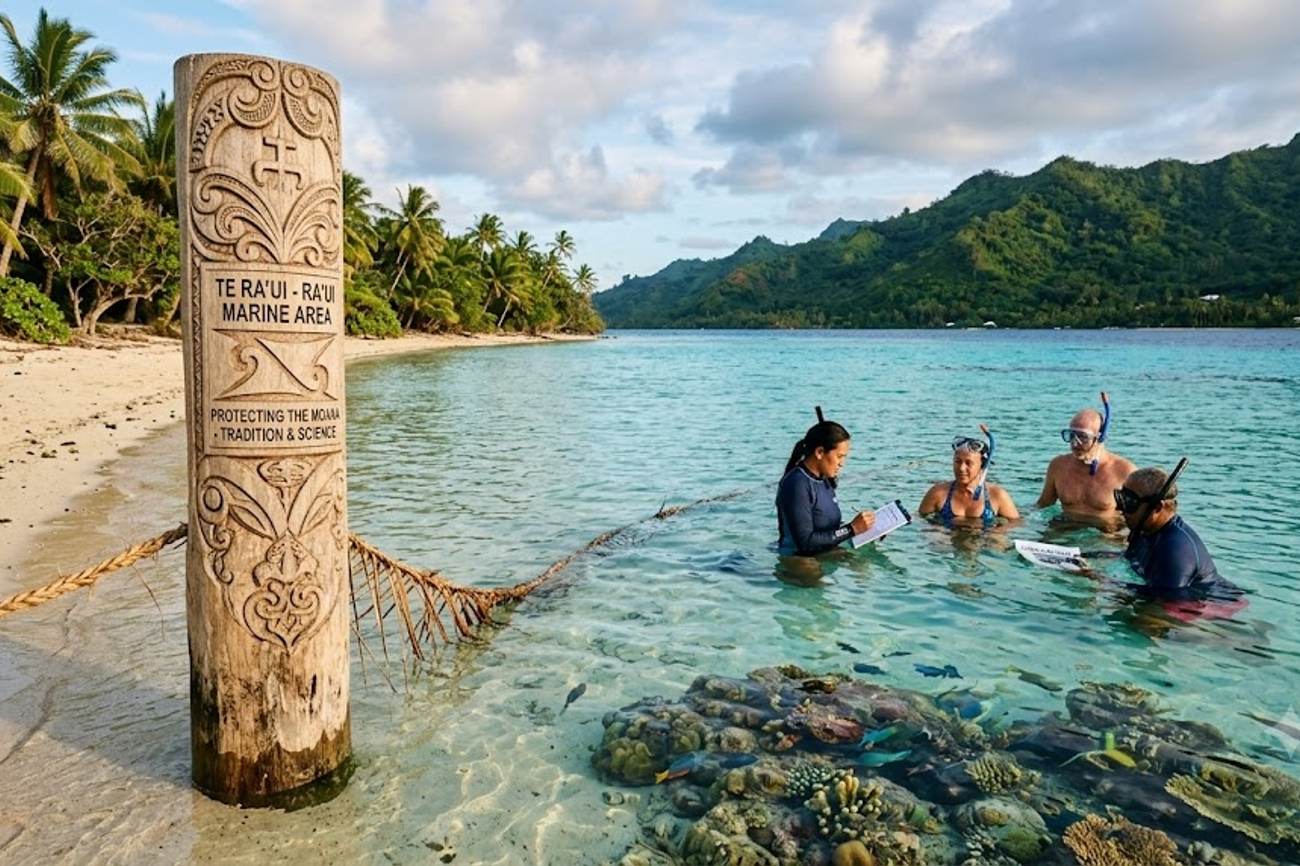
Image generated by AI
Cook Islands Integrates Ancient Ra’ui Wisdom Into Modern Marine Management
The Cook Islands is evolving its approach to marine conservation by synthesizing traditional customary closures, known as Ra’ui, with advanced citizen-science monitoring. Unlike government-mandated marine protected areas, Ra’ui sites are decreed by community leaders on Rarotonga and surrounding islands, utilizing traditional practices to enforce temporary prohibitions on harvesting marine resources.
This hybrid model seeks to maintain indigenous authority over coastal waters while employing scientific data to validate ecological recovery.
Key Facts Breakdown
- Governance: Ra’ui is managed by Aronga Mana and community leaders, not directly administered as government protected areas.
- Rarotonga Ra’ui Sites: Identified areas include Aroko, Aroa, Akapuao, Pouara, Nikao, and Tikioki.
- Case Study (Aroa): A Ra’ui established in 1995 remains active; in 2025, Mataiapo Samuel reported significant coral recovery and increased turtle sightings.
- Kura Tapu Initiative: Launched in March 2026, this framework co-designs marine monitoring by combining traditional ecological knowledge with scientific tools.
- Scientific Tools: The initiative employs underwater photogrammetry, environmental DNA (eDNA) water sampling, and drop cameras for fish-population surveys.
- 2026 Field Pilots: Initial biodiversity surveys and underwater video transects were conducted on Atiu and Mauke.
Marine Conservation Framework
| Component | Traditional Ra’ui Approach | Kura Tapu Citizen Science (2026) |
|---|---|---|
| Authority | Aronga Mana / Community Leaders | Co-designed by govt, educators, and locals |
| Method | Customary prohibition of harvesting | Photogrammetry, eDNA, and drop cameras |
| Objective | Resource sustainability & food security | Biodiversity documentation & monitoring |
| Scope | Localized reef closures (e.g., Aroa) | National network (Pilots on Atiu, Mauke) |
Why This Matters
From a logistical and industry perspective, the shift toward Ra’ui-based management transforms the visitor experience from passive recreation to educational tourism. For travelers on these routes, the impact is a transition from "consuming" the lagoon to engaging with a living cultural landscape.
Our analysis of this model suggests a strategic move to avoid the "over-tourism" trap. By keeping authority in the hands of traditional leaders, the Cook Islands can dynamically adjust access based on real-time reef health rather than static government legislation. This ensures that high-value biodiversity—such as the turtles and coral noted at Aroa—becomes a draw for sustainable, low-impact tourism rather than a casualty of unregulated access.
Industry Outlook
The integration of the Kura Tapu framework suggests a move toward "participatory tourism," where visitors may eventually support non-invasive monitoring efforts. Expect a rise in specialized tour operators focusing on reef ecology and indigenous governance. The success of the 2026 pilots on Atiu and Mauke will likely dictate the scaling of these citizen-science tools across the entire archipelago, creating a blueprint for other Pacific nations to merge indigenous sovereignty with climate-science data.
Internal Link Suggestions:
- Sustainable Tourism Trends in Oceania
- Indigenous Governance and Environmental Policy
- The Evolution of Marine Protected Areas (MPAs)
Related Travel Guides
Disclaimer
This article is for informational and educational purposes only. It does not constitute legal, financial, or professional advice. While we strive to provide accurate and up-to-date information, travel policies, regulations, and conditions change rapidly. Always verify information with official sources before making travel decisions. Nomad Lawyer makes no representations about the accuracy, reliability, completeness, or suitability of the information provided. Readers should consult qualified professionals for advice specific to their circumstances. The views expressed in this article are those of the author and do not necessarily reflect the views of Nomad Lawyer.
Raushan Kumar
Founder & Lead Developer
Full-stack developer with 11+ years of experience and a passionate traveller. Raushan built Nomad Lawyer from the ground up with a vision to create the best travel and law experience on the web.
Learn more about our team →