
Connecticut Launches 130-Spot Haunted History Trail Featuring Colonial Witch Trials and Ghost Stories
Connecticut Launches 130-Spot Haunted History Trail Featuring Colonial Witch Trials and Ghost Stories

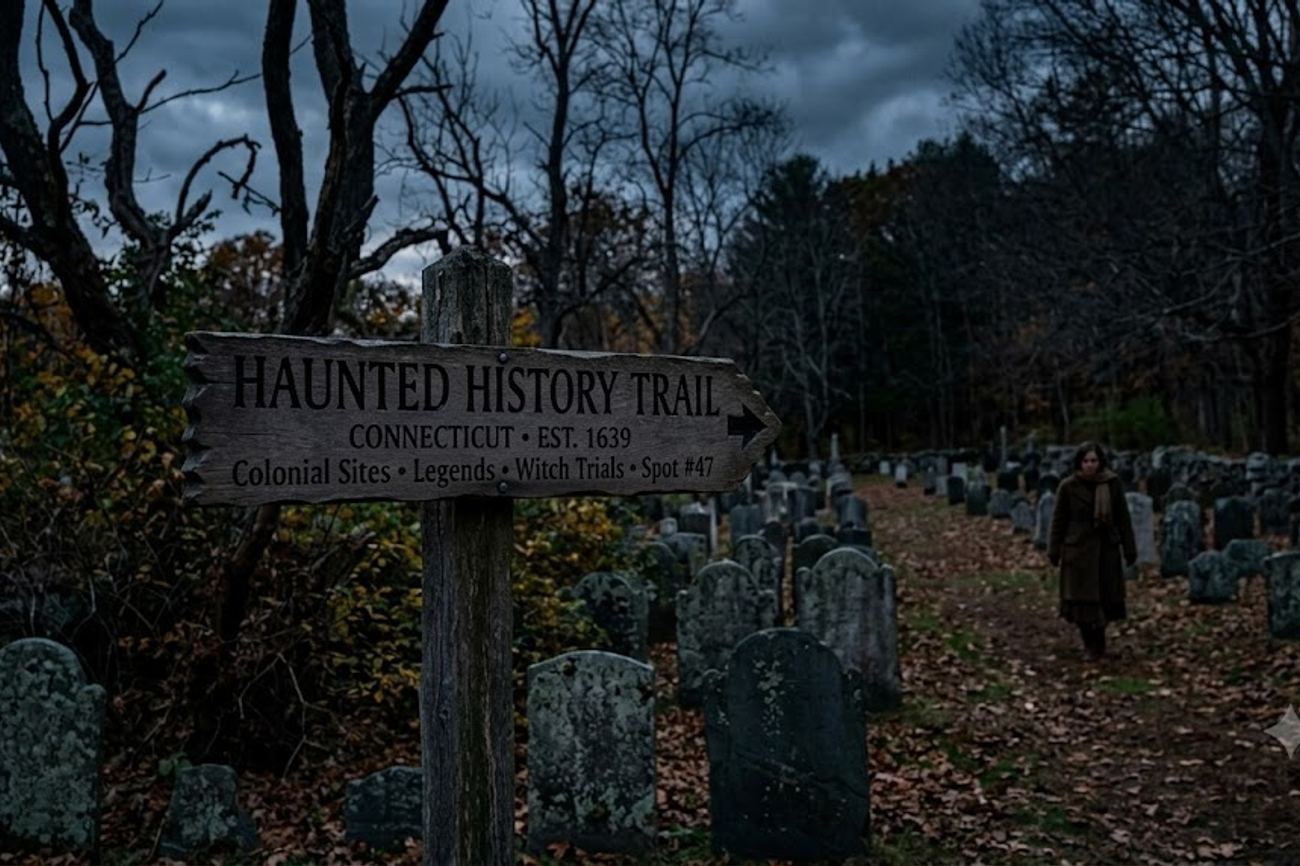
Image generated by AI
While Massachusetts has long dominated the "dark tourism" market via the Salem witch trials, Connecticut’s formalization of a 130-site haunted trail signals a strategic pivot to capture a market share of immersive history that predates Salem by 45 years. This shift is not merely about folklore; it is a calculated expansion of the state's cultural tourism infrastructure, moving from fragmented local legends to a centralized, data-mapped itinerary designed to extend the average visitor's stay in the Nutmeg State.
The Haunted Infrastructure in Numbers
The scale of the newly launched Connecticut Haunted History Trail represents one of the most comprehensive thematic tourism maps in the Northeast. By cataloging more than 130 individual sites, the Connecticut Office of Statewide Marketing and Tourism has created a network that spans nearly 400 years of regional history. The trail is not a monolithic list but is segmented into nine distinct categories, allowing for high-granularity travel planning. These categories include:
- Historic Homes
- Museums
- Theatres
- Mysterious Hiking Trails
- Lighthouses
- Cemeteries
- Metaphysical Shops
- And two additional categories focusing on immersive storytelling and urban legends.
The data points to a specific focus on "dark history" as a driver for economic activity. For instance, the trail highlights the Lockwood-Mathews Mansion Museum in Norwalk and the Mark Twain House & Museum, blending literary tourism with paranormal interest. On the maritime front, the Sheffield Island Lighthouse serves as a primary anchor for coastal visitors.
From a historical data perspective, the trail leverages a significant chronological advantage over its neighbors. While the Salem witch trials are the global benchmark for colonial occult history, Connecticut’s records show that its own witch trials began in 1647. This creates a 45-year lead in the timeline of American colonial executions. The state's records indicate that 49 individuals were accused of witchcraft, resulting in at least 11 executions, including Alse Young of Windsor, the first person executed for witchcraft in the American colonies.
Comparative Context: The New England Dark Tourism Market
The formalization of this trail reflects a broader trend identified by the World Tourism Organization (UNWTO), where travelers are moving away from passive sightseeing toward "experiential" or "story-based" travel. Connecticut is positioning itself as a direct competitor to the established dark tourism hubs of Massachusetts and Rhode Island.
Historically, Connecticut's tourism data has been overshadowed by the high-volume "witch city" branding of Salem. However, by integrating a formal resolution from the 2023 Connecticut General Assembly—which acknowledged the historical wrongs of the witch trials—the state has transitioned these sites from mere "spooky" attractions to recognized historical landmarks. This adds a layer of academic legitimacy that appeals to a higher-spending demographic of cultural tourists.
The following table compares the historical and structural benchmarks of Connecticut’s new initiative against the traditional regional benchmarks of the New England "Dark Tourism" corridor.
| Metric | Connecticut Haunted History Trail | Traditional Salem/MA Model | Regional Variance |
|---|---|---|---|
| Timeline Origin | 1647 (First Execution) | 1692 (Salem Trials) | CT leads by 45 years |
| Site Volume | 130+ mapped locations | Concentrated Hub (Salem) | CT offers wider geographic spread |
| Categorization | 9 distinct thematic pillars | General "Witchcraft" theme | CT utilizes diversified niches |
| Legal Status | 2023 General Assembly Resolution | Long-standing municipal recognition | CT is currently in "formalization" phase |
| Primary Drivers | Colonial History + Paranormal | Occultism + Commercial Tourism | Shift toward "Educational Spookiness" |
This diversification strategy is likely an attempt to mitigate the "seasonal spike" seen in other New England destinations. By offering nine different categories—including hiking trails and metaphysical shops—Connecticut is attempting to broaden the appeal beyond the October peak, though boutique lodgings and historic sites still report rapid occupancy increases during the autumn months.
Practical Traveler Advisory and Strategic Insights
For the individual traveler or the digital nomad operating in the Northeast, this data suggests a shift in how autumn itineraries should be structured. The sheer volume of the trail (130+ sites) means that "cluster booking" is now the most efficient strategy.
If you are planning a visit in Q3 or Q4, the following data-driven recommendations apply:
- Avoid the "Salem Overflow": As Massachusetts reaches peak capacity in October, Connecticut’s distributed model (spanning nine categories across the state) offers a less congested alternative with similar or older historical provenance.
- Priority Booking for Boutique Lodging: Because the trail integrates "boutique haunted lodgings," these specific assets have a lower inventory than standard hotels. Booking 8-12 weeks in advance for October dates is now essential to secure proximity to the 130 mapped sites.
- Route Optimization: Rather than attempting the full trail, travelers should select 2-3 of the nine categories. For example, pairing the Sheffield Island Lighthouse (Maritime) with the Ancient Burying Ground (Colonial) allows for a focused geographic loop rather than a state-wide trek.
- Educational Timing: Since the 2023 General Assembly resolution has brought new academic attention to the 1647 trials, expect increased crowds at the Windsor-area sites. Visiting these specific locations in the "shoulder season" (late September or early November) will provide a more immersive experience.
Forward Projection: The Institutionalization of the Paranormal
Based on current market movements tracked by Statista regarding the growth of experiential travel, Connecticut is likely to see a Year-over-Year (YoY) increase in autumn tourism revenue. The transition from "urban legend" to "state-sanctioned trail" allows the state to apply for different types of grants and marketing budgets that were previously unavailable for non-formalized sites.
We can project that the next 24 months will see the emergence of "Dark Tourism Packages" bundled by local hotels and transport providers. The integration of 130 sites provides a massive data set for AI-driven itinerary planners to create personalized "spooky" routes. Furthermore, the state's emphasis on the 1647 trials suggests a move toward "Corrective Tourism"—where the goal is not just to frighten, but to educate on the legal failures of the colonial era.
As the International Air Transport Association (IATA) continues to monitor regional travel patterns, the diversification of New England's offerings may lead to a redistribution of tourist traffic from the coast of Massachusetts deeper into the Connecticut interior, easing the burden on infrastructure in Salem while boosting the economy of smaller Connecticut towns.
FAQ: Connecticut Haunted History Trail 2024
Will prices for hotels in Connecticut increase during the autumn? Yes. With the formalization of a 130-site trail, demand for boutique and historic lodgings is expected to rise. Data suggests that "spooky season" creates a pricing premium; booking outside the October window can reduce costs by 15-20%.
Which sites are best for those interested in actual history rather than ghosts? The sites linked to the 1647 witch trials and the Ancient Burying Ground in Hartford offer the most documented historical data. These locations are grounded in colonial legal records and the 2023 General Assembly resolution.
Is the trail suitable for a short weekend trip? The trail is too large for a single weekend (130+ sites). Travelers should focus on one of the nine categories—such as the maritime phantoms at Sheffield Island Lighthouse—to maximize their time without excessive driving.
Which airline hubs are best for accessing this trail? Bradley International Airport (BDL) provides the most direct access to the interior sites and the colonial burial grounds, while hubs serving New York or Boston allow for easy road-trip entry into the Norwalk and Hartford corridors.
The shift from folklore to formal infrastructure transforms the Nutmeg State into a primary data point for the evolution of American dark tourism.
Related Travel Guides
- Protect Group Expands Travel Protection Network Through New MyTicketPro Partnership Covering Global Attractions and Events
- Greece Witnesses Tourism Surge As International Travellers Drive Strong July Gains Across Hotels And Destinations
- England Travel Boost As Brontë Exhibition Uncovers Forgotten Colonial Connections
Disclaimer
This article is for informational and educational purposes only. It does not constitute legal, financial, or professional advice. While we strive to provide accurate and up-to-date information, travel policies, regulations, and conditions change rapidly. Always verify information with official sources before making travel decisions. Nomad Lawyer makes no representations about the accuracy, reliability, completeness, or suitability of the information provided. Readers should consult qualified professionals for advice specific to their circumstances. The views expressed in this article are those of the author and do not necessarily reflect the views of Nomad Lawyer.
Raushan Kumar
Founder & Lead Developer
Full-stack developer with 11+ years of experience and a passionate traveller. Raushan built Nomad Lawyer from the ground up with a vision to create the best travel and law experience on the web.
Learn more about our team →