
Condor and American Airlines Partner to Fulfill Dream Transatlantic Journeys
Condor and American Airlines Partner to Fulfill Dream Transatlantic Journeys

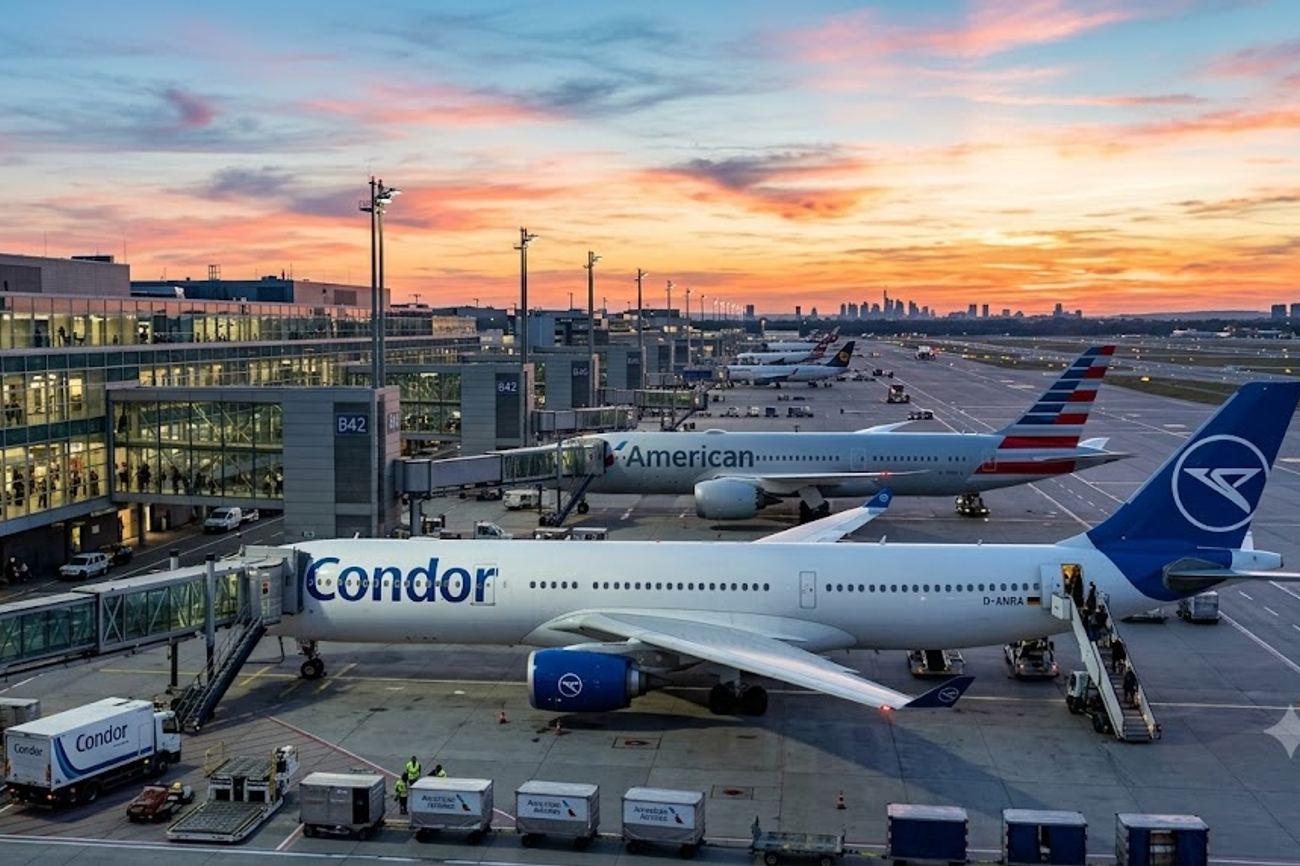
Image generated by AI
title: "The Transatlantic Pivot: Analyzing the Condor-American Airlines Interline Strategy" date: "2024-05-22" category: "Aviation Analysis"
150 American cities are now integrated into a streamlined transit pipeline following the establishment of a new interline partnership between Condor Airlines and American Airlines. This strategic alignment transforms the logistical framework for travelers moving between the United States and Frankfurt, Germany, by consolidating fragmented booking processes into a single, unified itinerary. By eliminating the need for separate tickets and manual baggage transfers, the two carriers are targeting a specific friction point in long-haul travel: the "last mile" connection from regional U.S. hubs to transatlantic gateways.
The Mechanics of Interline Integration
An interline agreement is not a full merger or a codeshare, but a commercial contract that allows airlines to sell seats on each other's flights and handle baggage across different carriers. In this specific arrangement, the operational flow is designed to funnel passengers from the vast domestic network of American Airlines into the specialized long-haul corridors operated by Condor Airlines.
The logistical backbone of this partnership relies on four primary U.S. gateways. These cities serve as the "sorting centers" where domestic passengers transition to international aircraft:
| Gateway City | Airport Code | Strategic Role |
|---|---|---|
| New York | JFK | Primary cultural and financial link to Europe |
| Los Angeles | LAX | Main West Coast artery to Frankfurt |
| Boston | BOS | New England regional feeder for European routes |
| Chicago | ORD | Expansion hub; direct service launching May 2027 |
Under this framework, a traveler departing from a secondary city—such as Austin or Charlotte—can book a single ticket that carries them through a gateway like JFK and onto a Condor flight to Frankfurt. The critical operational shift here is the baggage handling; checked luggage is now routed directly to the final destination, removing the requirement for passengers to reclaim and re-check bags during their layover.
The Economic Engine of Connectivity
The timing of this partnership aligns with broader data from the Federal Aviation Administration (FAA), which identifies commercial aviation as a primary catalyst for billions of dollars in annual visitor spending. The economic logic is simple: the easier it is to reach a destination, the higher the volume of arrivals, and the longer those arrivals stay.
Industry data indicates that more than 50% of all international visitors rely on air travel. When interline agreements remove the "friction" of multi-ticket bookings, it typically results in an uptick in spontaneous and multi-city travel. For Frankfurt, this means an increase in high-spending tourists who can now access the city from 150 different U.S. points of origin without the stress of fragmented logistics. This ripple effect extends beyond the airlines, providing a direct stimulus to the hospitality, dining, and cultural sectors within the Hessen region of Germany and various U.S. states.
Expert Analysis: The Strategic Play for Market Share
For the seasoned traveler and the industry observer, this partnership is less about "making dreams come true" and more about a calculated move to challenge the dominance of the major global alliances (such as Star Alliance or Oneworld).
Condor is positioning itself as a flexible, high-efficiency bridge. By partnering with American Airlines, Condor gains immediate access to a massive domestic feeder network without having to invest in its own U.S. domestic fleet. Conversely, American Airlines strengthens its offering to passengers heading to Frankfurt by providing more routing options via a reliable partner.
The most telling detail in this announcement is the May 2027 timeline for the Chicago (ORD) expansion. This suggests a long-term capacity planning phase, indicating that the carriers expect sustained growth in the Midwest-to-Germany corridor.
For travelers booking these routes, the direct consequence is a reduction in "connection risk." When a traveler holds two separate tickets (a "self-transfer"), a delay in the first flight often means the second ticket is forfeited. Under a single interline itinerary, the carriers share responsibility for getting the passenger to their destination, significantly lowering the legal and financial risk for the traveler.
Furthermore, this move mirrors Condor's recent interline agreement with Qantas Airways, which opened pathways through Bangkok, Johannesburg, Paris, Rome, San Francisco, and Vancouver. Condor is aggressively building a "web" of partnerships rather than joining a single restrictive alliance. This allows them to cherry-pick the most profitable routes and partners globally, creating a bespoke network that maximizes aircraft utilization.
Key Takeaways
- Unified Ticketing: Travelers can now book journeys from over 150 U.S. cities to Frankfurt on one ticket, eliminating the need for multiple bookings.
- Baggage Seamlessness: Checked luggage is transferred automatically between American Airlines and Condor, removing the need for manual re-checks at gateways.
- Gateway Focus: Operations are centered on JFK, LAX, and BOS, with Chicago (ORD) joining the network in May 2027.
- Strategic Diversification: This follows a similar partnership with Qantas, signaling Condor's strategy to build a global network through independent interline agreements.
- Risk Mitigation: Single-itinerary booking provides better protection against flight delays compared to separate ticket purchases.
FAQ: Condor & American Airlines 2024
Do I need to pick up my bags during my layover in the US? No. Under the new interline agreement, if you have a single itinerary ticket, your bags are checked through to your final destination in Frankfurt or your connecting European city.
Can I book these flights on the airline websites? Yes, the partnership allows for seamless booking of the complete international journey using one single itinerary ticket through the participating carriers.
When does the Chicago direct service start? New direct service and expanded transit options via Chicago (ORD) are scheduled to begin in May 2027.
Is this part of a larger airline alliance? This is an interline partnership, which is a specific commercial agreement for ticketing and baggage, rather than a full merger or a restrictive global alliance membership.
The era of the fragmented transatlantic ticket is ending, replaced by a calculated network of convenience.
Related Travel Guides
Disclaimer
This article is for informational and educational purposes only. It does not constitute legal, financial, or professional advice. While we strive to provide accurate and up-to-date information, travel policies, regulations, and conditions change rapidly. Always verify information with official sources before making travel decisions. Nomad Lawyer makes no representations about the accuracy, reliability, completeness, or suitability of the information provided. Readers should consult qualified professionals for advice specific to their circumstances. The views expressed in this article are those of the author and do not necessarily reflect the views of Nomad Lawyer.
Preeti Gunjan
Contributor & Community Manager
A passionate traveller and community builder. Preeti helps grow the Nomad Lawyer community, fostering engagement and bringing the reader experience to life.
Learn more about our team →