
China’s Zhejiang Opens Dubai Tourism Hub To Attract Rising Middle East Travellers With Culture And Innovation
China’s Zhejiang Opens Dubai Tourism Hub To Attract Rising Middle East Travellers With Culture And Innovation

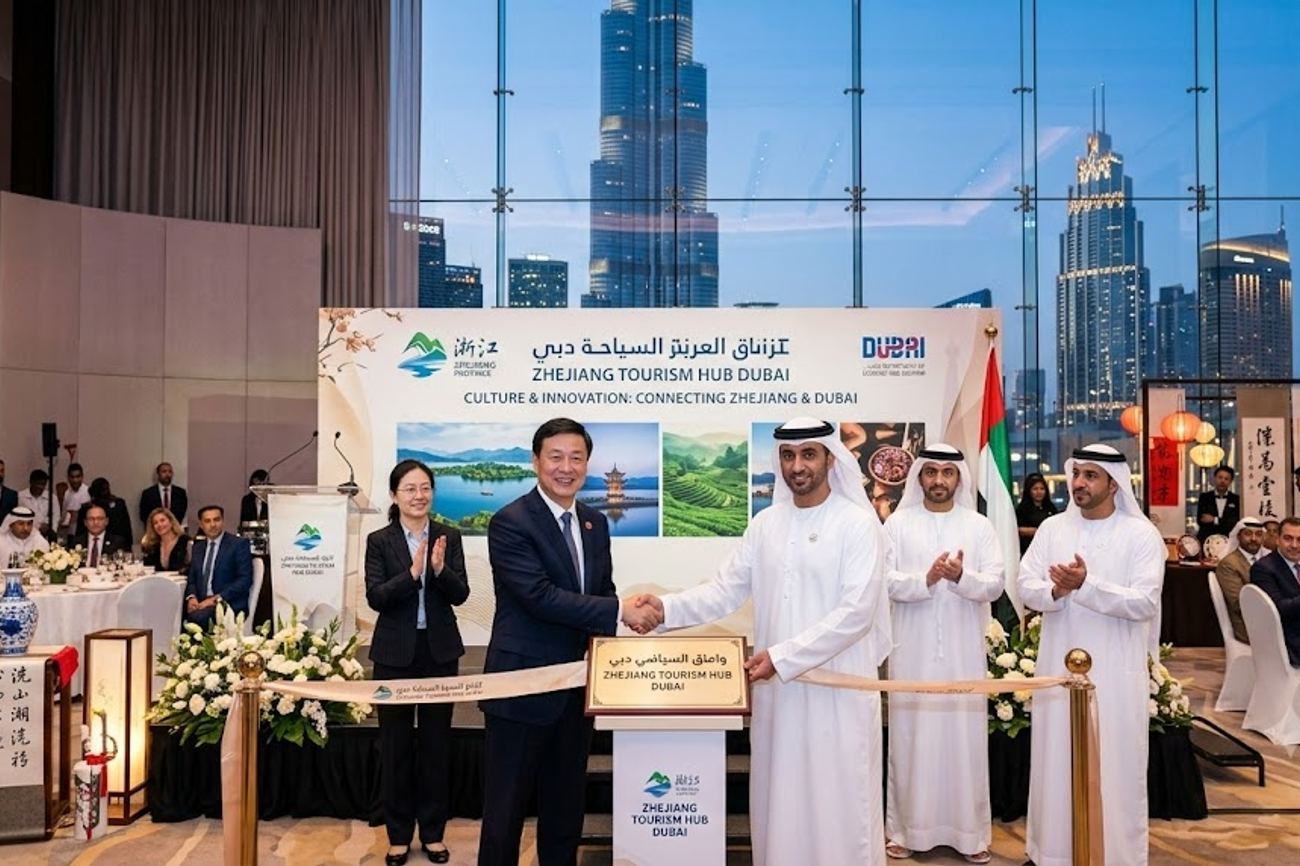
Image generated by AI
60 representatives from the UAE, Saudi Arabia, and the broader Gulf region converged in Dubai to mark the official launch of the Zhejiang Culture and Tourism Middle East Promotion Center. This strategic installation transforms Dubai into a permanent operational hub for eastern China, signaling a shift from passive marketing to an active, boots-on-the-ground pursuit of high-net-worth Middle Eastern travelers.
The Dubai Gateway Strategy
The establishment of a dedicated promotion center in Dubai is not a mere branding exercise; it is a calculated geopolitical and economic move by the Zhejiang Provincial Department of Culture, Radio, Television and Tourism. By embedding itself within the UAE, Zhejiang is leveraging Dubai's status as the primary aviation and commercial nexus between Asia and the West.
This center functions as a permanent bridge for destination marketing, travel trade engagement, and business collaboration. For the province, the objective is to bypass traditional third-party intermediaries and establish direct pipelines to Gulf travel agencies and corporate entities. The decision to anchor this initiative in the UAE reflects a broader Chinese strategy to diversify its tourism inflows, moving beyond the saturated Western markets toward the high-spending demographics of the GCC (Gulf Cooperation Council).
The operational focus of the center extends beyond leisure. It is designed to facilitate "innovation-focused travel," integrating Zhejiang’s reputation as a global tech hub with its cultural assets. This allows the province to compete for a specific subset of the Middle Eastern market: the professional traveler who seeks a hybrid of business intelligence and luxury leisure.
Diversifying the Gulf Outbound Portfolio
The competition for outbound travelers from the Middle East has intensified as Gulf citizens increasingly seek "experience-led" travel over traditional sightseeing. Zhejiang is responding by pivoting its value proposition away from generic landmarks and toward a multidimensional itinerary.
The provincial strategy is built on four distinct pillars designed to capture different segments of the Gulf market:
Zhejiang Province is strategically expanding its tourism outreach by establishing a hub in Dubai to attract high-spending Middle Eastern travelers. This initiative focuses on blending traditional Chinese heritage with modern technological innovation to appeal to the region's growing middle class, supported by promotional efforts from the China National Tourism Administration.
| Tourism Pillar | Target Demographic | Primary Appeal |
|---|---|---|
| Cultural Heritage | Luxury & History Seekers | Immersive discovery of ancient Chinese traditions and local lifestyles. |
| Ecological Leisure | Nature & Wellness Travelers | Contrast between urban centers and quiet, scenic natural environments. |
| Technological Innovation | Professionals & Students | Exposure to digital ecosystems and science-driven urban development. |
| Business Tourism | Corporate Entities | B2B networking and commercial exchange within Zhejiang's industrial hubs. |
By weaving these elements together, Zhejiang aims to increase the "Average Length of Stay" (ALOS) for Gulf visitors. Rather than being a brief stopover on a wider China tour, the province is positioning itself as a primary destination where a traveler can experience a high-tech city, a remote ecological reserve, and a historical site within a single journey.
Expert Analysis: The Pivot to High-Yield Hybrid Travel
For travelers and travel agents booking routes into China, the direct consequence of this hub is the emergence of "Hybrid Itineraries." We are seeing a transition where the distinction between a "business trip" and a "vacation" is blurring. The Zhejiang model recognizes that the modern Gulf traveler—particularly from the UAE and Saudi Arabia—often travels with family and possesses significant spending power, seeking destinations that offer intellectual stimulation alongside luxury.
The pricing pressure this creates is fascinating. By targeting the "innovation-focused" traveler, Zhejiang is moving its tourism product up the value chain. They are no longer competing on the cost of a hotel room or a flight ticket, but on the exclusivity of access to tech ecosystems and cultural immersion.
From a logistical standpoint, this move coincides with the broader efforts of the International Air Transport Association (IATA) to streamline global connectivity. As Zhejiang strengthens its ties with the Middle East, we can expect to see a push for increased flight frequencies or specialized charters between the Gulf and regional airports in eastern China. Furthermore, the involvement of diplomatic and cultural institutions suggests that this is a state-backed effort to align tourism with the "Belt and Road Initiative" logic—using soft power (culture and tech) to facilitate hard economic ties (trade and investment).
For the nomad traveler or business consultant, this means Zhejiang is becoming a viable alternative to the traditional Beijing-Shanghai-Guangzhou triangle. The province is effectively rebranding itself as the "Innovation Corridor" of China, making it an essential stop for those interested in the intersection of digital commerce and traditional heritage.
To facilitate this influx of visitors, enhanced flight connectivity remains a priority for regional logistics and passenger transit. Travelers can coordinate their journeys through Emirates, which provides the critical aerial link between Dubai and major Chinese gateways to ensure seamless access to Zhejiang's cultural sites.
Key Takeaways
- Permanent Infrastructure: The new Dubai-based center serves as a direct link between Zhejiang's tourism board and Middle Eastern travel stakeholders, removing intermediaries.
- Beyond Leisure: The strategy explicitly targets business, education, and technology sectors, moving beyond traditional "sightseeing" to attract high-yield professional travelers.
- Strategic Diversity: The province is marketing a "four-pillar" approach: combining ecological nature, ancient culture, modern urbanism, and digital innovation.
- Market Focus: The primary targets are high-spending outbound travelers from the UAE and Saudi Arabia who prioritize immersive and multidimensional experiences.
- Economic Integration: The initiative blends tourism with commercial and diplomatic goals, aiming to foster long-term B2B relationships between the Gulf and eastern China.
FAQ: Zhejiang Tourism Middle East 2024
What is the Zhejiang Culture and Tourism Middle East Promotion Center? It is a dedicated hub in Dubai established by the Zhejiang Provincial Department of Culture, Radio, Television and Tourism to attract visitors from the UAE, Saudi Arabia, and the Gulf through direct marketing and business partnerships.
What makes Zhejiang different from other Chinese destinations for Gulf travelers? Zhejiang emphasizes a "hybrid" experience, combining its high-tech digital innovation ecosystem with traditional cultural heritage and ecological landscapes, appealing to both business professionals and luxury leisure travelers.
Can business travelers combine work and leisure in Zhejiang? Yes. The province is specifically promoting "innovation-focused travel," allowing visitors to engage with science and technology hubs while accessing the region's scenic and historical attractions.
Who is the primary target audience for this new tourism push? The initiative targets high-net-worth individuals, corporate professionals, students, and families from the GCC region who are seeking diverse, experience-led international travel.
The shift from brochures to embassies suggests that for Zhejiang, tourism is the vanguard of a much larger economic offensive in the Gulf.
Tags: Zhejiang Province, Dubai Tourism Hub, Gulf Outbound Travel, China-UAE Relations, Innovation Tourism 2024, GCC Travel Trends
Related Travel Guides
- New York Joins Miami and Chicago as Barcelona’s Direct Air Links and New Tourist Taxes Reshape 2026 Holidays
- France Aligns With US And Other Nations To Modernize Global Ski Facilities Amid Rising Climate Demands
- Singapore Tourism Update 2026 As China Leads Visitor Growth While Shorter Trips Impact Recovery
Disclaimer
This article is for informational and educational purposes only. It does not constitute legal, financial, or professional advice. While we strive to provide accurate and up-to-date information, travel policies, regulations, and conditions change rapidly. Always verify information with official sources before making travel decisions. Nomad Lawyer makes no representations about the accuracy, reliability, completeness, or suitability of the information provided. Readers should consult qualified professionals for advice specific to their circumstances. The views expressed in this article are those of the author and do not necessarily reflect the views of Nomad Lawyer.
Naina Thakur
Contributor & Travel Specialist
Travel enthusiast and legal writer covering visa regulations, responsible tourism, and cultural journeys across global destinations.
Learn more about our team →