
China Accelerates 'Technology Tourism' as AI Study Tours and Smart Factory Visits Surge
China is expanding technology tourism with AI study tours and smart factory visits. Discover how Tianjin and Yunnan are leading digital travel innovation.

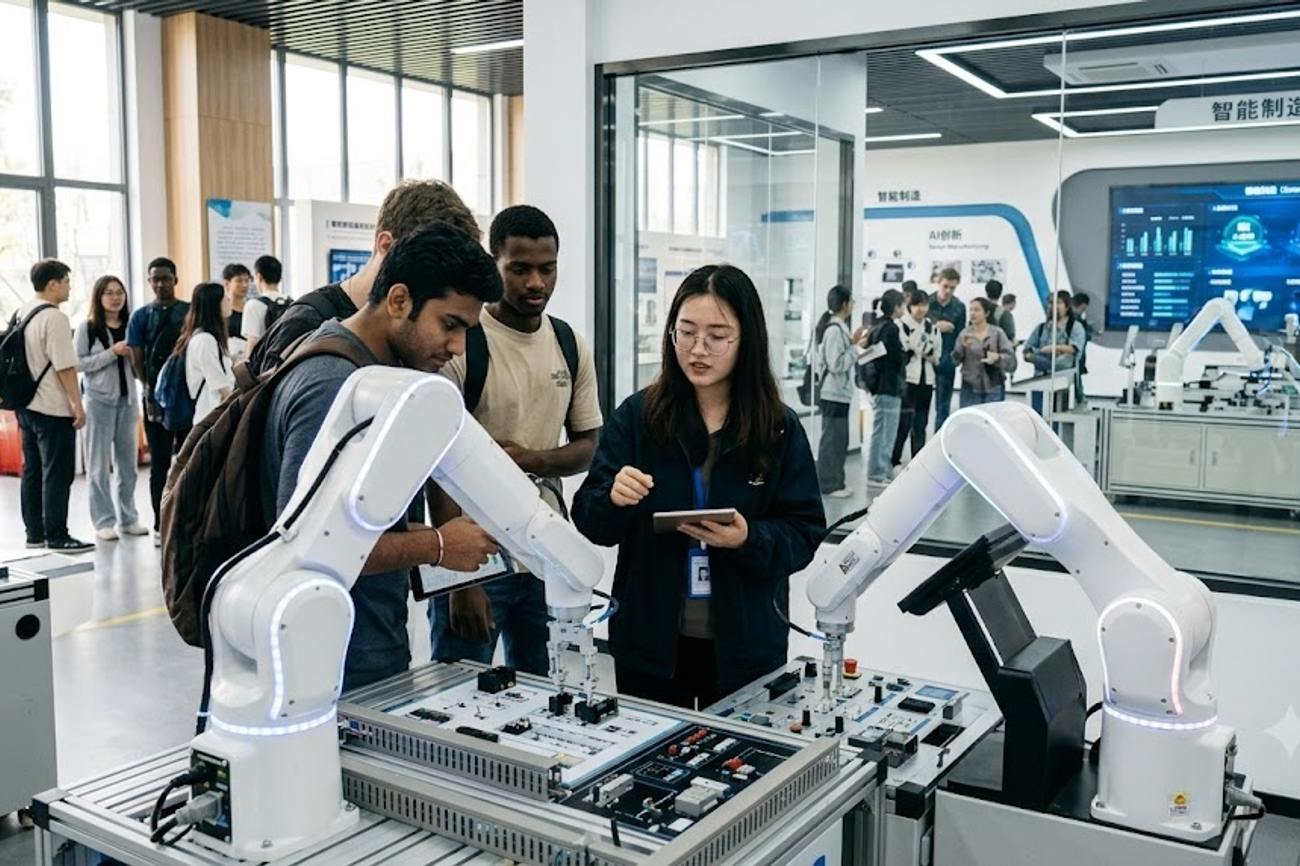
Image generated by AI
[Tianjin, September 6, 2026] — China is aggressively expanding a new niche in the travel sector known as Technology Tourism, blending high-tech educational journeys with industrial innovation tours designed for international business travelers and students. This shift is evidenced by a massive surge in demand for AI-centric study trips and the integration of smart-tourism frameworks into national cultural exhibitions.
Recent industry activity in Tianjin and Yunnan highlights a strategic move to transform how visitors interact with Chinese innovation. During the summer of 2026, bookings for AI-focused study tours on a leading online platform skyrocketed by 370% year-over-year. While official national statistics currently do not separate "technology tourism" from general travel data—such as hotel occupancy or total spending—the sheer volume of bookings suggests a significant shift in traveler preferences toward educational, tech-driven itineraries.
Tianjin Expo Integrates Digital Innovation into National Tourism
The scale of China's commitment to this sector was on full display at the 2026 China Cultural Tourism Industry Expo, which commenced on September 3 at the Meijiang Convention and Exhibition Centre in Tianjin. Hosted by the Ministry of Culture and Tourism, this four-day event marked the second time Tianjin has served as the host city.
The exhibition spanned 100,000 square meters and was divided into ten specialized zones. These areas focused on digital business models, tourism equipment, international cooperation, and the integration of culture and tourism. Rather than treating technology as a standalone vertical, the expo positioned digital services as a foundational element of the broader tourism experience, linking them directly to consumer behavior and destination development.
The event attracted 2,540 enterprises from 20 different countries and regions, alongside representatives from 30 provincial-level areas within China. Additionally, ten national industry bodies and international organizations participated. The program featured 18 professional sessions dedicated to industrial innovation, technological empowerment, and creative consumption, effectively bridging the gap between AI developers and tourism operators.
Yunnan Focuses on AI Governance and Smart Destination Services
While Tianjin focused on industry-wide integration, a separate symposium held in Yunnan on September 1 targeted the operational side of smart travel. This meeting centered on the deployment of artificial intelligence, data governance, and the optimization of digital platforms to enhance the visitor experience.
Officials in Yunnan are prioritizing the overhaul of the province's mobile tourism services to ensure a more seamless user interface. The objective is to move away from fragmented, local systems in favor of a province-wide data approach. By improving data governance, Yunnan aims to use AI to better manage visitor flows and provide more personalized services.
The symposium specifically called for the use of digital technology to preserve and present intangible cultural heritage. This indicates that technology tourism in China is not limited to factories and labs but extends to the digital resurrection of historical sites and cultural assets.
Evidence-Based Breakdown of Technology Tourism Components
The following data provides an editorial assessment of the current state of technology tourism based on verified reports from government and industry authorities.
| News Component | Share of Story | Officially Verified Finding | Relevance to Travellers |
|---|---|---|---|
| Digital cultural tourism development | 25% | Tianjin hosted a four-day national cultural tourism industry expo covering digital services and technology-enabled products | Shows how digital tools are entering mainstream tourism planning and visitor experiences |
| Smart destination services | 20% | Yunnan discussed platform operations, data governance, AI applications and service improvements | Could make destination information and tourism services easier to use |
| AI education and study tours | 20% | National education policy encourages AI in after-school services and organised study tours | Supports learning-focused travel for children, schools and families |
| AI study-tour demand | 15% | Bookings recorded by an online platform rose 370% year on year during summer 2026 | Demonstrates rising recorded demand, but not total national activity |
| Wider tourism economy | 10% | Tourism and related industries generated 5.8631 trillion yuan in value added during 2024 | Provides economic context for emerging Technology Tourism products |
| International access | 10% | Eligible travellers from 57 countries can use the 240-hour visa-free transit policy | Can support qualifying short educational, cultural or business journeys |
Strategic Impact on International Access and Economy
The growth of technology tourism is being supported by broader economic trends and liberalized entry policies. In 2024, the tourism sector and its related industries generated 5.8631 trillion yuan in value added, providing a massive economic foundation for these new, high-value tech products.
For international visitors, the 240-hour visa-free transit policy—currently available to eligible travelers from 57 countries—acts as a critical catalyst. This policy allows business professionals and educators to conduct short-term AI study tours or visit innovation hubs without the friction of a traditional visa process.
However, industry observers note that the sector is currently a patchwork of connected policies rather than a single, unified national program. Because there is no centralized "technology tour" agency, the experience varies significantly by province.
Why This Matters: The Shift to "Intellectual Consumption"
For the modern traveler, this evolution signals a shift from passive sightseeing to "intellectual consumption." The 370% increase in AI study tour bookings suggests that travelers—particularly families and business cohorts—are no longer satisfied with traditional landmarks. They are seeking "Information Gain," where the value of the trip is measured by the knowledge acquired about future technologies.
From a logistical standpoint, the integration of AI in provinces like Yunnan means that the "friction" of travel—language barriers, navigation, and scheduling—is being reduced through smarter data governance. For the business traveler, the ability to visit a functioning AI factory or a smart-city hub in Tianjin provides a competitive intelligence advantage that traditional tourism cannot offer.
Ultimately, China is rebranding its image from a destination of ancient history to a living laboratory of the future. By linking visa-free transit to high-tech educational experiences, the country is positioning itself as the primary global hub for technology-driven travel.
Related Travel Guides
Disclaimer
This article is for informational and educational purposes only. It does not constitute legal, financial, or professional advice. While we strive to provide accurate and up-to-date information, travel policies, regulations, and conditions change rapidly. Always verify information with official sources before making travel decisions. Nomad Lawyer makes no representations about the accuracy, reliability, completeness, or suitability of the information provided. Readers should consult qualified professionals for advice specific to their circumstances. The views expressed in this article are those of the author and do not necessarily reflect the views of Nomad Lawyer.
Naina Thakur
Contributor & Travel Specialist
Travel enthusiast and legal writer covering visa regulations, responsible tourism, and cultural journeys across global destinations.
Learn more about our team →