
India's BLTM 2026 Summit Projects MICE Market Growth to USD 103.7 Billion by 2030
The BLTM 2026 summit in New Delhi revealed a massive surge in India's MICE sector, with projections hitting USD 103.7 billion by 2030 amid a 23% rise in trade attendance.

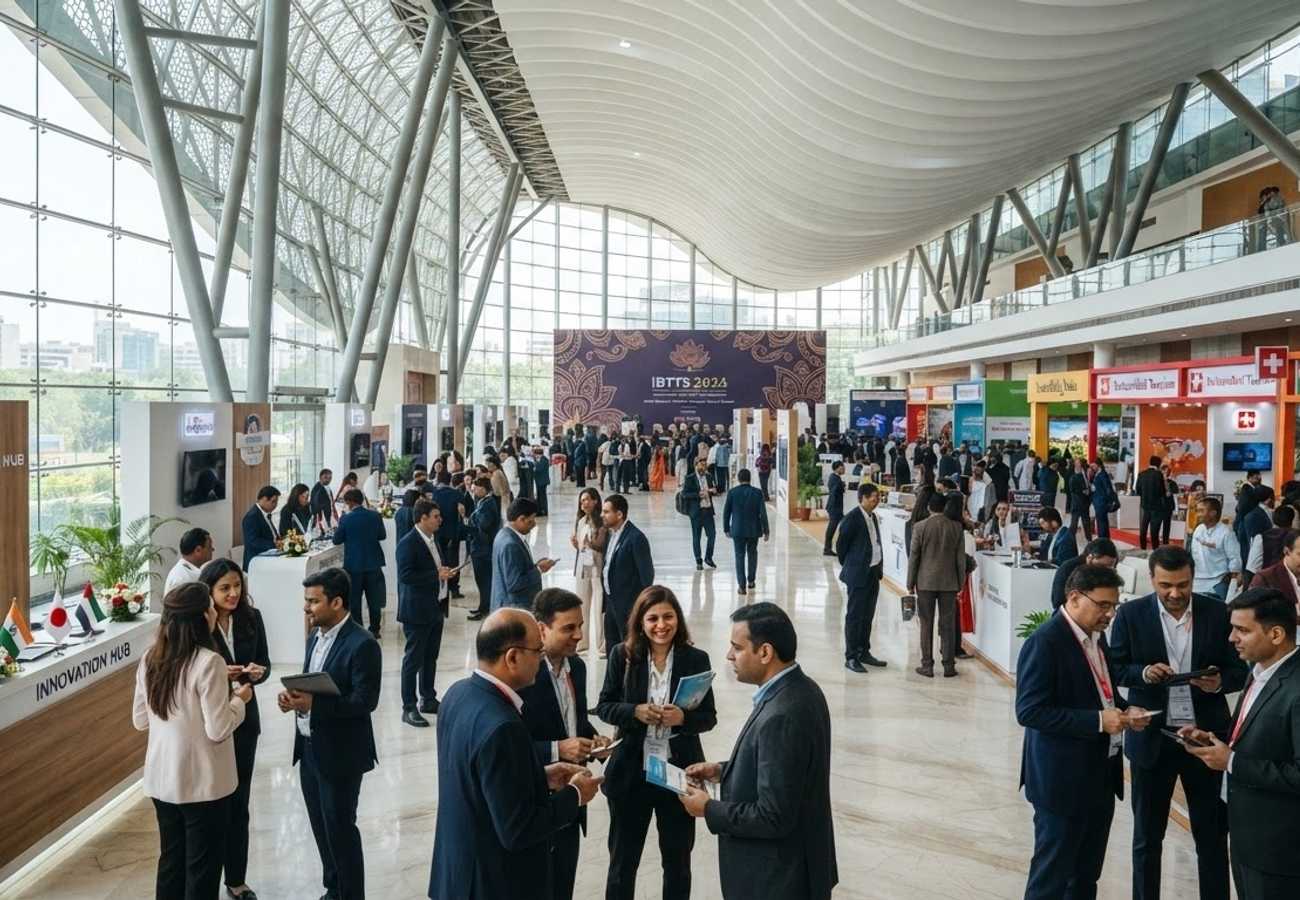
Image generated by AI
India's travel and MICE sector is eyeing a massive expansion, with the BLTM 2026 summit reporting a 23% increase in trade attendance and projections suggesting the MICE market will soar to USD 103.7 billion by 2030.
The three-day event, hosted at the Yashobhoomi Convention Center in New Delhi, served as a critical nexus for global travel suppliers and corporate buyers. The summit aligned with national strategic goals to modernize tourism infrastructure, reflecting a broader economic trend where tourism is expected to contribute 10% of India's GDP by 2047.
Record Trade Participation at Yashobhoomi New Delhi
The scale of the 2026 edition of BLTM demonstrated a significant rebound and appetite for business expansion within the Indian subcontinent. More than 13,000 trade professionals attended the event, a figure that represents a 23% year-over-year increase. This surge indicates a heightened urgency among industry players to establish new partnerships and secure contracts in a rapidly evolving market.
The exhibition floor acted as a high-density networking hub, featuring over 500 exhibitors and 450 hosted buyers. The event's reach was extensive, drawing participants from five different countries and 18 Indian states and Union Territories. This diversity highlighted the consensus among airlines, hospitality groups, and tour operators that India is currently one of the most profitable source markets for both luxury leisure and high-stakes business travel.
MICE and Corporate Travel Economic Forecasts
Industry data presented during the summit suggests an explosive trajectory for the Meetings, Incentives, Conferences, and Exhibitions (MICE) sector. The current valuation of the Indian MICE market stands at USD 49.4 billion as of 2024, but it is projected to more than double to USD 103.7 billion by 2030.
Furthermore, the outbound MICE segment—where Indian corporations host events abroad—is expected to reach USD 13.4 billion by 2031. This growth is being fueled by increased corporate profitability and a growing preference for premium overseas incentive trips for high-performing employees.
BLTM 2026 Key Performance Metrics
| Indicator | Performance / Metric |
|---|---|
| Total Trade Visitors | 13,000+ (23% increase year-over-year) |
| Exhibitor Count | 500+ Exhibitors |
| Hosted Buyers | 450+ Hosted Buyers |
| Geographic Footprint | 5 Countries & 18 Indian States / UTs |
| India MICE Market '24 | USD 49.4 Billion |
| India MICE Target '30 | USD 103.7 Billion |
| Outbound MICE Target '31 | USD 13.4 Billion |
Prioritizing Sustainability through ICRT Awards
Beyond the financial metrics, the summit emphasized the ethical evolution of the industry. The ICRT Indian Subcontinent Responsible Tourism Awards 2026, supported by the Ministry of Tourism, Government of India, recognized enterprises that have integrated sustainable practices into their business models.
The awards focused on heritage preservation, efficient waste management, and community-led hospitality. The ceremony was attended by Shri Suman Billa, IAS, Additional Secretary & Director General of the Ministry of Tourism, and Ms. Kanta Singh, Deputy Country Representative for UN Women India. Their participation signaled a shift in government policy toward gender inclusion and environmental stewardship as core components of tourism growth.
Government Strategy for Responsible Infrastructure
Shri Suman Billa, IAS, highlighted that while India now possesses the world-class physical infrastructure necessary to compete for global business events, the focus must shift toward the quality of that growth. He noted that the primary challenge is not achieving growth itself, but ensuring that such expansion occurs within a responsible framework that benefits local communities and smaller industry players.
The Ministry of Tourism views events like BLTM as a means to democratize the industry, allowing boutique operators and small-scale service providers to connect with global corporate giants, thereby spreading the economic benefits of tourism more equitably.
Market Diversification and Buyer Behavior
Sanjiv Agarwal, Chairman & CEO of Fairfest Media Limited, observed that the 23% increase in attendance reflects a maturing market. According to Agarwal, buyers are no longer looking for generic travel packages but are instead seeking highly diversified products. This includes a rise in demand for destination weddings, experiential travel, and niche corporate retreats.
The summit's structure allowed for targeted networking through a hierarchy of partner destinations:
- Partner Country: Sri Lanka
- Feature Country: Israel
- Focus Destination: Saint Petersburg
- Host State: Delhi
- Partner States: Odisha and Goa
- Feature States: West Bengal, Punjab, and Tamil Nadu
This international representation, including delegations from Nepal and Thailand, enabled Indian event planners to negotiate group rates and forge alliances with overseas Destination Management Companies (DMCs).
The Rise of Rural and Community-Based Tourism
A significant portion of the summit was dedicated to shifting the tourism gaze away from congested urban centers. State boards from Himachal Pradesh, Uttarakhand, Madhya Pradesh, and the Delhi NCR region showcased initiatives focused on eco-lodges, village homestays, and cultural heritage trails.
By promoting indigenous handicrafts and regional culinary arts, these initiatives aim to decentralize the travel economy. This strategic move allows rural communities to capture a share of the high-value corporate and leisure spend, transforming village-level hospitality into a viable economic engine.
Why This Matters: The Impact on the Modern Traveler
For the corporate traveler and event planner, these developments signal a shift toward "high-value, low-impact" travel. The projected growth to USD 103.7 billion means that India is no longer just a destination for budget travel, but a powerhouse for luxury corporate infrastructure.
From a logistical standpoint, the emphasis on rural tourism and sustainable practices means travelers will soon have more authentic, off-the-beaten-path options that are professionally managed and government-backed. For the business traveler, this translates to more diverse incentive trip options that combine high-end luxury with genuine cultural immersion.
India is rapidly transitioning from a traditional tourist destination to a global hub for sophisticated business events and responsible travel.
Related Travel Guides
Disclaimer
This article is for informational and educational purposes only. It does not constitute legal, financial, or professional advice. While we strive to provide accurate and up-to-date information, travel policies, regulations, and conditions change rapidly. Always verify information with official sources before making travel decisions. Nomad Lawyer makes no representations about the accuracy, reliability, completeness, or suitability of the information provided. Readers should consult qualified professionals for advice specific to their circumstances. The views expressed in this article are those of the author and do not necessarily reflect the views of Nomad Lawyer.
Raushan Kumar
Founder & Lead Developer
Full-stack developer with 11+ years of experience and a passionate traveller. Raushan built Nomad Lawyer from the ground up with a vision to create the best travel and law experience on the web.
Learn more about our team →