
China and Oman Lead Multi-Nation Diplomatic Push to Restore Middle East Aviation and Maritime Tourism Stability in 2026
China, Oman, Qatar, and BRICS nations initiate diplomatic talks between the US and Iran to stabilize Middle East airspace, maritime routes, and tourism.

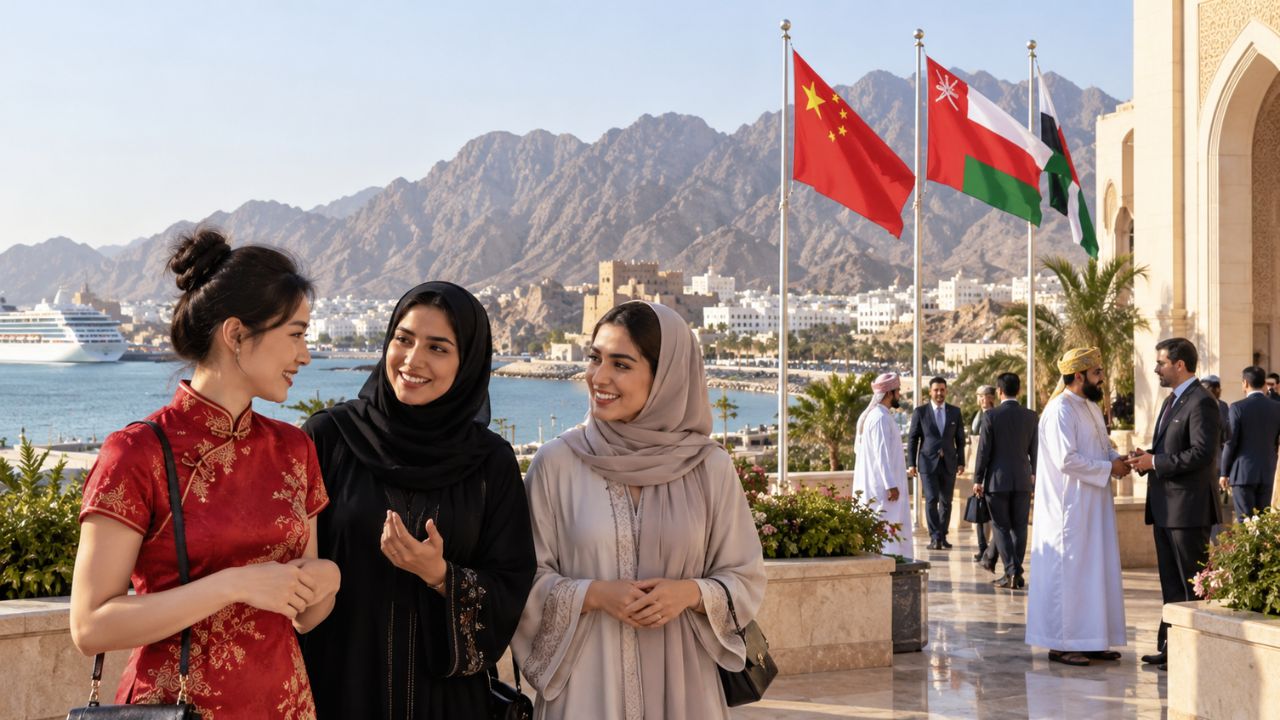
Image generated by AI
China and Oman have initiated joint diplomatic efforts alongside Qatar, Pakistan, Russia, and India to de-escalate tensions between the United States and Iran, aiming to safeguard international aviation corridors and maritime tourism across the Middle East.
President Xi Jinping called upon the expanded BRICS bloc—incorporating China, India, Russia, Brazil, South Africa, Iran, Egypt, Ethiopia, Indonesia, and the United Arab Emirates—to take an active role in regional peace building. The diplomatic initiative comes at a vital juncture when geopolitical friction threatens commercial flight routing, energy shipping lanes in the Strait of Hormuz, and passenger travel confidence across Gulf destinations.
China and Oman Spearhead Multi-National Middle East Diplomatic Initiative
The multi-lateral talks emphasize protecting critical transport infrastructure that supports global trade and international travel. The Gulf region serves as a central transit crossroads connecting Asia, Europe, Africa, and the Americas through global aviation megahubs in Dubai, Doha, Abu Dhabi, and Muscat.
Geopolitical stability remains directly linked to airline operating costs, fuel surcharges, and maritime insurance premiums. By encouraging indirect communication channels between Washington and Tehran, mediating nations aim to mitigate risks of airspace closures, flight diversions, and maritime shipping disruptions.
Diplomatic Roles and Transport Sector Impact Matrix 2026
The table below details the mediating functions of key participating nations, affected international transit sectors, and strategic maritime corridors:
| Participating Country / Entity | Diplomatic Alignment & Role | Affected Transport & Tourism Sector | Primary Strategic Objective |
|---|---|---|---|
| Sultanate of Oman | Neutral mediator; active communication bridge | Regional transit flight paths, Gulf cruise ports | Maintain safe airspace & open maritime channels |
| People's Republic of China | BRICS leadership; economic & trade sponsor | Energy shipping routes, global aviation corridors | De-escalate US-Iran friction; protect trade flow |
| State of Qatar | Regional mediator & aviation hub host | Long-haul flight connections via Doha (DOH) | Safeguard international hub passenger confidence |
| Republic of India | Strategic partner to GCC, Iran & Western states | Outbound Asian tourism, regional air corridors | Ensure passenger safety & stable air mobility |
| BRICS Grouping | Multi-national economic & security bloc | Hospitality investments, cross-border MICE | Foster regional stability for tourism development |
| Strait of Hormuz | Strategic maritime choke point | Regional cruise itineraries, container shipping | Prevent naval escalations & protect passenger liners |
Analysis of Mediating Nations and Regional Security Roles
Oman's Neutral Diplomatic Bridge
Oman maintains a long-standing neutral foreign policy, allowing Muscat to serve as a trusted communication bridge between Western governments and Iranian authorities. Oman’s diplomatic stability has enabled the country to build a strong reputation as a safe, peaceful travel destination known for luxury mountain resorts in Jebel Akhdar and coastal heritage.
China and the Expanded BRICS Framework
China’s diplomatic involvement reflects Beijing’s growing interest in safeguarding Middle East energy routes and maritime supply chains. Within the expanded BRICS framework, President Xi Jinping has emphasized that regional stability is essential for maintaining predictable airline operating environments and protecting long-term tourism infrastructure investments across the Arabian Peninsula.
Qatar, Pakistan, and India Support Regional Stability
Qatar’s role as an international aviation hub makes regional security paramount for connecting millions of transit passengers through Hamad International Airport (DOH). Concurrently, Pakistan and India maintain strong economic and passenger transport ties with the Gulf, making safe airspace and unhindered flight paths vital for South Asian travel flows.
Impact on Aviation Megahubs and Maritime Cruise Shipping
A successful de-escalation of regional tensions directly impacts three major travel sectors:
- Commercial Aviation Reliability: Reduced airspace restrictions prevent lengthy intercontinental flight diversions around Gulf airspace, lowering jet fuel consumption and reducing travel times for passengers connecting between Europe and Asia.
- Maritime and Cruise Operations: The Strait of Hormuz and the Persian Gulf represent major winter cruise destinations. Enhanced maritime security reassures international cruise lines operating out of ports in Oman, the UAE, and Qatar.
- Hospitality Investment Confidence: Political stability encourages major hotel chains and destination management organizations to proceed with multi-billion dollar leisure projects under development in Saudi Arabia, the UAE, Qatar, and Oman.
Traveler & Operator Logistics Guide: Navigating Middle East Transit
Travelers and travel management companies operating journeys through the Middle East can manage potential disruptions using structured logistics protocols:
-
Airspace Advisory Monitoring
- Official Aviation Notices: Monitor European Union Aviation Safety Agency (EASA) Conflict Zone Information Bulletins (CZIB) and FAA Notices to Air Missions (NOTAMs) for real-time airspace routing advisories.
- Hub Connection Buffers: When booking flight connections through Dubai (DXB), Doha (DOH), Abu Dhabi (AUH), or Muscat (MCT), select layover windows of at least 2.5 to 3 hours to absorb potential airway rerouting delays.
-
Maritime Cruise Travel Planning
- Insurance Verification: Ensure international travel insurance policies include coverage for itinerary alterations or port cancellations caused by regional maritime security directives.
- Operator Briefings: Consult pre-departure security briefs issued by cruise lines operating in the Gulf and Sea of Oman.
-
Consular Registration and Tracking
- Government Travel Portals: Register flight details with national diplomatic tracking systems (e.g., STEP for US citizens, Registration of Canadians Abroad) before transit.
Long-Term Regional Tourism Infrastructure Assessment
While diplomatic negotiations between major powers require sustained effort, the current multi-nation peace initiative highlights the international priority placed on Middle East stability. A secure regional environment provides the foundation for continued tourism expansion across the Gulf, ensuring safe mobility for millions of global travelers.
Related Travel Guides
The 10 Best Middle East Stopover Destinations for Global Travelers, According To Reddit
Disclaimer
This article is for informational and educational purposes only. It does not constitute legal, financial, or professional advice. While we strive to provide accurate and up-to-date information, travel policies, regulations, and conditions change rapidly. Always verify information with official sources before making travel decisions. Nomad Lawyer makes no representations about the accuracy, reliability, completeness, or suitability of the information provided. Readers should consult qualified professionals for advice specific to their circumstances. The views expressed in this article are those of the author and do not necessarily reflect the views of Nomad Lawyer.
Raushan Kumar
Founder & Lead Developer
Full-stack developer with 11+ years of experience and a passionate traveller. Raushan built Nomad Lawyer from the ground up with a vision to create the best travel and law experience on the web.
Learn more about our team →