
China and Mongolia Launch New Cross-Border Tourism Route
China and Mongolia launch a cross-border tourism route connecting Ereen-Khoto and Zamiin-Uud, offering simplified border crossings and local cultural tours.

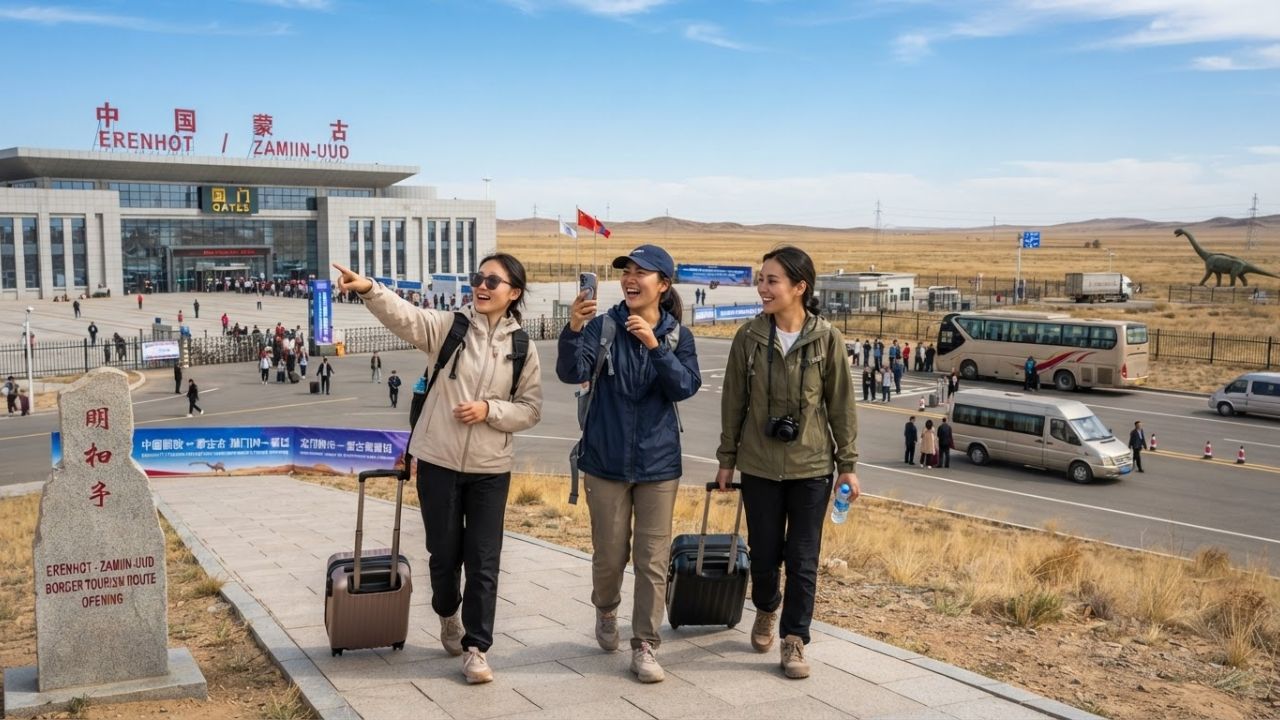
Image generated by AI
A new cross-border tourism corridor has opened between China and Mongolia, launching organized one-day and two-day tour itineraries that connect the border destinations of Ereen-Khoto and Zamiin-Uud.
Cross-Border Connectivity: Ereen-Khoto and Zamiin-Uud Linked
The first group of 108 travelers has completed the new cross-border route connecting Ereen-Khoto in China's Inner Mongolia Autonomous Region with Zamiin-Uud in Mongolia. Supported by policies linked to the Pilot Free Trade Zone and the Economic Cooperation Zone, this initiative introduces structured tours to simplify international travel across the Gobi border.
Ereen-Khoto, widely known as the "City of Dinosaurs" due to its rich paleontological fossil sites, offers travelers museum exhibitions and panoramic vistas from the State Gates observation area. Across the border, Zamiin-Uud showcases Mongolia's cultural heritage, railway history, and traditional evening markets, providing a distinct cultural contrast.
Simplified Customs and 24-Hour Port Operations
To support the growth of these short-distance tours, the Ereen-Khoto land port—the largest land port on the China-Mongolia border—has established 24-hour customs services. Travelers joining approved tour groups can cross the border using valid identification documents processed directly by registered travel agencies.
This simplified administrative process makes brief international excursions more accessible for regional travelers, reducing the preparation time usually required for cross-border trips. Short-distance international travel is growing in popularity as tourists seek authentic cultural experiences within compact, well-organized itineraries.
Economic Cooperation and Regional Development
The cross-border routes are designed to integrate the regional tourism economy, supported by the Zamiin-Uud Free Economic Zone. As visitor numbers grow, hotels, dining establishments, transport operators, and retail merchants on both sides of the border are experiencing increased demand.
The initiative encourages direct economic support for border communities by inviting tourists to purchase regional goods, such as traditional Mongolian cashmere. Beyond commercial benefits, the shared travel corridor promotes closer community connections and mutual understanding through exchange of local culinary and cultural traditions.
Sustainable Tourism and Desert Preservation
The Gobi desert is a highly sensitive ecological environment. Tourism operators are developing guidelines to ensure that travel groups minimize environmental impacts. By keeping tour groups on designated routes and using mass transport buses for border crossings, the project aims to reduce vehicle emissions and protect the fragile desert terrain.
Travelers are encouraged to buy crafts directly from cooperative makers in Zamiin-Uud, ensuring that tourism revenues support local livelihoods. The Inner Mongolia Autonomous Region Tourism Bureau and the Ministry of Environment and Tourism of Mongolia support these controlled routes as essential components of regional sustainable development.
Local Insider Travel Strategies
- Optimal Visit Windows: Plan your trip during the shoulder seasons of May to June, or September to October. These months offer moderate temperatures, avoiding both the freezing winter winds and the intense summer heat of the Gobi desert.
- Cultural Etiquette: In Mongolia, if you accidentally step on someone's foot, immediately shake their hand as a polite apology. In Inner Mongolia, when entering a yurt, always step in with your left foot first and avoid stepping on the wooden threshold.
- Culinary Specialties: Try buuz (traditional steamed mutton dumplings) or suutei tsai (salted milk tea) in Zamiin-Uud. In Ereen-Khoto, sample classic Mongolian hot pot or cumin-spiced mutton skewers.
- Hidden Gems: Visit the Dinosaur Geopark in Ereen-Khoto to view large-scale dinosaur replicas, or browse the local cashmere markets in Zamiin-Uud for high-quality, locally produced woolens.
Long-Term Outlook for China-Mongolia Travel
The establishment of the Ereen-Khoto–Zamiin-Uud corridor represents a long-term transition for border regions from mere transit points into active travel destinations. By coordinating border infrastructure, simplified customs, and cultural heritage promotion, both countries are establishing a resilient tourism corridor that will support economic cooperation and regional travel growth.
Related Travel Guides
Disclaimer
This article is for informational and educational purposes only. It does not constitute legal, financial, or professional advice. While we strive to provide accurate and up-to-date information, travel policies, regulations, and conditions change rapidly. Always verify information with official sources before making travel decisions. Nomad Lawyer makes no representations about the accuracy, reliability, completeness, or suitability of the information provided. Readers should consult qualified professionals for advice specific to their circumstances. The views expressed in this article are those of the author and do not necessarily reflect the views of Nomad Lawyer.
Raushan Kumar
Founder & Lead Developer
Full-stack developer with 11+ years of experience and a passionate traveller. Raushan built Nomad Lawyer from the ground up with a vision to create the best travel and law experience on the web.
Learn more about our team →