
China Enhances Chongqing Tourism Experience With New Thai Language Metro Support for Visitors
China Enhances Chongqing Tourism Experience With New Thai Language Metro Support for Visitors

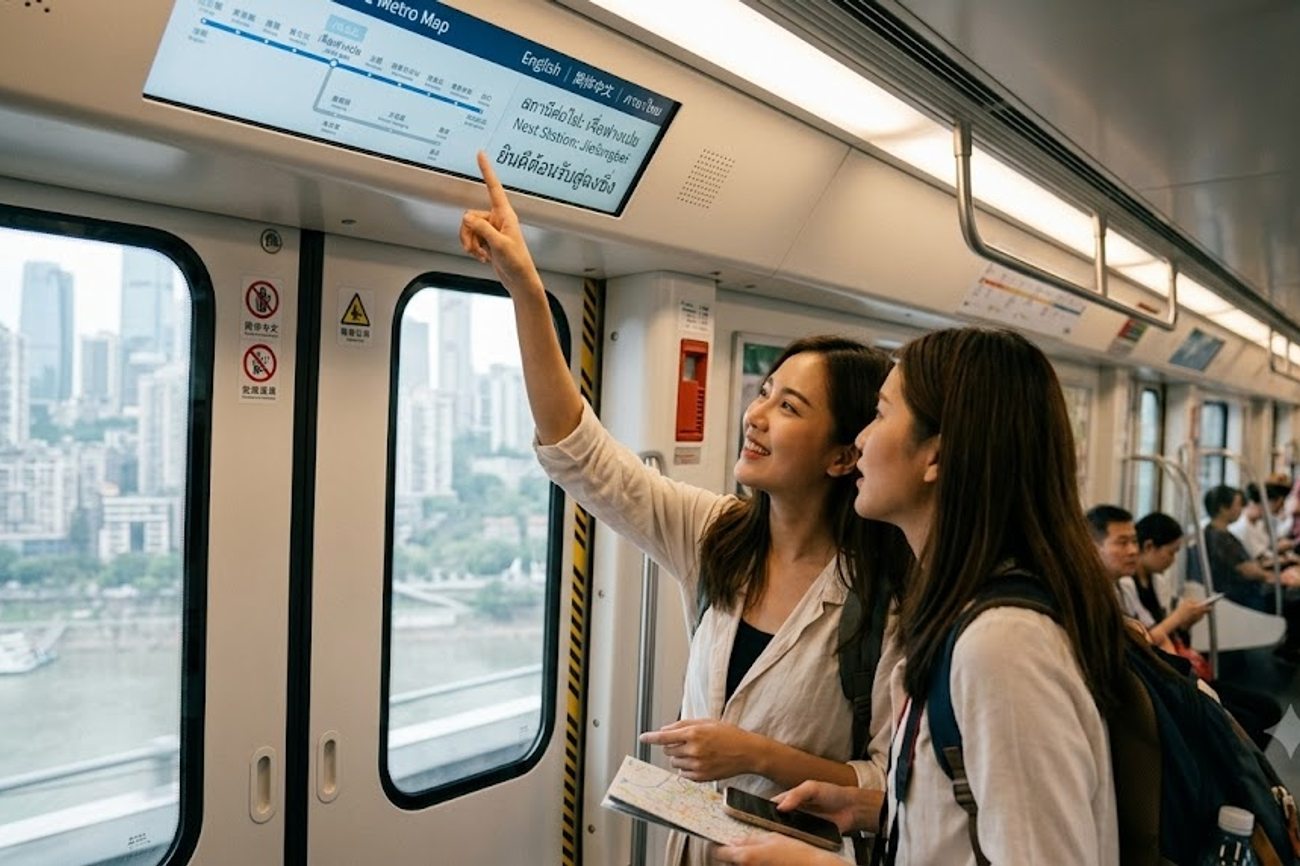
Image generated by AI
Chongqing's decision to integrate Thai-language announcements into its metro system marks a strategic shift in urban accessibility, coming at a time when Southeast Asian arrivals to China are seeing a volatile but upward trajectory. While the city already manages a complex network of 13 metro lines with bilingual Chinese and English support, the targeted addition of a third language for a specific nationality indicates a move toward "precision tourism" infrastructure. This is not merely a convenience update; it is a data-driven response to the shifting demographics of the Chinese inbound market, where Thailand has emerged as a primary growth engine for regional travel.
The Chongqing Transit Pivot in Numbers
The scale of Chongqing's infrastructure investment is designed to mitigate the "friction of travel" for a specific high-value demographic. The city is implementing Thai-language audio and visual announcements at selected high-traffic nodes, specifically targeting the window before the National Day holiday on October 1.
The initial deployment focuses on two critical transit hubs: Chaotianmen Station and Xiaoshizi Station. These are not random selections; they are primary gateways to the city's most visited commercial and cultural districts. To complement these audio updates, the city has already deployed multilingual translation hardware across 24 different metro stations. This creates a dual-layer support system—passive information (announcements) and active assistance (translation devices)—designed to reduce the reliance on guided tours and encourage independent exploration.
According to data from the World Travel & Tourism Council (WTTC), the recovery of Asian tourism is heavily dependent on intra-regional connectivity. By lowering the language barrier in one of China's most geographically complex cities—known for its multi-level urban design and mountain terrain—Chongqing is attempting to capture a larger share of the Thai outbound market, which has historically favored traditional hubs like Beijing or Shanghai.
Southeast Asian Market Integration Context
When comparing Chongqing's current strategy to historical norms, we see a transition from "General Internationalization" (Chinese/English) to "Market-Specific Localization." In previous years, Chinese cities focused on English as the sole lingua franca for foreigners. However, the current data suggests that for Southeast Asian travelers, English proficiency varies, and the psychological comfort of native-language navigation significantly increases the "dwell time" and spending within a city.
The following table illustrates the shift in Chongqing's transit accessibility framework:
| Metric | Previous Standard | New Implementation (Q4 2024) | Strategic Intent |
|---|---|---|---|
| Language Support | Bilingual (Chinese/English) | Trilingual (Chinese/English/Thai) | Market-specific penetration |
| Support Hardware | Standard Signage | Translation Devices at 24 Stations | Real-time problem solving |
| Targeted Nodes | General Network | High-Density Hubs (e.g., Chaotianmen) | Optimized visitor flow |
| Service Scope | Passive Information | Active Multilingual Assistance | Increased independent travel |
This move mirrors a broader regional trend. As noted in IATA's reports on passenger experience, the "last mile" of the journey—getting from the airport to the hotel via public transit—is where most international travelers experience the highest stress. By solving this in the metro, Chongqing is effectively expanding its "tourist-friendly" zone beyond the airport perimeter.
Practical Traveler Advisory and Strategic Insights
For Thai nationals and international travelers utilizing Chongqing as a hub, the data suggests a significant reduction in navigation errors. The city's geography is famously vertical, often leading to confusion regarding which level a traveler is on. The introduction of Thai-language guidance at Xiaoshizi and Chaotianmen stations means that the most complex transfer points are now the most supported.
If you are planning a visit to Chongqing in the final quarter of the year, consider the following actionable advice based on these infrastructure shifts:
- Prioritize Independent Exploration: With translation devices at 24 stations and Thai announcements in place, the necessity for expensive private guides is decreasing. Travelers can now navigate the 13-line network with higher confidence.
- Leverage Key Hubs: Use Chaotianmen and Xiaoshizi as your primary orientation points. Because these stations have the highest level of multilingual support, they serve as ideal "safe zones" for planning the next leg of a journey.
- Time Your Visit: The full rollout is timed for the October 1 National Day period. While this means higher crowds, it also means the infrastructure will be at its peak operational readiness.
Projection: The Blueprint for Tier-2 City Expansion
The Chongqing model is likely a pilot for other "New First-Tier" cities in China. As the central government seeks to diversify inbound tourism sources, we can expect a ripple effect across other municipalities. The trajectory suggests that we will move away from a one-size-fits-all English translation model toward a "weighted language" model, where the languages added to public transit reflect the actual arrival statistics of the previous fiscal year.
Based on current Statista trends regarding outbound travel from ASEAN countries, we can project that if Thai-language integration leads to a measurable increase in Thai visitor spending in Chongqing, similar updates for Vietnamese, Malaysian, or Indonesian languages will follow within the next 24 to 36 months. The goal is to transform the metro system from a simple transport utility into a customer-acquisition tool for the tourism board.
FAQ: Chongqing Transit Trends 2024
Will this lead to higher ticket prices for international tourists? No. These are infrastructure upgrades to the existing public service. Metro fares in Chongqing remain standardized regardless of the language support provided at the station.
Which stations are the most accessible for Thai speakers right now? The primary focus is on Chaotianmen Station and Xiaoshizi Station, though the city is expanding this list to other major transit hubs.
Are these translation devices available at every station? No. Currently, multilingual translation devices are installed at 24 specific stations. Travelers should look for designated assistance points at these locations.
Is English still the primary foreign language used in the metro? Yes. Thai is an addition to the existing Chinese and English framework, meaning trilingual support is now the standard at selected sites.
The shift from bilingual to trilingual transit is the first signal that Chongqing is no longer just a destination, but a precision-engineered tourism product.
Tags: Chongqing-Metro-Expansion-2024, Thai-Inbound-Tourism-China, ASEAN-Travel-Infrastructure, Chongqing-Transit-Data, Multilingual-Urban-Mobility
Related Travel Guides
- United Kingdom Aligns With Netherlands And More Destinations As New Tourist Taxes Increase Accommodation Charges Across England And Amsterdam
- Jordan Tourism Revenue Climbs Over Seventeen Percent as Travellers Discover Strong Growth and New Experiences Across the Kingdom
- United Kingdom British Airways Restores Dubai Flights as Travellers Gain More Winter Travel Choices From November
Disclaimer
This article is for informational and educational purposes only. It does not constitute legal, financial, or professional advice. While we strive to provide accurate and up-to-date information, travel policies, regulations, and conditions change rapidly. Always verify information with official sources before making travel decisions. Nomad Lawyer makes no representations about the accuracy, reliability, completeness, or suitability of the information provided. Readers should consult qualified professionals for advice specific to their circumstances. The views expressed in this article are those of the author and do not necessarily reflect the views of Nomad Lawyer.
Kunal K Choudhary
Co-Founder & Contributor
A passionate traveller and tech enthusiast. Kunal contributes to the vision and growth of Nomad Lawyer, bringing fresh perspectives and driving the community forward.
Learn more about our team →