
The Rise of Deep Tech Tourism: How AI and Robotics are Transforming Travel in Shanghai, Beijing, and Shenzhen
A paradigm shift is occurring in East Asia as travelers move beyond traditional sightseeing to engage with "living labor

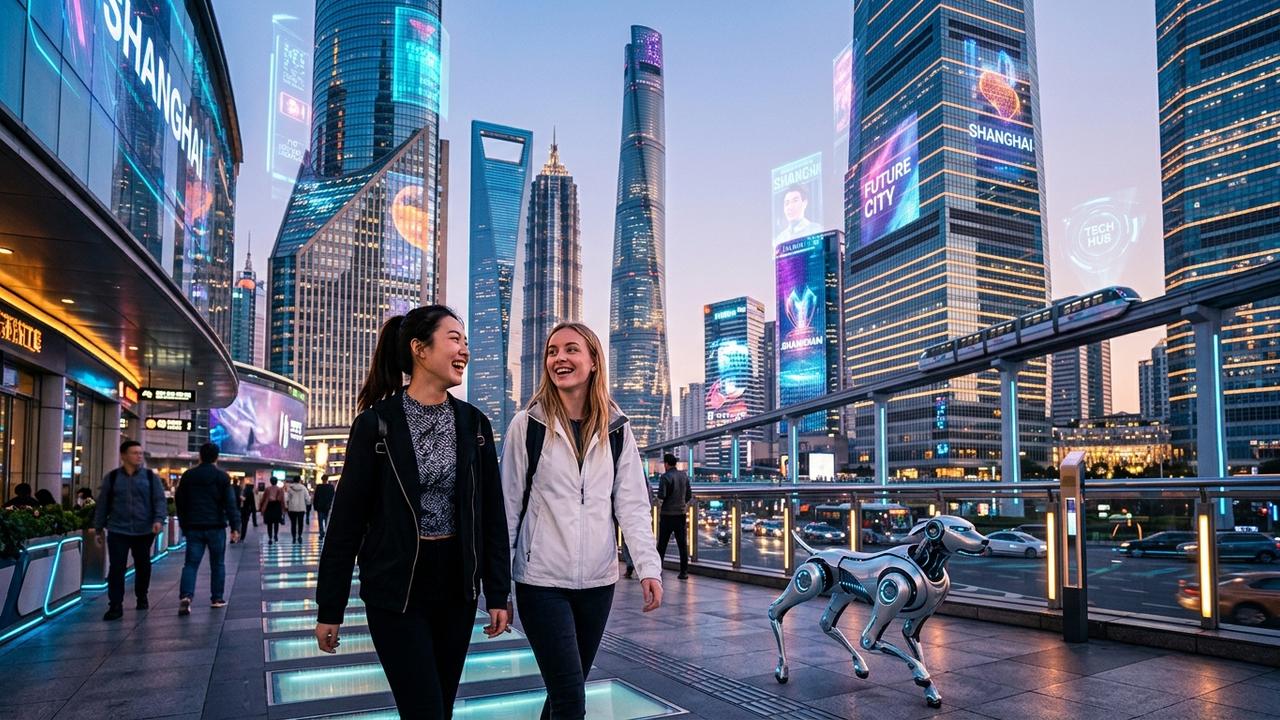
Image generated by AI
The New Era of Innovation-Driven Travel
A fundamental transformation is reshaping the global tourism landscape across China. The traditional appeal of ancient architecture and natural landscapes is being augmented—and in some cases replaced—by "deep tech tourism." In this emerging sector, the primary attractions are not monuments, but active ecosystems of artificial intelligence, autonomous systems, and humanoid robotics.
Major urban centers, specifically Shanghai, Beijing, and Shenzhen, have transitioned into global showcases for innovation. International visitors are now designing itineraries centered on robotics experience centers, AI-integrated retail hubs, and drone logistics networks, marking a shift from passive sightseeing to active participation in the future of engineering.
Shanghai: The Global Hub for Embodied AI
Shanghai has positioned itself as the epicenter of the robotics tourism explosion. The city's commercial districts have evolved into immersive corridors where laboratory-grade technology is accessible to the general public.
The Embodied Intelligence Revolution
The rise of embodied AI experience centers allows visitors to move beyond screens and interact with physical machines. These centers feature:
- Humanoid Interaction: Direct engagement with advanced humanoid robots.
- Quadruped Systems: Observations of robotic agility and balance.
- Real-time Responsiveness: Testing the latency and adaptability of machine learning in physical spaces.
The Cultural Fusion: The Panda Robotic Dog
A standout attraction in Shanghai is the biomimetic robotic dog featuring a giant panda exterior. By blending high-tech engineering (such as agile flips and environmental sensing) with national cultural symbolism, this attraction has become a viral sensation, driving significant digital engagement and attracting global tourists.
Beijing: Integrating Smart City Infrastructure
In Beijing, the focus of tech tourism is the seamless integration of AI into the urban fabric. The city is utilizing its infrastructure to create a network of "smart" experiences.
Autonomous Mobility and Heritage Access
Beijing is pioneering the use of technology to enhance accessibility. This includes the deployment of robotic exoskeleton-assisted mobility systems, which help visitors navigate physically demanding historical sites. Additionally, former industrial zones, such as repurposed steel complexes, have been converted into innovation hubs where autonomous transport is demonstrated in real-time.
Shenzhen: The Live Hardware Laboratory
While other cities may focus on exhibitions, Shenzhen offers "live" operational technology. As the world's hardware capital, the city functions as a real-world deployment zone for the latest in robotics.
Key highlights for visitors include:
- Aerial Logistics: Drone-based food delivery systems operating in public parks.
- Robotaxi Networks: Fully autonomous ride-hailing services in active city service.
- Automated Infrastructure: Robotic libraries and AI-driven public service platforms.
The Emergence of High-Value Tech Itineraries
A premium segment of "Deep Tech Tourism" has emerged, catering to high-net-worth individuals, researchers, and industry professionals. These curated experiences move beyond public attractions to offer:
- Private access to cutting-edge innovation hubs and AI labs.
- Guided walkthroughs of smart factory ecosystems.
- Direct consultations with leading technology firms and engineering students.
The Digital Feedback Loop
The growth of this sector is being accelerated by a powerful social media cycle. As travelers share videos of humanoid robots and autonomous cities, the content goes viral globally, which in turn spikes demand for innovation-focused trips. This turns China's urban infrastructure into a global marketing asset for its technological capabilities.
Innovation Tourism Framework
The following table outlines the primary components of the current tech tourism landscape in China's major hubs.
| Category | Experience Type | Tourist Interaction |
|---|---|---|
| Autonomous Mobility | Driverless transport zones | Riding in AI-controlled vehicles |
| Smart Parks | Tech demonstration areas | Observing robotics in operation |
| Industrial Reuse Zones | Innovation hubs | Exploring repurposed tech campuses |
| Assisted Heritage Access | Smart mobility tools | Enhanced access to cultural sites |
Key Takeaways
- Shift in Demand: Tourism is moving from historical observation to "deep tech" interaction.
- City Specialization: Shanghai leads in AI retail/robotics, Beijing in smart city integration, and Shenzhen in live hardware deployment.
- Economic Impact: A new high-value travel niche is forming around private innovation tours for investors and engineers.
- Cultural Synthesis: The blending of cultural icons (like the Panda) with robotics is driving viral global interest.
FAQ
What is "Deep Tech Tourism"? It is a form of travel focused on visiting and interacting with cutting-edge technological ecosystems, such as AI labs, robotics centers, and smart city infrastructure, rather than traditional tourist landmarks.
Which cities are the best for tech tourism in China? Shanghai (AI and humanoid robotics), Beijing (smart city infrastructure and autonomous mobility), and Shenzhen (drones and hardware innovation).
Are these robotic attractions just for show? No. Many of the experiences, particularly in Shenzhen and Beijing, involve operational technology—such as robotaxis and drone deliveries—that are functioning as part of the city's actual infrastructure.
Related Travel Guides
Disclaimer
This article is for informational and educational purposes only. It does not constitute legal, financial, or professional advice. While we strive to provide accurate and up-to-date information, travel policies, regulations, and conditions change rapidly. Always verify information with official sources before making travel decisions. Nomad Lawyer makes no representations about the accuracy, reliability, completeness, or suitability of the information provided. Readers should consult qualified professionals for advice specific to their circumstances. The views expressed in this article are those of the author and do not necessarily reflect the views of Nomad Lawyer.
Kunal K Choudhary
Co-Founder & Contributor
A passionate traveller and tech enthusiast. Kunal contributes to the vision and growth of Nomad Lawyer, bringing fresh perspectives and driving the community forward.
Learn more about our team →