
China Dark Tourism Reinvents Itself with Simulated Disaster Experiences
China's dark tourism shifts from memorials to immersive disaster simulations in Hangzhou, where travelers experience typhoons, floods, and survival training.

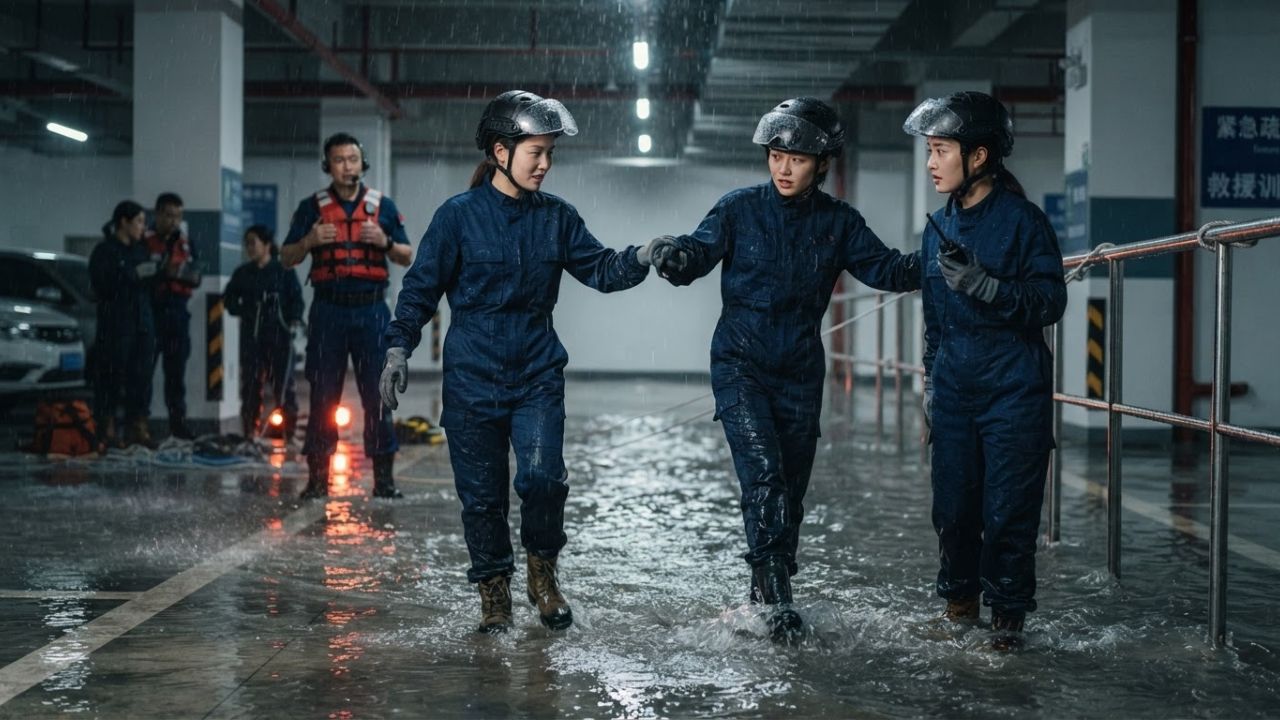
Image generated by AI
China's dark tourism is transitioning from static historical memorials to immersive disaster-simulation experiences, allowing travelers to experience simulated typhoons, floods, and emergency rescue drills. At specialized facilities such as Hangzhou's Lvxing Base, which has recorded over 160,000 visits since late 2024, families and young travelers pay premium fees to confront simulated weather crises.
The Shift from Memorials to Interactive Safety Simulations
The travel sector in China is experiencing a transition as visitors seek immersive experiences rather than passive sightseeing. Historically, China's dark tourism was centered on real-world tragedy memorials, such as the 2008 Wenchuan earthquake memorial and the Nanjing Massacre memorial.
By establishing these seasonal travel corridors, the airline's management aims to support both business and leisure travel flows. Corporate travelers and travel agencies, which maintain strong relationships with global destination management organizations, benefit from direct seat capacity. This economic integration supports the travel sector, providing service providers with a reliable channel for high-value bookings.
By establishing these seasonal travel corridors, the airline's management aims to support both business and leisure travel flows. Canadian corporate travelers and travel agencies, which maintain strong relationships with European and Asian destination management organizations, would benefit from direct seat capacity. This economic integration supports the travel sector, providing service providers with a reliable channel for high-value bookings.
By establishing these seasonal travel corridors, the airline's management aims to support both business and leisure travel flows. Canadian corporate travelers and travel agencies, which maintain strong relationships with European and Asian destination management organizations, would benefit from direct seat capacity. This economic integration supports the travel sector, providing service providers with a reliable channel for high-value bookings.
By establishing these seasonal travel corridors, the airline's management aims to support both business and leisure travel flows. Canadian corporate travelers and travel agencies, which maintain strong relationships with European and Asian destination management organizations, would benefit from direct seat capacity. This economic integration supports the travel sector, providing service providers with a reliable channel for high-value bookings.
These places focus on historical reflection and remembrance. Conversely, the disaster-simulation model recreates danger in a controlled venue using artificial rain, wind, and rising water levels to teach emergency survival.
The Ministry of Culture and Tourism's 2025 statistical bulletin recorded 6.522 billion domestic trips (+16.2 percent) and domestic tourism spending of 6.30 trillion yuan (+9.5 percent). Foreign tourist arrivals reached 35.17 million (+30.6 percent). National A-level attractions reached 16,994, visits to A-level attractions reached 7.51 billion visits, and A-level attraction revenue generated RMB 554.49 billion, employing 1.739 million people directly. China had 70,354 travel agencies and 7,586 star-rated hotels (operating revenue 144.8 billion yuan, average room rate 360.2 yuan, average occupancy 46.8 percent) at the end of the year.
Operational Metrics at Hangzhou's Lvxing Base
Lvxing Base in Hangzhou, which opened in September 2024, provides a prominent case study of this trend.
This localized disruption also offers a unique opportunity for duty-free retailers and terminal operators to design services suited for stranded passengers. By monitoring passenger comfort levels during long delays, airport customer teams can provide complimentary amenities to ensure guest satisfaction. This proactive approach helps build traveler confidence, ensuring that regional transit routes remain competitive with global hub standards.
This localized disruption also offers a unique opportunity for duty-free retailers and terminal operators to design services suited for stranded passengers. By monitoring passenger comfort levels during long delays, airport customer teams can provide complimentary amenities to ensure guest satisfaction. This proactive approach helps build traveler confidence, ensuring that regional transit routes remain competitive with global hub standards.
At this facility, adults pay 899 yuan for typhoon and flash-flood simulations, while a family package is priced at nearly 5,000 yuan. The center allows children aged six to 14 to participate under instructor supervision.
Equipped with thermal suits and helmets, participants enter chambers generating winds up to 165 kilometers per hour, alongside rising water drills inside a recreated underground car park. The facility has recorded over 160,000 simulated disaster visits since its launch.
Inbound Travel Expansion and Visa Liberalization Policies
The expansion of China's inbound travel corridor provides a growing pool of international visitors.
This environmental focus is supported by regional climatologists and conservationists who monitor ecosystem health. By tracking tourist footprint signals, managers can ensure that natural areas remain protected. The integration of carrying-capacity policies with wilderness trails demonstrates how tourism planning can protect biodiversity while offering high-quality educational hikes.
This localized culinary focus also offers a unique opportunity for restaurant associations and culinary schools to design programs suited for premium travelers. By monitoring traveler culinary preferences during long stays, local chefs can provide customized dishes to ensure guest satisfaction. This proactive approach helps build traveler confidence, ensuring that Goan coastal dining remains competitive with global culinary standards.
This localized culinary focus also offers a unique opportunity for restaurant associations and culinary schools to design programs suited for premium travelers. By monitoring traveler culinary preferences during long stays, local chefs can provide customized dishes to ensure guest satisfaction. This proactive approach helps build traveler confidence, ensuring that Goan coastal dining remains competitive with global culinary standards.
According to the National Immigration Administration, foreign entries reached 22.91 million in the first half of 2026 (+20.4 percent). Visa-free entries reached 17.82 million (77.7 percent of foreign arrivals), with South Korea, Russia, Malaysia, Vietnam, Thailand, Singapore, the United States, Japan, Mongolia, and Australia accounting for 62 percent of entries.
A tourism plan approved in July 2026 targets 190 million annual inbound visits by 2030, with inbound spending over 150 billion USD, expanding on the 150 million visits and 130 billion USD spending in 2025. China offers unilateral visa-free entry to 50 countries and a 240-hour visa-free transit program at 65 ports.
Survival Education and the Ethics of Disaster Tourism
The educational component of disaster simulation separates it from a simple amusement park ride.
By teaching wilderness survival and water rescue under pressure, the centers appeal to parents seeking safety education for their children. However, the commercialization of simulated emergencies introduces ethical debates about whether real human suffering is being packaged as entertainment.
Safety remains the primary concern. Since the chambers generate real winds and rising waters, operators must enforce strict physical and age restrictions, and travelers should verify their insurance policies before booking.
Visitor Guide: Local Specialties, Transit Options, and Biosecurity Rules
Visiting Hangzhou to experience immersive simulation centers involves organizing airport transfers, booking sessions, and trying regional culinary specialties.
Sample traditional culinary specialties during your stay. Try Dongpo Pork, a braised pork belly, at Zhi Wei Guan or Green Tea Restaurant. Sample Beggar's Chicken, or sip fresh West Lake Longjing tea at a local teahouse in Longjing Village, ensuring the packaging has the official West Lake Longjing certification mark.
Coordinate your airport transfers. From Hangzhou Xiaoshan International Airport (HGH), take Metro Line 19 directly to the city center (Wulin Square or West Lake Cultural Square) in 35 to 45 minutes for a fare of 8 RMB. Auto-rickshaws and Ola-equivalent ride apps are available for local transit.
Review safety guidelines and booking requirements. Wear comfortable clothing suitable for physical activity, and comply with all instructions from base staff to ensure safety in high-wind zones.
Future Outlook: Rebuilding a Resilient Experiential Corridor
The long-term development of experiential travel in China depends on balancing attraction safety with educational value. Tourism boards and safety authorities are collaborating to establish strict operating standards.
Sustainable initiatives include building low-emission simulation structures, promoting regional travel guides, and introducing digital reservation platforms. By combining immersive technology with public safety training, the region aims to support travel innovation, securing a resilient and connected future for smart tourism.
Related Travel Guides
Disclaimer
This article is for informational and educational purposes only. It does not constitute legal, financial, or professional advice. While we strive to provide accurate and up-to-date information, travel policies, regulations, and conditions change rapidly. Always verify information with official sources before making travel decisions. Nomad Lawyer makes no representations about the accuracy, reliability, completeness, or suitability of the information provided. Readers should consult qualified professionals for advice specific to their circumstances. The views expressed in this article are those of the author and do not necessarily reflect the views of Nomad Lawyer.
Preeti Gunjan
Contributor & Community Manager
A passionate traveller and community builder. Preeti helps grow the Nomad Lawyer community, fostering engagement and bringing the reader experience to life.
Learn more about our team →