
Travel Chaos Devastates China as China Eastern, Air China, and Hainan Airlines Trigger Over 100 Flight Cancellations Across Beijing, Shanghai, and Guangzhou: Latest Airline News
A highly disruptive operational bottleneck violently strands passengers across China as major domestic and international carriers suffer severe cascading delays and sudden groundings at five mega-hubs.

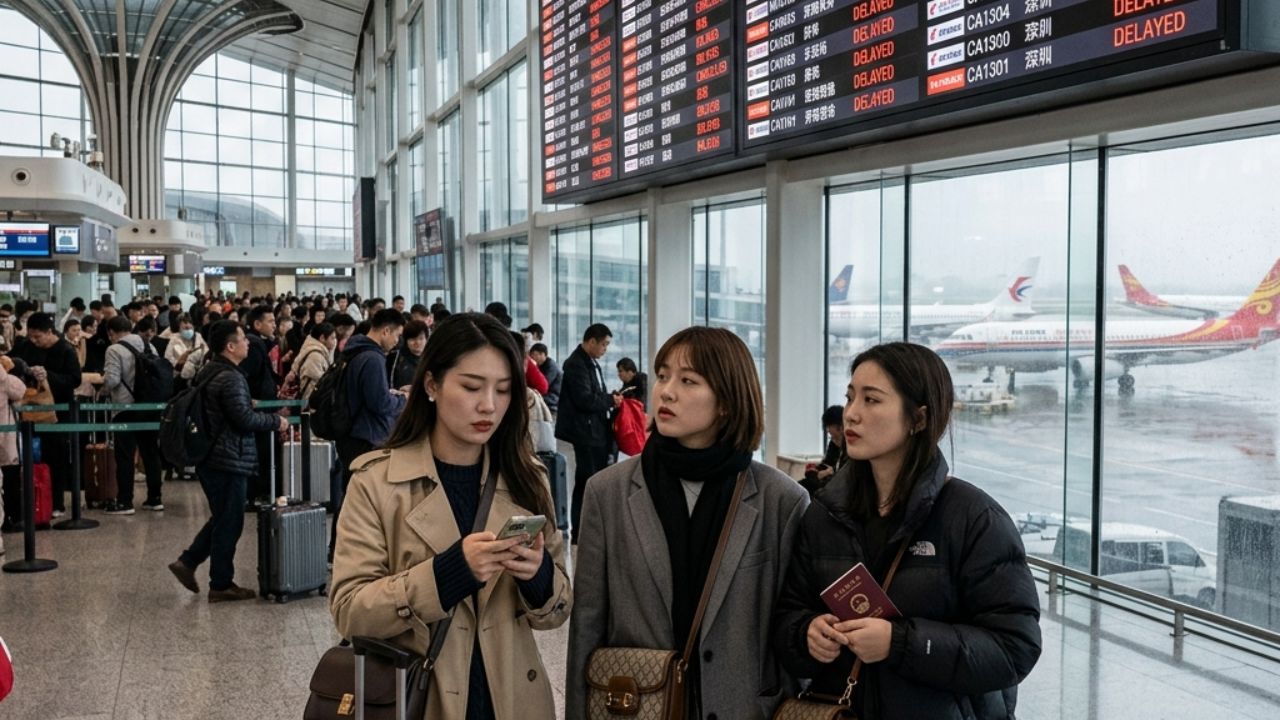
Image generated by AI
A Sudden Logistical Bottleneck Across the Asian Aviation Network
While the broader global passenger network frequently battles unpredictable localized weather events and standard transcontinental congestion, a highly disruptive wave of operational friction is currently severely straining operations across the entire Asian aviation network. Delivering highly urgent, breaking airline news, verified flight data confirms that multiple prominent aviation mega-hubs spanning China succumbed to unexpected and highly frustrating scheduling bottlenecks on May 31, 2026. While desperate travelers attempt to navigate sudden, terrifying airport disruptions, these exclusive aviation updates reveal that major mainline and regional carriers—including China Eastern, Air China, Hainan Airlines, and Shanghai Airlines—were violently forced into aggressive ground holds, resulting in severe rolling delays and over 100 outright flight cancellations. By aggressively stalling critical domestic departures and inter-city trunk routes, this localized failure has triggered uncontrollable, rolling travel chaos, leaving thousands of passengers entirely stranded and completely severing vital routes bound for Guangzhou, Shenzhen, Shanghai, Wuhan, and Beijing.
Expanded Overview: The Scale of the Chinese Gridlock
The sudden execution of these mass cancellations serves as an undeniable example of how rapidly carrier-specific operational hurdles can completely dismantle a regional aviation hub's highly optimized schedule. Historically, these five mega-hubs operate as highly efficient, economically vital gateways linking massive Chinese municipal centers with critical global connections.
However, the sheer impact of today's disruption has completely dismantled that reliability. Passengers face immense frustration as massive departure boards turn blood red across the country. Meanwhile, airlines are working frantically to rebook panicked passengers onto alternative routes. The massive ripple effect is actively creating chaos well beyond these central terminal gates. Ticket counters are dealing with absolutely unprecedented queues, completely overwhelming the physical capacity of the terminals. Ultimately, exhausted ground crews are violently struggling to manage the backlog of delayed aircraft. If you are flying through these major hubs today, expect incredibly extended wait times.
Section-Wise Breakdown of the Hub Disruptions
Guangzhou Baiyun International Airport
Guangzhou bore the absolute brunt of the southern regional travel chaos, recording a highly severe 15% drop in total scheduled departures. China Southern Airlines absorbed a massive 86 rolling delays at this hub, while China Eastern executed 15 outright cancellations.
| Airline | Cancelled (Count) | Delayed (Count) |
|---|---|---|
| China Eastern | 15 | 31 |
| Air China | 7 | 22 |
| Hainan Airlines | 4 | 4 |
| China Southern Airlines | 2 | 86 |
Shenzhen Bao’an International Airport
Right alongside Guangzhou, Shenzhen Bao’an also recorded a sharp 15% cancellation rate out of its total daily scheduling. Shenzhen Airlines violently struggled at its home hub, pulling 12 flights entirely while delaying 37 others.
| Airline | Cancelled (Count) | Delayed (Count) |
|---|---|---|
| Shenzhen Airlines | 12 | 37 |
| China Eastern | 8 | 14 |
| Air China | 7 | 9 |
| Hainan Airlines | 4 | 14 |
| Shanghai Airlines | 1 | 0 |
| Juneyao Airlines | 1 | 1 |
Shanghai Pudong International Airport
Operations at China's massive financial gateway were severely choked by a wide distribution of carrier failures. China Eastern logged 3 absolute cancellations and 36 massive rolling delays, heavily stalling transpacific and domestic connections.
| Airline | Cancelled (Count) | Delayed (Count) |
|---|---|---|
| China Eastern | 3 | 36 |
| Shenzhen Airlines | 3 | 6 |
| Hainan Airlines | 2 | 3 |
| Juneyao Airlines | 2 | 10 |
| Air China | 2 | 9 |
| Shanghai Airlines | 2 | 16 |
| China United Airlines | 1 | 0 |
Wuhan Tianhe International Airport
Wuhan suffered an incredibly concentrated wave of cancellations specifically targeting China Eastern. The carrier was violently forced to execute 21 outright flight cancellations at this facility alone, absolutely devastating regional connectivity.
| Airline | Cancelled (Count) | Delayed (Count) |
|---|---|---|
| China Eastern | 21 | 10 |
| Air China | 2 | 4 |
| Kunming Airlines | 2 | 0 |
Beijing Capital International Airport
The national capital witnessed highly frustrating scheduling friction. Hainan Airlines absorbed the hardest hit, logging 11 absolute cancellations and 13 massive rolling delays. Air China followed closely behind with 5 cancellations and a staggering 31 delays.
| Airline | Cancelled (Count) | Delayed (Count) |
|---|---|---|
| Hainan Airlines | 11 | 13 |
| Air China | 5 | 31 |
| China Eastern | 2 | 2 |
Global Industry Analysis: A Synchronized Aviation Logjam
From a macroeconomic and industry operations perspective, the localized flight disruptions across China highlight a terrifyingly synchronized global aviation logjam. A global look at the flight data shows severe scheduling challenges hitting major transit networks across several continents simultaneously.
Leading the global surge in operational issues, Boston Logan International Airport (BOS) in the United States recorded a terrifying 32% cancellation rate with 5% of its flights facing delays. Europe and Southeast Asia followed closely, with Munich International Airport (MUC) logging 19% cancellations and Jakarta-Soekarno-Hatta International Airport (CGK) suffering an 18% cancellation rate. European major hubs were similarly choked, as Frankfurt International Airport (FRA) noted an 11% flight suspension rate, while smaller American destinations like Nantucket Memorial Airport (ACK) experienced a highly concentrated 11% cancellation rate. For travelers and logistics managers alike, this synchronized disruption underscores the ongoing volatility of modern air travel, proving that major disruptions in China coincide with a highly vulnerable global system.
Passenger Impact: Extended Terminal Waits and Rebooking
For the modern domestic commuter, the passenger impact of these massive, sudden disruptions across China is physically exhausting. Flight cancellations can be incredibly frustrating, but airport officials urge passengers to take immediate, proactive steps. Because these mega-hubs handle immense daily traffic, disgruntled travelers face incredibly lengthy queues inside massive terminals while gate agents scramble to rebook missed connections.
Stranded travelers must immediately reach out to the airline’s customer service either in person at the airport or over the phone. Utilizing official digital communication channels provided by China Eastern, Air China, or Hainan Airlines is the absolute fastest way to secure emergency rebooking options. For those navigating international corridors, aggressively monitoring your airline's digital app is absolutely crucial to bypassing the overwhelming physical lines at the service desks.
Conclusion: A Highly Volatile Recovery Phase for Chinese Carriers
The sudden, highly publicized reporting of over 100 outright cancellations and massive severe delays across Guangzhou, Shenzhen, Shanghai, Wuhan, and Beijing is a textbook example of how rapidly localized operational constraints can devolve into terminal gridlock. By completely severing critical domestic connections and violently stalling international trunk routes, the disruption has proven that domestic scheduling architectures remain highly vulnerable to sudden friction. For now, the focus entirely shifts toward operational recovery as China Eastern and Air China work aggressively to clear the massive backlog and stabilize their regional networks.
Key Takeaways
- Massive Network Gridlock: The Chinese aviation network suffered a highly concentrated wave of over 100 absolute flight cancellations across five mega-hubs.
- Guangzhou and Shenzhen Paralyzed: Both southern hubs suffered the worst total disruptions, logging severe 15% cancellation rates across their entire daily schedules.
- China Eastern Devastated: Mainline operator China Eastern absorbed incredibly severe hits, including 21 absolute cancellations concentrated at Wuhan Tianhe.
- Global Ripple Effects: Massive simultaneous cancellation rates hit Boston (32%), Munich (19%), and Jakarta (18%), highlighting a synchronized global breakdown.
- Passenger Chaos: Stranded travelers are heavily urged to utilize airline mobile apps for instant rebooking and to avoid the completely unprecedented queues forming at ticket counters.
Disclaimer: The specific flight cancellation counts, delay percentages, and destination impacts presented in this report are based on verified flight tracking data regarding operations across China on May 31, 2026. Official causes for this operational breakdown, subsequent network recovery timelines, and passenger compensation procedures are highly volatile and subject to continuous, real-time update. Affected passengers are urgently advised to monitor their specific booking status directly via their airline's official portal.
Disclaimer
This article is for informational and educational purposes only. It does not constitute legal, financial, or professional advice. While we strive to provide accurate and up-to-date information, travel policies, regulations, and conditions change rapidly. Always verify information with official sources before making travel decisions. Nomad Lawyer makes no representations about the accuracy, reliability, completeness, or suitability of the information provided. Readers should consult qualified professionals for advice specific to their circumstances. The views expressed in this article are those of the author and do not necessarily reflect the views of Nomad Lawyer.
Kunal K Choudhary
Co-Founder & Contributor
A passionate traveller and tech enthusiast. Kunal contributes to the vision and growth of Nomad Lawyer, bringing fresh perspectives and driving the community forward.
Learn more about our team →