
Chile Joins Greece, Thailand and More as Official Tourism Apps Bring AI, Geolocation and Smarter Trip Planning to Travellers: All You Need to Know
Chile Joins Greece, Thailand and More as Official Tourism Apps Bring AI, Geolocation and Smarter Trip Planning to Travellers: All You Need to Know

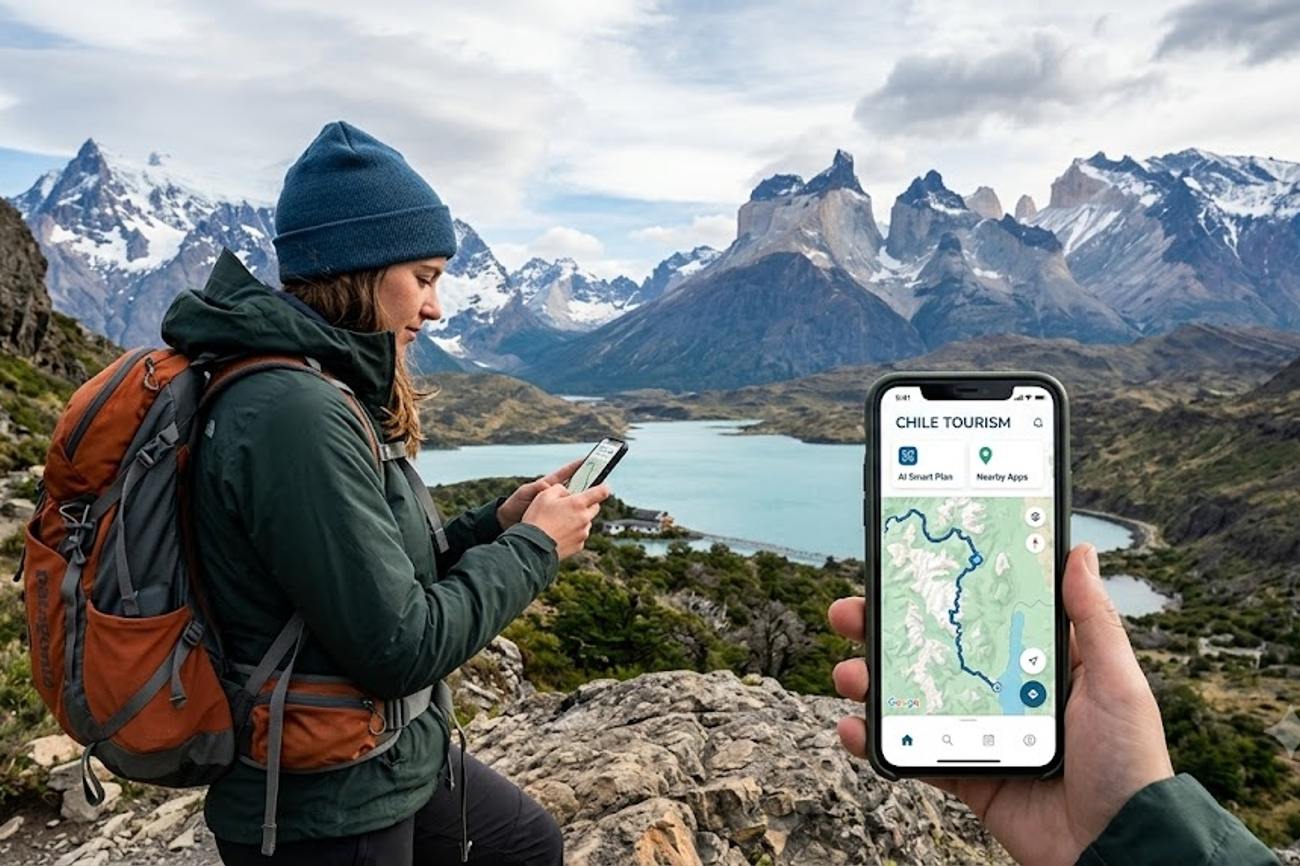
Image generated by AI
31 different languages are supported by the mAiGreece platform, signaling a shift toward hyper-accessible, AI-driven national tourism infrastructures. This linguistic breadth is part of a larger global trend where sovereign states are moving away from static PDF guides and toward real-time, geolocation-aware digital companions. From the recent September 2026 rollout of the Chile Travel App to the 2024 launch of Greece's AI system, governments are now competing to reduce "travel friction" by integrating emergency services, transit data, and personalized itineraries into a single official interface.
The Shift Toward Sovereign Digital Concierges
For decades, travelers relied on third-party aggregators or fragmented local websites to navigate foreign cities. However, a new regulatory and technological push is seeing national tourism boards reclaim the visitor experience. The primary driver is the integration of Artificial Intelligence (AI) and Global Positioning System (GPS) data to provide "contextual assistance."
In Chile, the Subsecretaría de Turismo has pivoted toward a model that blends leisure with safety. By launching the Chile Travel App in September 2026, the state has integrated official visitor data with immediate access to the Carabineros, firefighters, and ambulance services. This transformation converts a tourism app from a marketing tool into a piece of critical safety infrastructure.
Similarly, the Greek government's mAiGreece, launched June 10, 2024, serves as a blueprint for this evolution. By linking the app directly to the 112 emergency system, Greece has created a mechanism where a traveler's precise geographic position can be shared with rescue services instantly. This move indicates that national tourism strategies are now prioritizing risk management as much as destination promotion.
Comparative Analysis of National Digital Ecosystems
The deployment of these tools varies by the specific logistical needs of the destination. While some focus on safety, others prioritize the commercial "spending" phase of the journey or the logistical hurdle of urban transit.
| Country | Official Application | Primary Authority | Core Technical Capability | Launch/Update Date |
|---|---|---|---|---|
| Chile | Chile Travel App | SERNATUR | AI + Metro Integration + Emergency | September 2026 |
| Greece | mAiGreece | Ministry of Tourism | 31 Languages + 112 Emergency Link | June 10, 2024 |
| Thailand | Amazing Thailand | Tourism Authority of Thailand | AI-Driven Spending & Planning | March 15, 2026 |
| South Korea | VISITKOREA | Korea Tourism Organization | Long-term Evolutionary Planner | Updated 2026 |
| Philippines | Travel PH | DOT / Tourism Promotions Board | Personalized Journey Mapping | October 2023 |
| Malta | VisitMalta+ | Malta Tourism Authority | Offline Maps + Ticketing | Active |
| Qatar | Visit Qatar | Qatar Tourism | Qatar Pass + Event Integration | Active |
| Singapore | Visit Singapore | Singapore Tourism Board | Location-Based Discovery | Active |
The South Korean model, managed by the Korea Tourism Organization, represents the longest trajectory of development in this group, having provided digital information since 2011. Its evolution—with major expansions in 2019 and 2023, and further privacy updates in 2026—shows that the "all-in-one" app is not a sudden trend but a decade-long migration toward data-driven tourism.
Expert Analysis: The Geopolitics of the "Official App"
For the modern nomad or high-frequency traveler, the proliferation of official state apps creates a significant shift in how data is collected and how destinations are monetized. When a traveler uses the Amazing Thailand App (updated March 15, 2026), they are not just receiving AI suggestions; they are feeding high-resolution behavioral data directly to the Tourism Authority of Thailand.
The direct consequence for the traveler is a reduction in "search fatigue." Instead of toggling between Google Maps, TripAdvisor, and local transit apps, the integration of Metro lines in the Chile Travel App or ticketing in VisitMalta+ streamlines the physical movement through a city. However, the underlying business logic is "ecosystem lock-in." By providing the Qatar Pass within the Visit Qatar App, the state ensures that visitor spending remains within a curated, official network of partners.
Furthermore, the emphasis on offline functionality in Malta’s VisitMalta+ addresses a critical legal and logistical pain point: connectivity. For travelers without local SIM cards, an official app that caches maps and transport data reduces the reliance on expensive roaming or unstable public Wi-Fi, effectively lowering the barrier to entry for the destination.
The most critical shift, however, is the "Emergency Integration" seen in Greece and Chile. By merging tourism with the 112 system or Carabineros access, these nations are reducing the liability and risk associated with international tourism. For the traveler, this means a faster response time during a crisis; for the state, it means better tracking of tourist densities and incident hotspots in real-time.
Key Takeaways
- Safety Integration: Official apps in Greece and Chile now function as emergency beacons, linking users directly to national rescue services (112 and Carabineros) via GPS.
- Linguistic Accessibility: The mAiGreece platform has set a high bar for inclusivity, offering support in 31 different languages to minimize communication barriers.
- Transit Convergence: Modern apps, such as those in Chile and Malta, are merging destination discovery with actual transport logistics, including Metro references and ticket booking.
- Data-Driven Planning: Thailand and South Korea are utilizing AI to move beyond static lists, offering personalized itineraries based on user behavior and real-time event data.
- Connectivity Solutions: The move toward offline access (as seen in Malta) acknowledges the logistical reality of international data roaming constraints.
FAQ: National Tourism Apps 2026
Do I need a local SIM card to use these official tourism apps? Not necessarily. While AI and GPS features require data, apps like VisitMalta+ offer offline capabilities for maps and basic information, allowing you to navigate without a constant internet connection.
Are official government apps safer than third-party travel apps? Generally, yes, regarding data accuracy and emergency services. Official apps are linked directly to government bodies like SERNATUR or the Ministry of Tourism, ensuring that emergency numbers and transit data are current.
Can these apps help me with visa or entry requirements? While these specific apps focus on "in-destination" experiences—such as the Visit Qatar App or Travel PH—they often provide links to official government portals for legal and entry documentation.
How do the AI assistants in these apps differ from ChatGPT? Unlike general AI, these assistants are trained on official national databases. For example, the Amazing Thailand App provides curated, verified experiences and official offers rather than general web-scraped data.
The era of the printed guidebook is officially dead; the state is now your concierge.
Tags: SERNATUR, mAiGreece, Amazing Thailand App, VISITKOREA, Travel PH, VisitMalta+
Related Travel Guides
- Iceland Unites Poland and more as Gdansk Flights Open Exciting New Routes for Global Tourists
- Managua Strengthens Tourism Workforce as Savoury Pastry Workshop Brings Culinary Skills Training from September 23: What You Need to Know
- Freiburg in Germany Leads Europe’s Green Travel Movement With Smart Sustainable Tourism: All You Need to Know
Disclaimer
This article is for informational and educational purposes only. It does not constitute legal, financial, or professional advice. While we strive to provide accurate and up-to-date information, travel policies, regulations, and conditions change rapidly. Always verify information with official sources before making travel decisions. Nomad Lawyer makes no representations about the accuracy, reliability, completeness, or suitability of the information provided. Readers should consult qualified professionals for advice specific to their circumstances. The views expressed in this article are those of the author and do not necessarily reflect the views of Nomad Lawyer.
Kunal K Choudhary
Co-Founder & Contributor
A passionate traveller and tech enthusiast. Kunal contributes to the vision and growth of Nomad Lawyer, bringing fresh perspectives and driving the community forward.
Learn more about our team →