
Stargazing and Coastal Swells: How AdventureWEEK Coquimbo Is Redefining Chilean Travel in 2026

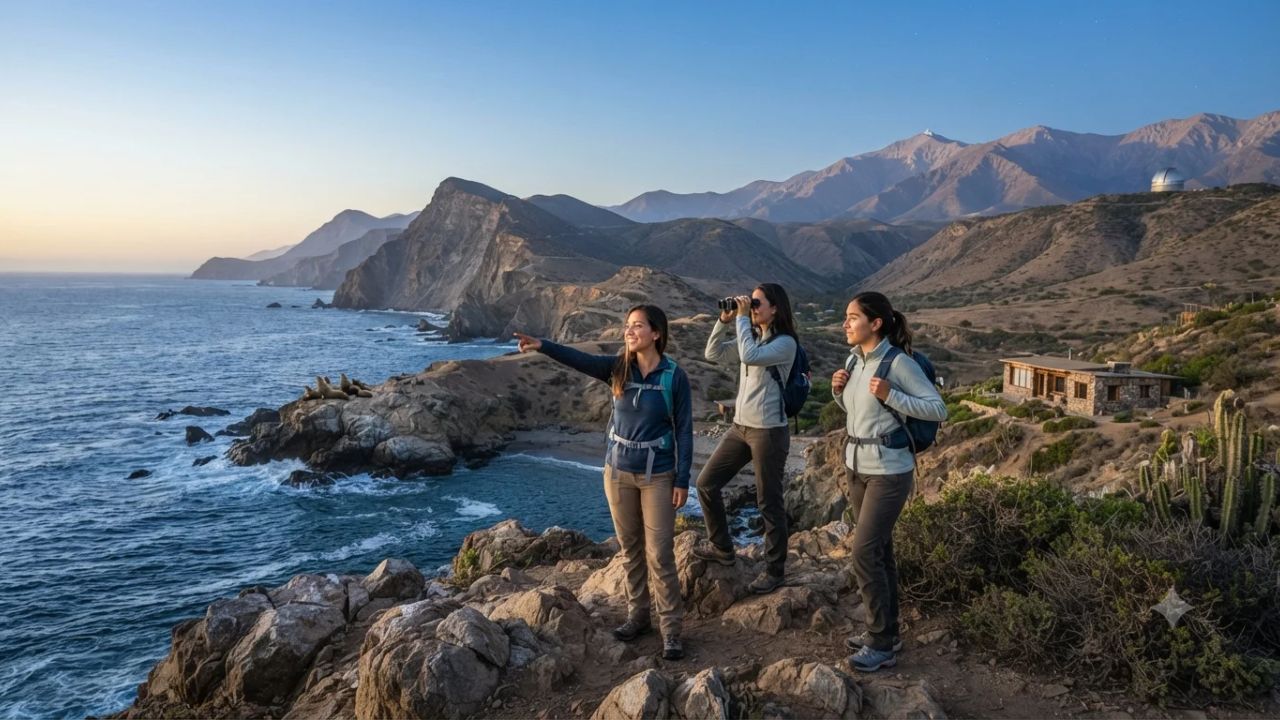
While international travelers often view Chile through the binary lens of Patagonian glaciers or the high Atacama salt flats, the central Coquimbo Region is stepping onto the global adventure stage as the Adventure Travel Trade Association gathers 13 elite hosted buyers and two working journalists for AdventureWEEK Coquimbo from 7 to 13 December 2026. Following the closure of global applications on 7 September, ATTA and regional government partners are finalizing selections across seven core outbound markets—the United States, the United Kingdom, Germany, France, Spain, Brazil, and Argentina—to showcase a region where Pacific marine reserves meet the world’s clearest astronomical night skies.
Developed in direct partnership with Sernatur (Servicio Nacional de Turismo) and the Regional Government of Coquimbo, the intensive experiential showcase bypasses passive trade show booths. Instead, international itinerary designers will kayak alongside Humboldt current sea lion colonies in the morning, taste artisan Muscat grapes in sun-drenched valleys by afternoon, and peer through research-grade optical telescopes into deep nebulae after dark.
The AdventureWEEK Model: Connecting Global Buyers with Local Operators
The AdventureWEEK format operates on a proven market-activation mechanism: delegates first experience the region through multi-day experiential itineraries before sitting down for one-on-one commercial Marketplace sessions with local outfitters, family-run boutique stays, and indigenous community guides.
Following candidate reviews in October 2026, hosted delegates will embark on a curated exploration designed to convert firsthand regional knowledge into commercial tour products sold across Europe and the Americas.
| Operational Dimension | Event Specification & Timeline | Strategic Industry Objective |
|---|---|---|
| Event Timeline | 7–13 December 2026 (delegate commitment 6–13 Dec) | Timed for ideal early-summer weather and clear stargazing |
| Delegate Cohort | 13 hosted buyers + 2 international media delegates | Highly vetted decision-makers and working journalists |
| Target Source Markets | US, UK, Germany, France, Spain, Brazil, Argentina | Seven primary high-yield adventure travel outbound markets |
| Core Experience Pillars | Astrotourism, marine wildlife, pisco terroir, trekking | Multi-activity itineraries linking the Pacific to the Andes |
| B2B Component | Direct Marketplace business negotiations | Connects rural Chilean suppliers directly with global distributors |
| Organizing Partners | ATTA, Sernatur Región de Coquimbo, Regional Council | Integrates public conservation with private tourism enterprise |
By requiring detailed post-event feedback and monitoring commercial catalog inclusion, ATTA ensures that the event produces measurable bookings and sustainable economic growth across Coquimbo’s smaller municipalities.
What Sets Coquimbo Apart: The Star Capital of the Southern Hemisphere
Coquimbo occupies a privileged geographic sanctuary where the cold Pacific Ocean meets the arid foothills of the Andes, creating more than 300 cloudless nights per year and exceptionally low atmospheric moisture.
This unique climate has turned the Elqui Valley into the world’s foremost astronomical corridor, hosting iconic research complexes like Cerro Tololo Inter-American Observatory and the Gemini South Observatory. At public observatories such as Mamalluca and Pangue, amateur stargazers can view the Magellanic Clouds, Saturn’s rings, and distant star clusters with crystal clarity unattainable in light-polluted northern cities.
Beyond astronomy, the region is the birthplace of Chilean Pisco—an aromatic clear brandy distilled from sun-ripened Moscatel grapes cultivated in ancient terraced river valleys. Along the coast, the Humboldt Penguin National Reserve protects thriving colonies of Humboldt penguins, marine otters (chungungos), and bottle-nosed dolphins that can be observed via low-impact community boat tours.
Travelers can research verified dark-sky itineraries and certified local operators through the official Chile Travel portal.
Visitor Insider Tips: Timing, Stargazing, and Culinary Feasts
Navigating the Coquimbo Region like a seasoned local requires planning around lunar cycles and adopting regional dining customs:
- Schedule Around the New Moon Window: To experience the Elqui Valley’s legendary stargazing at its most dramatic, plan your trip during the new moon phase. A bright full moon washes out faint nebulae and the Milky Way's galactic core.
- Base Yourself in Vicuña or Pisco Elqui: Skip generic coastal beach hotels in La Serena and base yourself upvalley in Vicuña (the birthplace of Nobel laureate Gabriela Mistral) or the serene mountain village of Pisco Elqui. Both towns offer boutique adobe eco-lodges with private telescope decks and rooftop skylights.
- Savor Grilled Goat Cheese and Classic Pisco Sours: In rural villages across the Limarí and Elqui valleys, sample pan-fried Queso de Cabra (fresh artisan goat cheese drizzled with native chañar syrup), followed by a traditional Pisco Sour crafted with aged 40-degree Muscat pisco, fresh Pica lime juice, and powdered sugar.
- Rent a High-Clearance Vehicle for Mountain Passes: While the main CH-41 highway through the Elqui Valley is paved and well-maintained, reaching remote mountain trailheads in Alcohuaz or the high-altitude pass into Argentina requires a sturdy crossover or SUV with good ground clearance.
- Book Observatory Visits Well in Advance: Public evening observation tours at Observatorio Mamalluca and private boutique star-parties book out weeks ahead, particularly during peak summer months between December and February.
Cultural and Environmental Context: Protecting the Night Sky
Coquimbo’s emergence as a premier astrotourism destination has turned environmental light-pollution control into a vital civic mission. Municipal lighting ordinances across La Serena, Coquimbo, and Vicuña enforce strict low-pressure sodium streetlights and downward-shielded fixtures to protect the dark-sky baseline required by global scientific observatories.
Furthermore, community-led sustainable tourism initiatives in coastal fishing villages like Punta de Choros provide alternative livelihoods for maritime families. Local fishermen operate regulated eco-tours around the Humboldt Penguin Reserve under strict distance guidelines, preventing engine noise disturbance to nesting seabirds while earning sustainable income outside commercial fishing seasons.
By championing low-impact walking tours, renewable solar energy use across boutique valley haciendas, and direct partnerships with artisan pisco distillers, AdventureWEEK Coquimbo demonstrates how international adventure tourism can celebrate local culture while safeguarding fragile desert and marine ecosystems.
FAQ: Visiting Coquimbo and the Elqui Valley in 2026
What makes the Coquimbo Region famous for adventure and astrotourism?
Coquimbo boasts over 300 clear nights per year, international research observatories, world-class stargazing in the Elqui Valley, and rich marine biodiversity along the Pacific coast.
How do travelers reach Coquimbo from Santiago?
Domestic commercial flights from Santiago (SCL) land at La Serena Airport (LSC) in under an hour, or travelers can take a scenic five-hour drive north along the coastal Route 5 highway.
When is AdventureWEEK Coquimbo scheduled to take place?
The event will run from 7 to 13 December 2026, bringing 13 hosted international buyers and two media delegates to explore regional adventure itineraries.
Is stargazing possible year-round in the Elqui Valley?
Yes, stargazing tours operate throughout the year, with the southern hemisphere summer (December to March) offering warm, comfortable nighttime temperatures.
[Where the arid Andes touch celestial starlight and the cold Pacific rolls ashore, Coquimbo invites travelers to discover the infinite beauty of the southern sky.]
Related Travel Guides
The Complete Guide to Exploring the Elqui Valley: Observatories, Pisco, and Villages
Santiago to Atacama: The Ultimate Northern Chile Overland Road Trip
10 Best Stargazing Eco-Lodges and Dome Hotels in Chile, According to Reddit
Disclaimer
This article is for informational and educational purposes only. It does not constitute legal, financial, or professional advice. While we strive to provide accurate and up-to-date information, travel policies, regulations, and conditions change rapidly. Always verify information with official sources before making travel decisions. Nomad Lawyer makes no representations about the accuracy, reliability, completeness, or suitability of the information provided. Readers should consult qualified professionals for advice specific to their circumstances. The views expressed in this article are those of the author and do not necessarily reflect the views of Nomad Lawyer.
Raushan Kumar
Founder & Lead Developer
Full-stack developer with 11+ years of experience and a passionate traveller. Raushan built Nomad Lawyer from the ground up with a vision to create the best travel and law experience on the web.
Learn more about our team →