
Beyond the Golden Triangle: Vaupés and Guaviare Surge as Colombia's New Frontiers for Amazonian Ecotourism

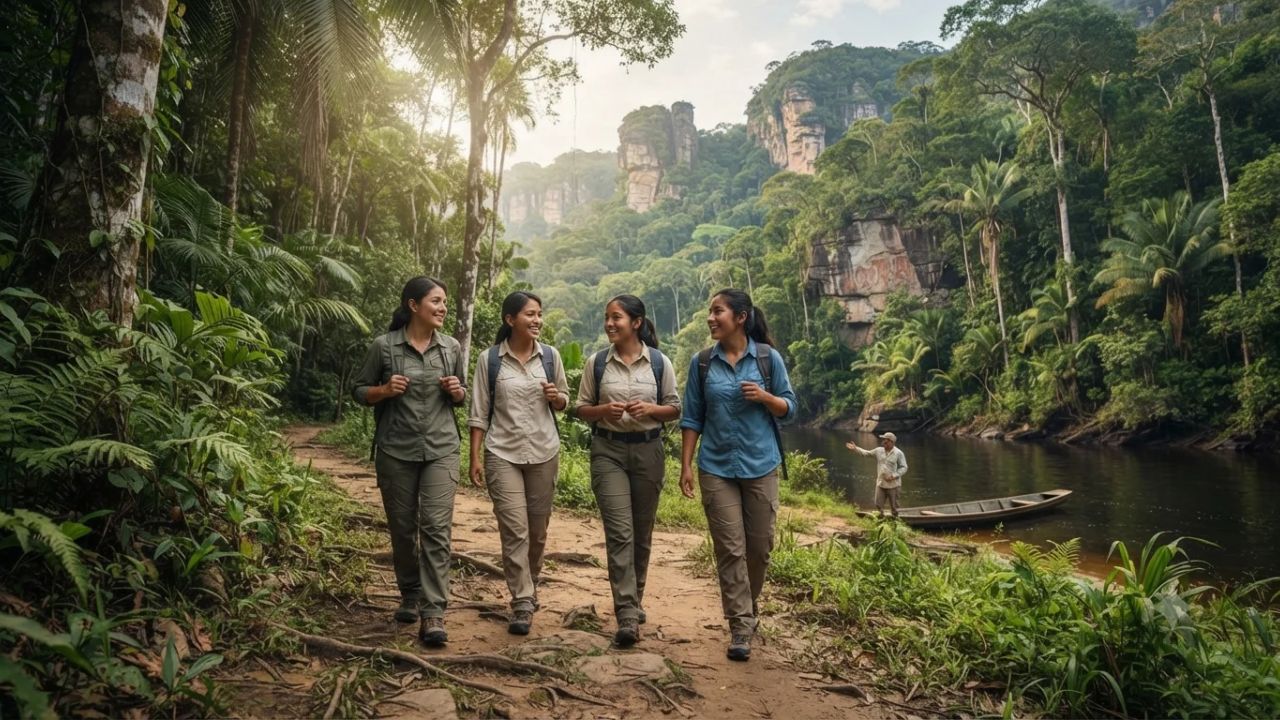
While nearly eighty percent of international arrivals to Colombia remain concentrated in Bogotá, Medellín, and Cartagena, the remote eastern Amazonian department of Vaupés posted an unprecedented 63.2 percent surge in foreign visitors during the first half of 2026. Official data compiled by Migración Colombia and released by the Colombian Association of Travel and Tourism Agencies (ANATO) reveals a dramatic shift in adventurous traveler preferences. Seeking ancient archaeological rock art, primary jungle waterways, and indigenous community stewardship, global explorers are venturing far beyond established urban corridors.
Following closely behind Vaupés, the transit zone department of Guaviare recorded a 24.7 percent increase in international arrivals compared to the first six months of 2025. Nearby Guainía rose 21.9 percent, while southwestern Nariño grew 21.7 percent. While major urban hubs still command the vast majority of raw visitor numbers—Bogotá logged approximately 869,000 foreign arrivals (35.8% national share), Medellín drew around 568,000 (24.8% share via Antioquia), Cartagena recorded 457,000 (18.9% share via Bolívar), and Cali registered 96,000—the momentum has unmistakably shifted toward the country's untamed eastern frontier.
The Rise of Colombia's Amazonian and Orinoco Wilderness Outposts
The double-digit surge across Colombia's eastern departments reflects an expanding international appetite for low-impact nature, biodiversity, and living cultural heritage. In Vaupés, where the municipal capital of Mitú serves as the sole aerial gateway, tourism operates without mass-market hotel chains or paved highway networks. Visitors navigate winding tributaries of the Vaupés and Apaporis river basins in wooden motorized canoes, accompanied by indigenous Cubeo, Tukano, and Desano hosts who manage community-led ecotourism lodges.
In Guaviare, accessible through the departmental capital of San José del Guaviare, the attraction centers on a meeting zone where the Amazon rainforest merges with the open savanna plains of the Llanos Orientales. Other departments recording notable growth during the first half of 2026 include Meta (+9.0%), Sucre (+8.9%), Tolima (+8.8%), San Andrés (+8.2%), Amazonas (+6.6%), and Risaralda (+4.9%).
Rather than replacing classic city circuits, these emerging territories offer immersive extensions. Promoted internationally by ProColombia, the experience invites travelers to spend three days appreciating colonial architecture and fine dining on the Caribbean coast before flying deep into the Amazonian river basin for multi-day jungle navigation, canopy birdwatching, and indigenous ethnobotanical walks.
What Makes Vaupés and Guaviare Different
The geographic and historical identity of Vaupés and Guaviare separates them completely from Andean city centers and Caribbean resort strips. Guaviare is home to the extraordinary Serranía de La Lindosa, a sandstone plateau adorned with tens of thousands of ochre rock paintings dating back more than 12,000 years. These archaeological friezes depict Ice Age megafauna—including giant ground sloths, mastodons, and native camelids—etched onto towering rock shelters that rival prehistoric sites documented by the UNESCO World Heritage Centre.
Beyond ancient rock art, Guaviare features geological oddities such as Ciudad de Piedra (the City of Stone), natural subterranean tunnels, and tranquil blackwater rivers where pink Amazon river dolphins swim among red aquatic plants (Macarenia clavigera) similar to those found in neighboring Caño Cristales.
Vaupés offers an even deeper immersion into untouched Amazonian biodiversity. Recognized by ornithologists worldwide as one of the ultimate birdwatching destinations, the region around Mitú provides habitats for rare avian specialties including the Guianan cock-of-the-rock, chestnut-crested antbird, and azure-naped jay. Because the department has no overland road connections to central Colombia, the primary jungle canopy remains intact, offering an unvarnished encounter with the ecological heart of the northwest Amazon.
Visitor Insider Tips
Entering these remote frontier regions requires specific travel planning, physical readiness, and cultural sensitivity:
- Vaccination Requirements: You must possess an International Certificate of Vaccination for Yellow Fever administered at least 10 days before arrival. Carry physical proof when boarding domestic flights to Mitú, San José del Guaviare, and Inírida.
- Cash and Connectivity Realities: Bank ATMs are scarce and unreliable outside San José del Guaviare. Carry sufficient Colombian Pesos (COP) in low-denomination bills to pay local indigenous guides, boat operators, and artisan cooperatives directly. Mobile phone service is largely limited to urban town centers.
- Pack Specialized Jungle Gear: Bring quick-drying long-sleeve safari shirts, lightweight hiking trousers, permethrin-treated socks to deter chiggers, a 100% waterproof dry-bag for river transfers, and high-strength picaridin insect repellent.
- Local Indigenous Etiquette: Indigenous reserves (resguardos) in Vaupés govern their own ancestral lands. Always obtain community permission before entering communal malocas (ceremonial longhouses), respect sacred tobacco (mambe) and coca rituals, and ask before taking personal photographs.
- Flight Scheduling Strategy: Flights from Bogotá to Mitú on regional carriers like SATENA operate on limited weekly schedules. Allow at least one buffer day in Bogotá before connecting to international flights to account for high-altitude weather delays.
Cultural and Environmental Context
The transition of Vaupés and Guaviare into high-growth ecotourism hubs represents a powerful tool for environmental conservation and post-conflict community regeneration. For decades, remote sectors of the Colombian Amazon faced pressures from illicit cattle ranching, logging, and social instability. Today, community-led tourism provides direct economic alternatives that incentivize local families and former combatants to protect primary forest canopies and preserve ancient archaeological sites.
However, absorbing rapid foreign arrival growth poses distinct infrastructural challenges. Unlike established urban centers, fragile river ecosystems cannot support large volumes of untreated waste or unregulated foot traffic along delicate sandstone ridges. Tourism associations like ANATO emphasize that sustainable growth requires robust local guide training, reliable waste management systems, and strict carrying-capacity caps on sensitive rock-art murals.
By partnering directly with indigenous authorities and certified local travel operators, visitors help ensure that travel expenditure flows directly into community healthcare, clean water filtration projects, and bilingual educational initiatives. Mindful exploration transforms tourism into a sustainable guardian of ancestral Amazonian wisdom and ecological integrity.
FAQ: Visiting Vaupés & Guaviare 2026
How do I travel to Vaupés and Guaviare from Bogotá?
Fly directly from Bogotá's El Dorado Airport to San José del Guaviare (SJE) on commercial regional flights (approx. 50 minutes), or take a scheduled SATENA flight to Mitú (MVP) in Vaupés (approx. 1 hour 20 minutes).
Is it safe to travel to Guaviare and Vaupés today?
Both San José del Guaviare and Mitú have developed secure, community-regulated tourism corridors. Traveling with certified local guides and licensed expedition operators ensures a safe, enriching experience.
What is the best season to explore Serranía de La Lindosa?
The dry season between December and March offers the clearest hiking trails, dry rock faces for viewing archaeological murals, and optimal conditions for river navigation and wildlife spotting.
Do I need a special permit to visit indigenous reserves in Vaupés?
Yes, excursions outside Mitú require authorization from local indigenous councils (Autoridades Tradicionales Indígenas), which licensed local tour operators arrange in advance as part of your expedition package.
In the quiet canopy of the Colombian Amazon, ancient rock murals and river songs whisper stories far older and deeper than any modern city wall.
Related Travel Guides
Disclaimer
This article is for informational and educational purposes only. It does not constitute legal, financial, or professional advice. While we strive to provide accurate and up-to-date information, travel policies, regulations, and conditions change rapidly. Always verify information with official sources before making travel decisions. Nomad Lawyer makes no representations about the accuracy, reliability, completeness, or suitability of the information provided. Readers should consult qualified professionals for advice specific to their circumstances. The views expressed in this article are those of the author and do not necessarily reflect the views of Nomad Lawyer.
Raushan Kumar
Founder & Lead Developer
Full-stack developer with 11+ years of experience and a passionate traveller. Raushan built Nomad Lawyer from the ground up with a vision to create the best travel and law experience on the web.
Learn more about our team →