
207 Flights Cancelled at Chicago O'Hare as SkyWest, Republic, Envoy Air Paralyze North American Aviation Network
Chicago O'Hare experienced massive operational collapse on June 18, 2026, with 207 cancellations and 1,218 delays across multiple carriers affecting travelers across North America, Europe, and Asia.

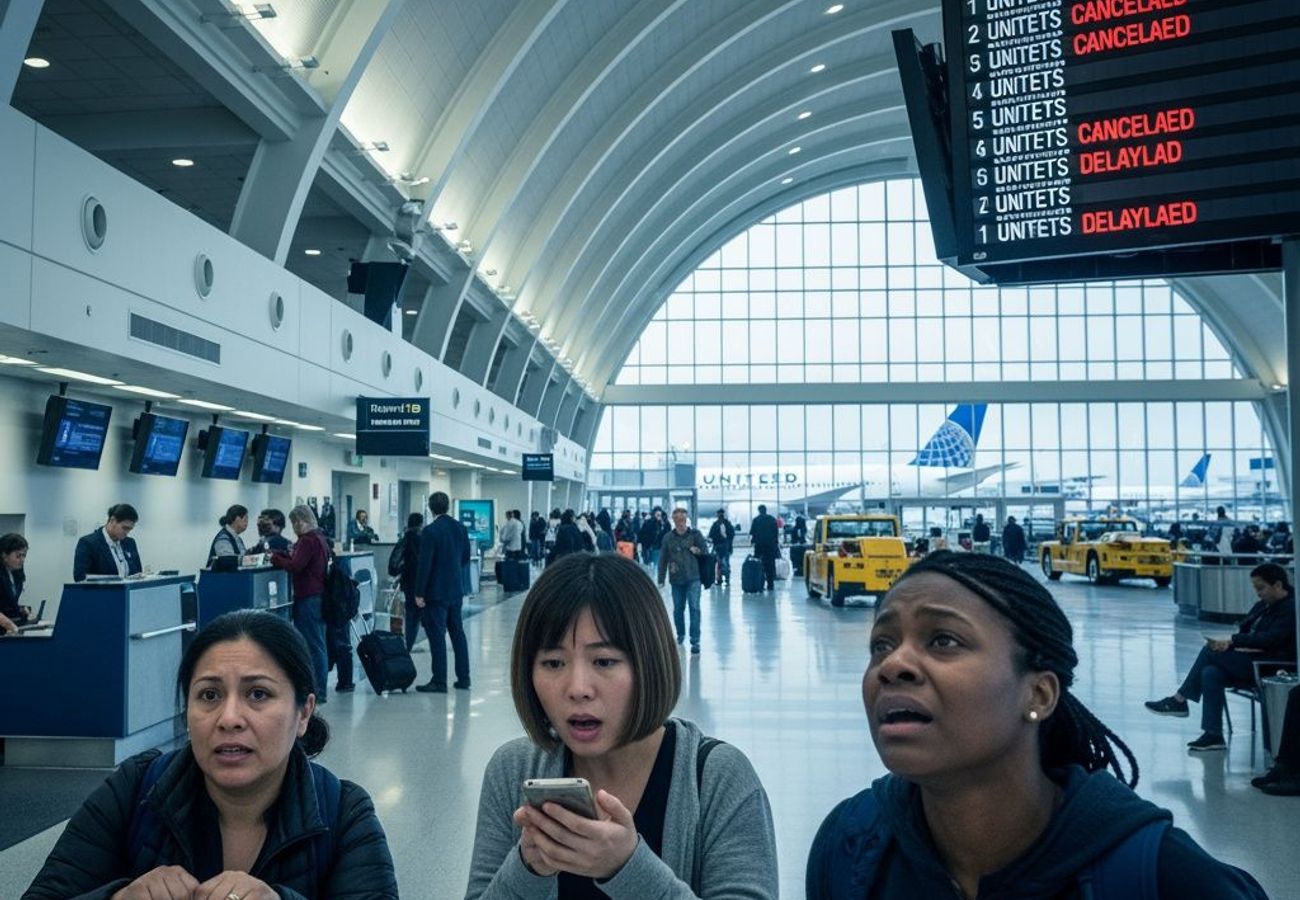
Image generated by AI
The Breakdown: When One Hub Collapses, the Entire Network Follows
On June 18, 2026, chaos erupted at Chicago O'Hare International Airport (ORD). What began as a localized operational crisis transformed into a cascading aviation catastrophe that would ultimately strand thousands of passengers and disrupt flights across three continents.
The numbers tell the story: 207 flight cancellations and 1,218 additional delays rippled outward from O'Hare, affecting major carriers and leaving travelers scrambling for answers. This wasn't a weather event. This wasn't a security incident. This was pure operational breakdown—and the scale was staggering.
Reddit: "I was supposed to connect through O'Hare to Boston. Sat at the gate for 4 hours before they told us the plane was cancelled. No rebooking, no meal voucher, nothing." — r/travel
The Carriers at the Center of the Storm
SkyWest Airlines bore the heaviest burden, accounting for 87 cancellations and 216 delays across its network. As one of the largest regional carriers in North America, operating routes for major airlines like United and Delta, a SkyWest collapse doesn't just affect SkyWest passengers—it sends shockwaves through entire alliance networks.
Republic Airways followed with 35 cancellations and 63 delays. Envoy Air, the regional partner for American Airlines, recorded 34 cancellations and 155 delays. GoJet Airlines, operating United Express flights, added 24 cancellations and 75 delays to the disruption tally.
Even major carriers felt the pain. United Airlines reported 1 cancellation but a staggering 366 delays—a stark reminder that even legacy carriers depend heavily on their regional partners to function.
Here's the breakdown of all affected carriers:
| Airline | Cancelled | Delayed |
|---|---|---|
| SkyWest | 87 | 216 |
| Republic | 35 | 63 |
| Envoy Air (AAL) | 34 | 155 |
| GoJet (UAL) | 24 | 75 |
| Contour Airlines | 9 | 4 |
| American Airlines | 6 | 217 |
| Delta Air Lines | 5 | 44 |
| Air Canada | 2 | 2 |
| Endeavor Air (DAL) | 2 | 2 |
| Jazz (ACA) | 2 | 8 |
| United | 1 | 366 |
The Global Reach: From Chicago to the World
What makes this disruption remarkable is its geographic scope. Chicago O'Hare doesn't just serve Chicago—it's the western gateway for transatlantic flights and a crucial domestic hub for connections spanning the entire continent.
Cancellations rippled across 50+ major U.S. cities: Louisville, Indianapolis, Traverse City, Detroit, Cincinnati, St. Louis, Boston, Atlanta, Jacksonville, Pittsburgh, Columbus, Nashville, Cleveland, Miami, Orlando, Las Vegas, Denver, Dallas–Fort Worth, Washington D.C., Salt Lake City, Phoenix, San Francisco, Los Angeles, Seattle, and Memphis all felt the impact.
Canadian passengers weren't spared. Toronto, Montreal, Calgary, Winnipeg, and Edmonton all experienced significant delays as connections to O'Hare vanished from the schedule.
The disruption extended across the Atlantic and beyond. Travelers with international connections discovered their flights were grounded in London, Frankfurt, Munich, Amsterdam, Zurich, Dublin, Rome, Naples, Istanbul, Athens, and Lisbon. Asian hubs weren't immune either, with delays reported in Tokyo, Hong Kong, Seoul, Dubai, and Abu Dhabi.
When Your Flight Gets Cancelled: What You Need to Know
If you were caught in this disruption—or if you want to be prepared for the next one—here's what actually matters:
Stay Plugged Into Real-Time Information
The moment you hear about a cancellation, stop scrolling social media and act. Check your email, monitor your airline's app, and visit the official website for rebooking information. Delays and cancellations spread fastest through official channels, not Twitter.
Contact the Airline Immediately
Don't wait in hope. Get to the service desk or call customer service right now. In situations like O'Hare on June 18, thousands of passengers competed for limited rebooking slots. First movers secured seats on the next available flights; late movers ended up stranded overnight.
Know Your Legal Rights
According to U.S. Department of Transportation regulations, airlines must provide rebooking on the next available flight at no additional charge when they cancel a flight. If you're in the European Union, passengers are entitled to compensation up to €600 under EU261 regulations—regardless of the cause of cancellation in many circumstances.
Explore Alternative Transport
When flights disappear, trains, buses, and rental cars become viable alternatives. A 12-hour train journey beats a 24-hour airport wait any day. Check Amtrak, Greyhound, and regional rail services immediately.
Document Everything
Keep receipts for meals, hotels, transportation, and any out-of-pocket expenses. Major carriers like American Airlines and United have defined policies covering cancellation-related expenses, but you need proof.
Why This Matters: The Fragility of Modern Aviation
The June 18 disruption at O'Hare exposed something uncomfortable: the North American air network is held together by regional carriers operating on razor-thin margins. When one hub experiences operational issues, the system doesn't have redundancy. Flights don't reroute smoothly. Passengers don't magically find seats on competing airlines.
Instead, thousands of people find themselves in terminals with no flights, no answers, and no guarantee they'll reach their destination that day.
The incident also highlighted the interconnected nature of global aviation. A problem in Chicago reverberated across the Atlantic, disabled connections in Asia, and created domino effects in Europe. FlightAware's tracking data confirmed the severity in real time, but the tools existed only to observe the chaos, not prevent it.
Recovery and Lessons
As of the evening of June 18, 2026, airline operations teams worked throughout the night to restore normal schedules. Passengers were rebooked on following days' flights, though many faced multi-day delays due to cascading backlog effects.
The incident serves as a stark reminder: always build buffer time into connections. Always purchase travel insurance that covers airline cancellations. And always remember that the person at the ticket counter isn't your enemy—they're doing their job in an impossible situation.
For passengers affected by the O'Hare disruption, document your expenses, file claims with your airline, and consider pursuing compensation if you're entitled under applicable regulations. The chaos on June 18 was real. Your right to compensation is real too.
The system worked—until it didn't. And when it breaks, thousands pay the price.
Related Travel Guides
Disclaimer
This article is for informational and educational purposes only. It does not constitute legal, financial, or professional advice. While we strive to provide accurate and up-to-date information, travel policies, regulations, and conditions change rapidly. Always verify information with official sources before making travel decisions. Nomad Lawyer makes no representations about the accuracy, reliability, completeness, or suitability of the information provided. Readers should consult qualified professionals for advice specific to their circumstances. The views expressed in this article are those of the author and do not necessarily reflect the views of Nomad Lawyer.
Preeti Gunjan
Contributor & Community Manager
A passionate traveller and community builder. Preeti helps grow the Nomad Lawyer community, fostering engagement and bringing the reader experience to life.
Learn more about our team →