
Airlines Introduce Basic Business Class: The Hidden Trade-Offs of Cheaper First Class Fares in 2026
Airlines are deploying 'Basic Business' and stripped-down premium fares to attract leisure travelers, but these lower headline prices often remove lounge access, flexibility, and mileage accrual.

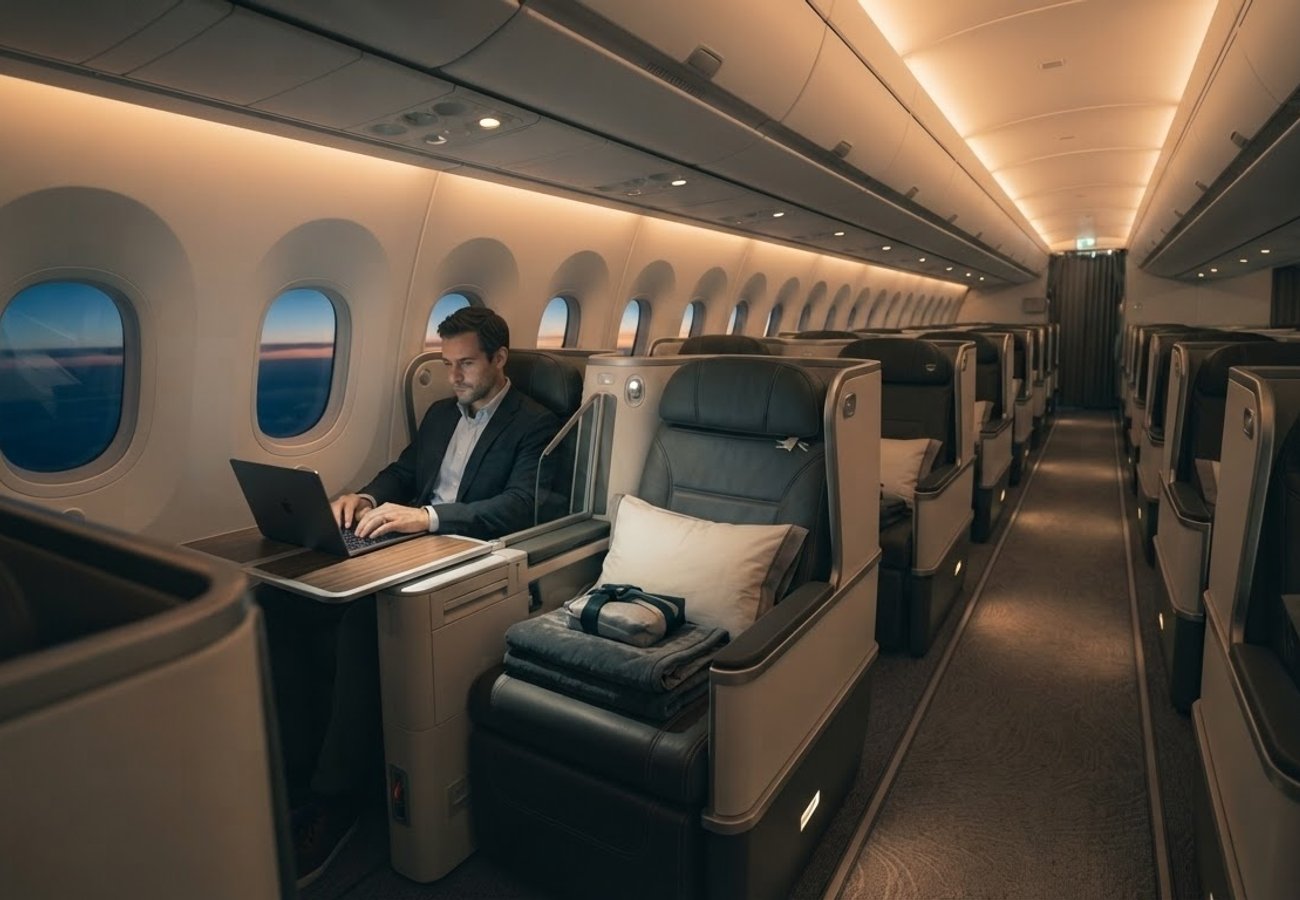
Image generated by AI
Airlines are aggressively unbundling premium cabins, introducing "Basic Business" fares that offer lie-flat seats but strip away essential perks. This shift targets high-spending leisure travelers while transferring financial risk from the carrier to the passenger.
The aviation industry is undergoing a structural shift in how it monetizes the front of the aircraft. While flight search engines are increasingly displaying lower headline prices for first and business class, these fares are not traditional discounts. Instead, carriers are implementing price segmentation—a strategy that mirrors the introduction of "Basic Economy"—to create entry-level premium products.
This approach allows airlines to fill high-margin seats with price-sensitive leisure travelers who are willing to pay for physical comfort but may not require the corporate-grade flexibility of a full-fare business ticket. However, this "democratization" of the premium cabin comes with significant caveats regarding what is actually included in the ticket price.
The Anatomy of the "Basic Premium" Fare
The primary objective of these stripped-down fares is to increase average revenue per seat by charging separately for benefits that were previously bundled. While the "hard product"—the physical seat and legroom—remains consistent, the "soft product" is being aggressively carved out.
The following table outlines the typical discrepancies between standard premium fares and the emerging basic premium tiers.
| Feature | Standard Business/First Class | Basic Business/Premium | Impact on Traveler |
|---|---|---|---|
| Ticket Flexibility | Fully refundable or low change fees | Non-refundable or high change fees | High financial risk for itinerary shifts |
| Lounge Access | Automatic access to flagship lounges | Omitted or requires separate membership | Loss of pre-flight amenities and quiet space |
| Seat Selection | Advanced selection (Window/Aisle) | Assigned at check-in | Reduced control over cabin positioning |
| Mileage Accrual | 100% or bonus earning rates | Reduced earning rates | Slower path to elite status/rewards |
| Ground Services | Priority check-in and boarding | Restricted to higher fare tiers | Longer queues at premium terminals |
| Amenity Kits | Full luxury kits included | Limited or tiered options | Reduction in in-flight comfort goods |
Revenue Management and the Leisure Pivot
From a logistics and economic perspective, this is a textbook application of revenue management. By creating multiple price bands within a single cabin, airlines can capture the maximum "willingness to pay" from different customer segments.
Corporate travel policies typically mandate flexible fares to accommodate shifting business schedules, ensuring a steady stream of high-revenue bookings. However, the growth of "premium leisure"—vacationers splurging on long-haul comfort—has provided a new opportunity. By offering a restricted premium fare, airlines nudge leisure travelers into cabins that were once the exclusive domain of corporate contracts, then recover the lost margin through ancillary fees for seat selection and lounge access.
Traveler Logistics Guide: Navigating the Premium Trap
From a ground-level perspective, the best way to navigate this fragmented pricing is to ignore the cabin label and scrutinize the "Fare Basis" code. A seat labeled "Business" does not guarantee a business-class experience.
Booking Strategies for 2026:
- The Flexibility Audit: If your travel dates are not 100% locked, avoid "Basic Business." The cost of a single change fee often exceeds the initial savings gained from the discounted fare.
- Lounge Workarounds: If your ticket omits lounge access, verify if your credit card or a third-party membership (such as Priority Pass) grants entry. Do not assume that a business class ticket is your "key" to the lounge.
- The Mileage Calculation: For those chasing elite status, check the earning percentage. A cheaper fare that only earns 25% or 50% of the miles may actually cost you more in the long run by delaying your status upgrades.
- Check-in Timing: Because basic premium fares often assign seats at check-in, be prepared to log in the exact second the window opens to avoid being placed in less desirable sections of the premium cabin.
Infrastructure and Regional Impact
The expansion of these tiered premium products is closely linked to aircraft retrofits. Carriers are ordering more aircraft with increased premium seat counts, betting that the leisure market will sustain the demand. This shift increases the operating weight and cost of the aircraft, further incentivizing airlines to extract every possible cent via unbundling.
As this trend evolves, industry observers expect a further divergence: the most exclusive suites will become even more restrictive and expensive, while a "no-frills" premium seat—offering only the physical space and nothing else—may become a standard offering on long-haul routes.
The era of the all-inclusive premium ticket is ending, replaced by a menu of options where comfort is guaranteed, but service is an add-on.
Related Travel Guides
Disclaimer
This article is for informational and educational purposes only. It does not constitute legal, financial, or professional advice. While we strive to provide accurate and up-to-date information, travel policies, regulations, and conditions change rapidly. Always verify information with official sources before making travel decisions. Nomad Lawyer makes no representations about the accuracy, reliability, completeness, or suitability of the information provided. Readers should consult qualified professionals for advice specific to their circumstances. The views expressed in this article are those of the author and do not necessarily reflect the views of Nomad Lawyer.
Preeti Gunjan
Contributor & Community Manager
A passionate traveller and community builder. Preeti helps grow the Nomad Lawyer community, fostering engagement and bringing the reader experience to life.
Learn more about our team →