
Cathay Group Achieves Record August 2026 Traffic With Over 3.6 Million Passengers Across Global Network

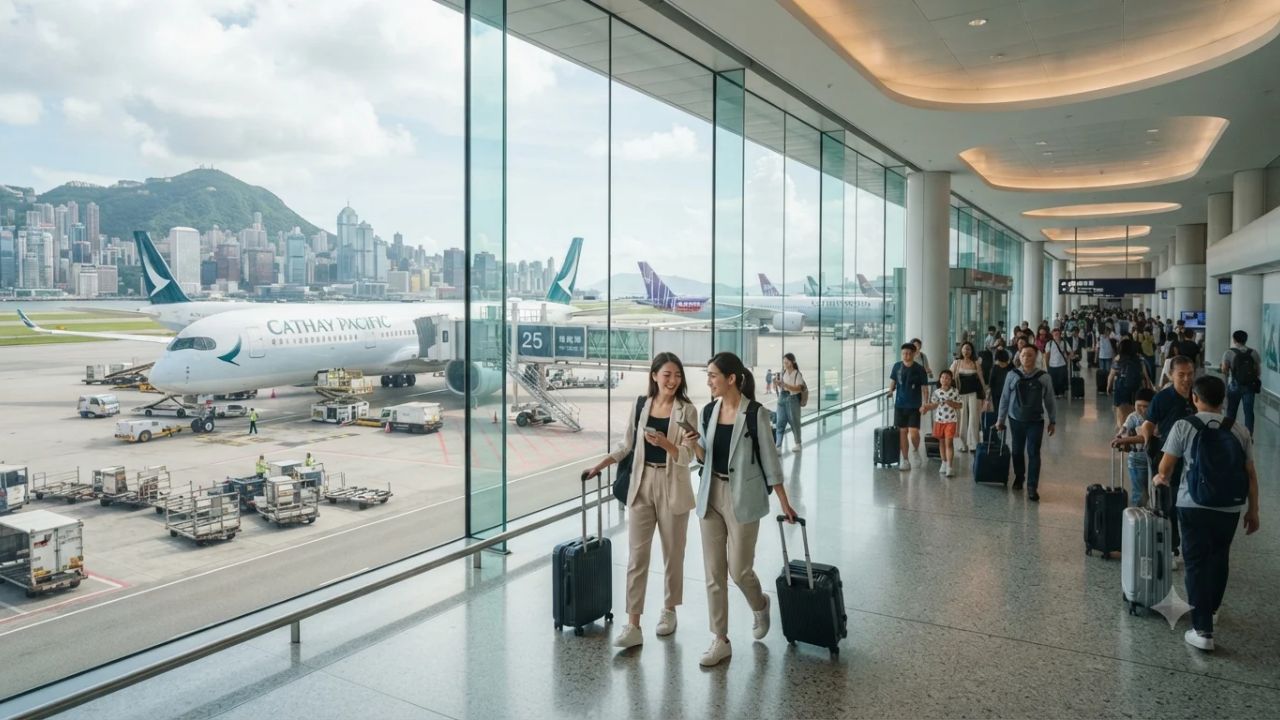
Image generated by AI
Carrying more than 3.6 million passengers in August 2026, Cathay Group set an all-time monthly passenger record, propelled by a 5% year-on-year lift at mainline carrier Cathay Pacific and high 90% seat occupancy across regional mainland routes. The milestone reflects a resurgent Hong Kong aviation nexus where late-summer vacation movement, peak transatlantic student departures, and recovering commercial exchanges outpaced ongoing operating cost pressures from elevated jet fuel prices.
Transpacific and Transatlantic Corridors: Anatomy of the August Surge
The passenger milestone recorded across the combined operations of Cathay Pacific and low-cost subsidiary HK Express underscores the structural rebound of Hong Kong International Airport (HKIA) as the premier transit springboard linking mainland China to the international aviation ecosystem. Mainline carrier Cathay Pacific experienced a 5% expansion in passenger traffic compared to August 2025. This volume growth outstripped the airline’s 3% year-on-year capacity expansion, illustrating tightening cabin seat supply and elevated passenger load factors during the height of late-summer operations.
A major driver behind the August volume surge was seasonal academic travel. Thousands of students originating across Hong Kong and mainland Chinese cities departed for higher-education institutions in the United Kingdom, the United States, and Canada ahead of the autumn academic semester. These long-haul educational flows provided high seat utilization on flagship trunk routes into London Heathrow, Manchester, Vancouver, Toronto, New York JFK, and Los Angeles. Concurrently, leisure travel demand remained buoyant through the final weeks of August, as families completed outbound overseas holidays across Europe, East Asia, and Australasia.
Cathay Pacific’s cumulative performance reflects an entrenched upward trajectory throughout the year. Between January and August 2026, the airline transported 15% more passengers than during the equivalent eight-month period in 2025. This double-digit volume expansion demonstrates that the group’s systematic rebuild of flight schedules, interline connections, and transit windows overseen by the Hong Kong Civil Aviation Department is successfully capturing deferred regional travel demand and establishing schedule stability across international corridors.
Dual-Brand Fleet Dynamics and Air Freight Metrics
The operating results for August 2026 demonstrate the complementary roles played by Cathay Group’s full-service long-haul fleet and its dedicated budget subsidiary, HK Express, as well as its cargo division.
Budget division HK Express carried more than 790,000 passengers during the month. Although this headline passenger total represented a slight 1% decrease compared to August 2025, the low-cost carrier absorbed a 3% expansion in available seat capacity. The division demonstrated exceptional seat utilization on routes connecting Hong Kong with key commercial destinations across mainland China, achieving an average load factor of 90%. Over the broader January-to-August 2026 timeframe, HK Express maintained an 8% expansion in passenger volumes compared to the previous year, highlighting the sustained appetite for point-to-point regional leisure travel across East and Southeast Asia.
Parallel to passenger operations, Cathay Cargo delivered a standout logistics performance, transporting more than 150,000 tonnes of freight in August 2026. This metric represents a 9% year-on-year volume expansion achieved against an available cargo capacity increase of just 1%. The disproportionate surge in freight tonnage points to strong demand in specialized industrial supply chains. Semiconductor shipments within East and Southeast Asia accounted for a significant portion of this growth, as global consumer electronics manufacturers relied on expedited air connections through Hong Kong. In addition, high-value pharmaceutical consignments between Europe and mainland China, along with early inventory positioning for the year-end retail shopping season, drove bellyhold and dedicated freighter utilization. Across the first eight months of 2026, total cargo tonnage rose 8% year-on-year.
| Operating Division | August 2026 Metric | Year-on-Year Change (YoY) | Capacity Change (YoY) | Key Operational Driver |
|---|---|---|---|---|
| Cathay Pacific (Mainline) | >2.81 Million Passengers (est. group share) | +5% | +3% | Peak overseas student travel to UK and North America; summer leisure traffic |
| HK Express (Budget) | >790,000 Passengers | -1% | +3% | 90% average load factor on mainland China corridors; short-haul leisure demand |
| Cathay Group (Combined) | >3.6 Million Passengers | Record Monthly High | Expanding | Integrated dual-brand scheduling through Hong Kong International Airport hub |
| Cathay Cargo (Logistics) | >150,000 Tonnes | +9% | +1% | Semiconductor distribution, pharmaceuticals, and early fourth-quarter retail inventory |
| Cathay Pacific (Jan–Aug 2026) | Cumulative Volume | +15% | Structured scaling | Sustained international recovery and long-haul interline connectivity |
| HK Express (Jan–Aug 2026) | Cumulative Volume | +8% | Network addition | Affordable regional connectivity across East Asian destinations |
| Cathay Cargo (Jan–Aug 2026) | Cumulative Freight Tonnage | +8% | Disciplined management | High-yield specialized air cargo and industrial supply chain integration |
Expert Analysis: Yield Realities, Student Flows, and the Golden Week Horizon
The operational data recorded by Cathay Group in August 2026 provides clear insight into how modern aviation conglomerates manage the delicate relationship between ticket yields, capacity discipline, and shifting macroeconomic forces. While global airlines navigate persistent inflationary pressures from elevated jet fuel prices and maintenance overheads, Cathay Group’s passenger gains outpacing capacity additions indicate strong pricing power and revenue optimization.
For travelers booking this route, the direct consequence is continued upward pressure on airfares across premier long-haul corridors. When an airline records a 5% increase in passenger traffic against only a 3% addition in available seat capacity, seat inventory contracts rapidly. On key student and corporate trunk routes between Hong Kong and London, Vancouver, or Sydney, late-booking passengers faced compressed economy inventory and expanded premium cabin take-up. The pricing pressure this creates means early reservations and flexible travel windows remain essential strategies for international travelers seeking manageable fares on Cathay Pacific’s intercontinental flights.
The high 90% load factor maintained by HK Express across mainland Chinese routes demonstrates the enduring commercial logic of the Greater Bay Area multi-modal transit strategy. Rather than competing directly for the same customer profile, Cathay Pacific captures high-yielding corporate and connecting intercontinental passengers, while HK Express absorbs price-sensitive leisure travelers and short-haul business commuters. This market segmentation protects average group yields while maintaining high fleet asset utilization across congested regional air corridors.
Simultaneously, the performance of Cathay Cargo serves as an economic buffer against volatile passenger cycles. Freight volume jumping 9% on a mere 1% capacity lift signifies strong cargo yield realizations. Under the oversight of the International Air Transport Association (IATA), air freight often provides essential margin support on long-haul passenger flights through lower-deck bellyhold cargo. By transporting high-value semiconductors, clinical pharmaceuticals, and electronic components on widebody passenger flights to North America and Europe, Cathay Group subsidizes long-distance route economics during seasonal swings in leisure demand.
Looking toward the final quarter of 2026, the upcoming National Day Golden Week holiday across mainland China represents the next major demand catalyst. With millions of domestic travelers taking extended vacations, Cathay Pacific and HK Express are positioned to capture high outbound transit volumes heading to Japan, Southeast Asia, and Australasia. Paired with peak consumer electronics product launches requiring priority air shipping, the airline group enters the fourth quarter with balanced revenue generation across passenger cabins and cargo holds.
Key Takeaways
- Historic Passenger Milestone: Cathay Group transported over 3.6 million passengers in August 2026, marking the highest monthly passenger volume in the carrier group’s operational history.
- Cathay Pacific Volume Growth: Mainline carrier Cathay Pacific increased passenger counts by 5% year-on-year on a 3% capacity expansion, with cumulative January-to-August passenger volume up 15%.
- Robust Budget Seat Occupancy: HK Express flew over 790,000 travelers in August 2026, achieving a 90% average load factor on routes connecting Hong Kong with mainland China.
- High-Yield Cargo Expansion: Cathay Cargo handled more than 150,000 tonnes of freight, jumping 9% year-on-year despite a modest 1% capacity increase, driven by semiconductor and pharmaceutical transport.
- Strong Forward Momentum: The carrier enters the final quarter of 2026 positioned for elevated leisure traffic during China’s National Day Golden Week and rising holiday logistics demand.
FAQ: Cathay Group August 2026 Travel Record
How many passengers did Cathay Group carry in August 2026?
Cathay Group carried more than 3.6 million passengers across Cathay Pacific and HK Express in August 2026. This performance established the highest monthly passenger total in the aviation group's history, driven by overseas student departures, summer leisure travel, and regional connections.
What drove passenger growth for Cathay Pacific during August?
Cathay Pacific recorded a 5% increase in passenger numbers on a 3% capacity expansion. Growth was heavily supported by student travel heading to academic institutions in North America and the United Kingdom, alongside robust outbound summer holiday demand connecting Hong Kong and mainland China.
How did HK Express perform on its regional routes?
HK Express carried over 790,000 passengers in August 2026. Despite a 1% year-on-year volume decrease, the budget carrier expanded capacity by 3% and registered an average load factor of 90% on routes between Hong Kong and mainland China destinations.
Why did Cathay Cargo freight volumes increase in August 2026?
Cathay Cargo handled over 150,000 tonnes of freight, up 9% year-on-year. This growth was driven by regional semiconductor shipments across Asia, time-sensitive pharmaceutical consignments between Europe and China, and early retail inventory movements preparing for the year-end shopping period.
[As Cathay Group pairs record passenger volumes with surging high-tech air freight, Hong Kong’s flag carrier cements its post-recovery role as an indispensable transit gateway connecting mainland China to the wider world.]
Related Travel Guides
Disclaimer
This article is for informational and educational purposes only. It does not constitute legal, financial, or professional advice. While we strive to provide accurate and up-to-date information, travel policies, regulations, and conditions change rapidly. Always verify information with official sources before making travel decisions. Nomad Lawyer makes no representations about the accuracy, reliability, completeness, or suitability of the information provided. Readers should consult qualified professionals for advice specific to their circumstances. The views expressed in this article are those of the author and do not necessarily reflect the views of Nomad Lawyer.
Preeti Gunjan
Contributor & Community Manager
A passionate traveller and community builder. Preeti helps grow the Nomad Lawyer community, fostering engagement and bringing the reader experience to life.
Learn more about our team →