
Caribbean Islands Face Overcrowding Crisis: Puerto Rico, Jamaica, Bahamas Impose Strict Visitor Controls in 2026
Caribbean governments including Puerto Rico, Jamaica, Bahamas, and Barbados are implementing strict visitor management policies to combat cruise-driven overcrowding and protect fragile island ecosystems amid 307 million global arrivals.

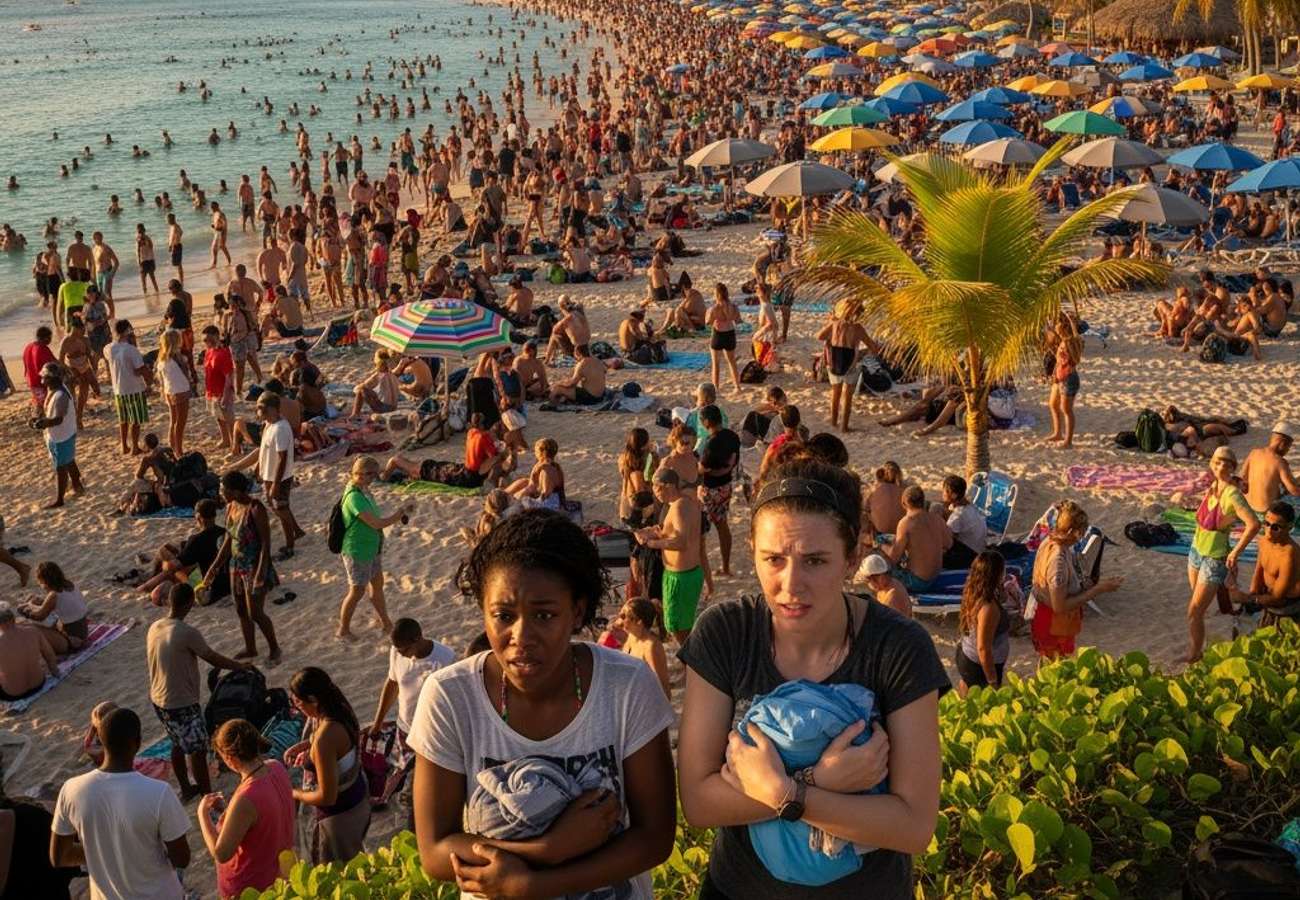
Image generated by AI
The Caribbean's Breaking Point: When Paradise Gets Crowded
Puerto Rico, Barbados, Dominican Republic, Jamaica, Saint Lucia, Bahamas, and Belize are hitting a critical tipping point. What was once viewed as unlimited tourism growth is now triggering emergency governance measures across the entire Caribbean region. Governments are no longer asking if they need to control visitor flows — they're asking how fast they can implement restrictions.
The numbers tell a sobering story. According to UN Tourism's 2026 outlook, global international arrivals reached approximately 307 million in Q1 2026 (+2% year-on-year), with a disproportionate concentration flowing directly into Caribbean cruise ports and coastal resort zones. This surge isn't evenly distributed. It's flooding specific islands while leaving entire regions underdeveloped and fragile ecosystems gasping for air.
Reddit: "Just got back from Jamaica. Montego Bay was literally wall-to-wall cruise passengers. You could barely walk on the beach. This wasn't what I expected." — r/travel
The Caribbean is now entering a new era: from growth-at-any-cost to managed, sustainability-focused tourism regulation.
Puerto Rico's San Juan Bottleneck: When Cruise Ships Overwhelm Infrastructure
San Juan is becoming a case study in what happens when visitor concentration goes unchecked. An estimated 60–65% of all visitor activity in Puerto Rico concentrates in coastal zones, driven primarily by cruise arrivals from the United States, Canada, the United Kingdom, Spain, Germany, France, and Latin America.
The Old San Juan district — the crown jewel of Puerto Rican tourism — frequently descends into gridlock during peak cruise arrivals. Transport bottlenecks. Infrastructure stress. Limited street capacity for thousands of simultaneous passengers. The situation is compounded by 8–12% cruise-linked seasonal increases, short-haul travel demand spikes, and geopolitical disruptions in the Middle East pushing travelers toward closer Caribbean alternatives.
Meanwhile, inland Puerto Rico remains vastly underutilized. The economic benefits concentrate in San Juan. The environmental strain concentrates there too. Authorities are now aggressively promoting cultural tourism circuits and eco-tourism dispersal strategies — but the fundamental problem remains: cruise ships dock in the capital, and that's where visitors go.
Bahamas: When Simultaneous Ship Arrivals Create Urban Chaos
The Bahamas faces perhaps the most acute cruise-driven crisis across the region. Nassau and nearby islands frequently experience simultaneous ship arrivals — sometimes three or four mega-ships offloading 10,000+ passengers into ports designed for regional traffic, not global cruise fleets.
Peak season visitor numbers regularly exceed local infrastructure capacity. Beaches become unsustainably crowded. City transportation systems strain under the load. Environmental degradation accelerates in sensitive coral and marine zones. The primary source markets — the United States (dominant), followed by Canada, the United Kingdom, and major European countries — show no signs of declining cruise demand.
In response, Bahamian authorities are now considering stricter cruise scheduling frameworks and explicit visitor dispersal strategies. The message is clear: unregulated cruise expansion is over.
Jamaica's 1 Million Visitor Surge: Coastal Saturation in Real Time
Jamaica absorbed over 1 million visitors in early 2026 alone, driven by strong inflows from the United States, Canada, and the United Kingdom, with accelerating contributions from Germany, France, and emerging regional markets. Key tourism hubs — Montego Bay, Ocho Rios, and Negril — are experiencing visible saturation.
Coastal corridors report near-maximum hotel occupancy rates, transport bottlenecks, and cruise-passenger surges that place unsustainable strain on beaches, heritage sites, and waste management infrastructure. Tourism authorities have responded by actively encouraging diversification into inland attractions and community-based tourism experiences. The goal: reduce overdependence on coastal hotspots and distribute economic benefits beyond resort clusters.
This represents a fundamental policy shift. Jamaica is no longer optimizing for maximum arrivals. It's optimizing for sustainable arrivals.
Barbados: Environmental Alarm Bells During Winter Peaks
Barbados experiences some of the Caribbean's most intense seasonal overcrowding, particularly during winter travel peaks when source markets — the United States, Canada, United Kingdom, Mexico, Brazil, and Colombia — collectively flood the island simultaneously. West Coast resort zones and Bridgetown cruise terminals frequently hit capacity during these periods.
The strain is visible: transportation gridlock, waste management failures, hospitality service degradation. Barbados has responded with prioritized sustainable visitor distribution strategies, increased investment in environmental protection measures, and explicit regulated cruise scheduling. The island understands that peak-season overcrowding directly threatens long-term ecosystem resilience.
Dominican Republic: The Largest Caribbean Destination Grappling With Scale
The Dominican Republic is the Caribbean's largest tourism destination by volume, but this success brings proportional pressure. Major source markets — the United States, Canada, United Kingdom, Mexico, Brazil, Colombia, Germany, and France — drive continuous high-volume arrivals, particularly to Punta Cana, La Romana, and Samaná.
These zones experience extreme high-density clustering, especially within all-inclusive resort ecosystems. Airports, highways, and coastal environmental zones face unprecedented pressure. Authorities are now implementing stricter visitor management protocols, though the sheer volume and economic dependency on tourism creates complex governance challenges.
The Regulatory Pivot: From Growth to Governance
What we're witnessing across the Caribbean isn't a tourism decline. It's a governance transformation. Governments that once competed on "most arrivals" are now competing on "most sustainable arrivals."
Key emerging regulations include:
- Cruise ship scheduling caps and mandatory port rotation systems
- Beach and coastal carrying capacity limits
- Visitor dispersal mandates encouraging inland and secondary destinations
- Environmental impact assessments for cruise terminal expansions
- Community-based tourism incentives to spread economic benefits
TTW's Editor-in-Chief, Anup Kumar Keshan, frames this starkly: "The Caribbean is at a defining crossroads where tourism success must be carefully balanced with sustainability. Rising overcrowding pressure highlights an urgent need for coordinated regional action, smarter visitor distribution, and stronger regulatory frameworks. The future depends on how effectively the region protects fragile ecosystems while delivering world-class experiences."
What This Means for Travelers in 2026 and Beyond
Travelers planning Caribbean trips should expect:
Stricter booking requirements. Some islands may implement visitor registration systems or advance booking mandates during peak seasons.
Higher costs. Regulated scarcity typically increases pricing. Fewer available slots mean increased competition for bookings.
Better experiences. Fewer visitors in overcrowded zones paradoxically improves travel quality. Less gridlock. Quieter beaches. More authentic interactions.
Incentives for off-peak travel. Islands will increasingly offer discounts and promotions for shoulder-season visits to distribute arrivals.
The era of unlimited Caribbean tourism is ending. The era of intentional, regulated, sustainable Caribbean tourism is beginning.
The Caribbean's lesson: paradise preserved beats paradise destroyed every single time.
Related Travel Guides
Disclaimer
This article is for informational and educational purposes only. It does not constitute legal, financial, or professional advice. While we strive to provide accurate and up-to-date information, travel policies, regulations, and conditions change rapidly. Always verify information with official sources before making travel decisions. Nomad Lawyer makes no representations about the accuracy, reliability, completeness, or suitability of the information provided. Readers should consult qualified professionals for advice specific to their circumstances. The views expressed in this article are those of the author and do not necessarily reflect the views of Nomad Lawyer.
Raushan Kumar
Founder & Lead Developer
Full-stack developer with 11+ years of experience and a passionate traveller. Raushan built Nomad Lawyer from the ground up with a vision to create the best travel and law experience on the web.
Learn more about our team →