
Indonesia Unveils Tourism 5.0 at UN Summit to Defeat Global Travel Chaos and End Airport Disruptions
Breaking airline news: Indonesia shocks the UN Executive Council with Tourism 5.0, deploying AI and direct aviation deals to protect tourists from severe travel chaos and flight cancellations.

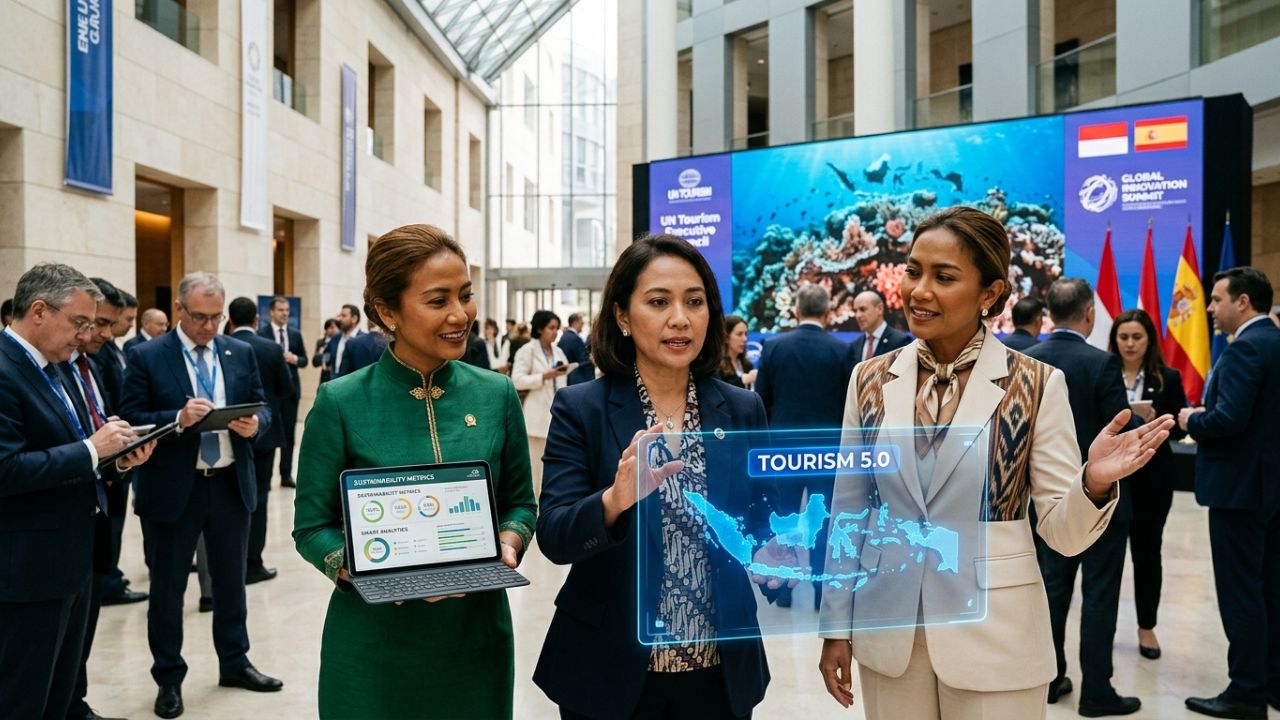
Image representing Indonesia's Tourism 5.0 technological framework, designed to insulate global travelers from airport disruptions and flight cancellations.
Indonesia Unveils Tourism 5.0 at UN Summit to Defeat Global Travel Chaos and End Airport Disruptions
A Technological and Diplomatic Shield Against Global Transit Friction
As international travel networks buckle under the constant pressure of unpredictable travel chaos and localized airport disruptions, the sovereign Republic of Indonesia has introduced a revolutionary defense mechanism. At the 126th Session of the UN Tourism Executive Council in Toledo, Spain, Indonesia officially captivated the global travel industry by unveiling its "Tourism 5.0" blueprint. According to the latest aviation updates, Tourism Minister Widiyanti Putri Wardhana fiercely advocated for this comprehensive structural evolution. By deploying hyper-advanced AI infrastructure alongside massive bilateral aviation deals, Indonesia is actively ensuring that international visitors can navigate its vast archipelago without falling victim to the paralyzing flight cancellations that routinely terrorize modern transit.
This ultra-progressive framework combats escalating economic uncertainties and climate crises by stabilizing the foundational travel experience. Through rigorous national decarbonisation and aggressive digital shifts, the Southeast Asian powerhouse has established itself as an absolute global leader, proving that sustainability and advanced operational logistics are the ultimate cure for widespread aviation instability.
Breaking Down the Tourism 5.0 Digital Defense Grid
The international travel landscape is transforming at a breakneck pace, and destinations that fail to innovate are leaving their passengers exposed to severe logistical nightmares. Indonesia is masterfully bypassing this threat by aggressively integrating cutting-edge artificial intelligence into its hospitality and transit framework. At the core of this initiative is MaiA, the nation’s highly sophisticated, AI-powered virtual travel assistant.
MaiA is specifically engineered to deliver hyper-personalised, real-time itineraries to international jet-setters. When sudden weather events or air traffic control strikes trigger massive airport disruptions at major transit hubs, this digital assistant seamlessly manages local transport, reroutes cultural bookings, and secures eco-friendly accommodation on the fly. Wealthy global wanderers can now enjoy a completely streamlined, stress-free exploration experience, perfectly insulated from the paralyzing anxiety of traditional travel chaos.
Section-Wise Breakdown: Strategic Pillars of the New Travel Economy
This ambitious structural overhaul is not limited to digital interfaces; it involves deep physical, rural, and diplomatic integration across multiple sectors.
Toledo, Spain (The UN Diplomatic Summit) The global presentation in Toledo served as the critical launchpad for Indonesia's aggressive global strategy. By officially endorsing the upcoming International Year of Sustainable and Resilient Tourism 2027, Jakarta signaled its intent to lead international conservation policy. Local authorities are already constructing eco-friendly transport hubs and subsidizing zero-emission adventure startups, ensuring the nation’s infrastructure can absorb massive visitor volumes without triggering localized congestion or travel chaos.
Pemuteran and the Rural Community Powerhouses To prevent massive overcrowding at major international airports, Indonesia is brilliantly dispersing tourism traffic by transforming more than 6,200 rural settlements into vibrant economic hubs. The UN Tourism assembly awarded its coveted Best Tourism Villages designation to five distinct Indonesian regions, explicitly lauding the Pemuteran Tourism Village for its world-class coral reef restoration. By shifting traffic toward these authentic tribal and organic farming communities, the state effectively decongests primary transit corridors, lowering the risk of systemic delays.
Saudi Arabia, Bulgaria, and Montenegro (Aviation Connectivity) On the highly charged sidelines of the Toledo summit, the Indonesian delegation executed masterful diplomatic maneuvers to directly combat global flight cancellations. Elite ministerial meetings with Bulgaria, Montenegro, and Saudi Arabia focused strictly on expanding direct long-haul aviation connectivity and cutting complex tourist visa bottlenecks. The landmark partnership with Saudi Arabia includes establishing an elite Arabic Language and Hospitality Center inside the Lombok Tourism Polytechnic, radically increasing premium two-way visitor flows while bypassing congested, disruption-prone transit hubs.
Operational Data: The Resilience and Strategy Matrix
To fully comprehend the massive scale of Indonesia's structural evolution, industry analysts have compiled the specific factual parameters of the Tourism 5.0 rollout. The following operational matrix details exactly how the state is fortifying its tourism economy:
The Tourism 5.0 Structural Blueprint
| Strategic Initiative / Entity | Factual Implementation Data |
|---|---|
| UN Presentation Venue | 126th Session of the UN Tourism Executive Council (Toledo, Spain) |
| Primary Digital Architecture | MaiA (AI-powered virtual travel assistant) |
| Environmental Frameworks | Glasgow Declaration signatory, Tourism Decarbonisation Roadmap |
| Food Waste Protocol | Active support for UN’s "Recipe of Change" initiative |
| Rural Tourism Expansion | Over 6,200 rural settlements transformed |
| Global Recognition | 5 Best Tourism Villages awarded (Featuring Pemuteran Tourism Village) |
| Bilateral Aviation Deals | Strategic expansion with Bulgaria, Montenegro, Saudi Arabia |
| Targeted Education Hub | Arabic Language and Hospitality Center (Lombok Tourism Polytechnic) |
| Global Policy Leadership | Endorsing International Year of Sustainable and Resilient Tourism 2027 |
Passenger Impact: Eradicating Holiday Friction
For the modern traveler, the constant threat of cascading flight cancellations and missed connections destroys consumer confidence. Indonesia’s proactive structural preparation directly addresses this psychological barrier. By heavily investing in human capital—specifically urging the UN Tourism Academy to pivot toward eliminating green and digital skill gaps among youth and women in Small Island Developing States—the nation guarantees elite, on-the-ground support.
When a traveler experiences a sudden delay, elite local guides trained in international hospitality standards can instantly leverage high-tech platforms to salvage the itinerary. This profound educational fortification successfully shields delicate island communities from economic exploitation while ensuring that visitors never feel abandoned during unexpected bursts of regional travel chaos.
Industry Analysis: Decarbonization and Systemic Resilience
As detailed in the latest breaking airline news, environmental degradation is intrinsically linked to aviation volatility. Severe weather driven by climate change is the primary catalyst for massive airport disruptions. By proudly serving as a proactive signatory of the Glasgow Declaration and deploying a state-backed Tourism Decarbonisation Roadmap, Indonesia is aggressively slashing its total carbon footprint. The rapid implementation of green energy grids across beachfront resorts and the strict auditing of supply chains to minimize organic waste (via the Recipe of Change) safeguards pristine marine sanctuaries. Consequently, this holistic environmental strategy establishes long-term systemic industry resilience against future macroeconomic and climate-driven crises.
Conclusion: The Ultimate Crisis-Proof Destination
Indonesia has definitively proven to the world that an emerging nation can successfully execute hyper-growth while fiercely guarding its ecological soul. By unveiling the cutting-edge Tourism 5.0 framework, deploying the MaiA digital assistant, and securing massive direct aviation pipelines with Saudi Arabia and Europe, Jakarta has built the ultimate fortress against global travel chaos. As the global tourism sector collectively gears up for 2027, Indonesia stands unopposed as an unstoppable pioneer of ethical, incredibly stable, and highly technologically advanced travel.
Key Takeaways
- Tourism 5.0 Launched: Indonesia unveiled a massive, technology-driven sustainability blueprint at the 126th UN Tourism Executive Council in Toledo, Spain.
- Digital Disruption Defense: The AI-powered travel assistant 'MaiA' completely streamlines itineraries, insulating wealthy wanderers from unpredictable travel chaos.
- Securing Flight Routes: High-stakes bilateral deals with Saudi Arabia, Bulgaria, and Montenegro will dramatically expand direct long-haul aviation connectivity, mitigating the risk of flight cancellations.
- Rural Empowerment: Five rural areas, including the world-class Pemuteran Tourism Village, received UN Best Tourism Villages designations, proving the success of integrating 6,200 rural settlements into the economy.
- Environmental Leadership: By adhering to the Glasgow Declaration and the UN "Recipe of Change" initiative, Indonesia is systematically eliminating vulnerabilities that lead to major airport disruptions and ecological collapse.
🌍 Related Travel Guides & Flight Resources
- Navigate Airport Disruptions Like a Pro Master the art of surviving unexpected travel chaos with our expert strategies.
- Breaking Airline News & Evasion Routes Stay ahead of the delays with our real-time aviation updates and route intelligence.
- Global Flight Cancellation Defense Grid Essential legal rights and compensation tactics when your flight goes down.
⚖️ Disclaimer
The tourism intelligence, diplomatic developments, and digital framework data provided in this report are for informational purposes only. International travel regulations, bilateral aviation agreements, and technological rollouts are highly fluid and subject to immediate change based on governmental policy. NomadLawyer does not guarantee the absolute accuracy or current validity of the information provided and assumes no liability for travel disruptions, flight cancellations, missed connections, or any financial consequences resulting from the use of this content. Travelers are strongly advised to independently verify all digital assistant capabilities, eco-lodge certifications, and direct flight connections with their respective airlines and relevant destination management authorities prior to travel.
Disclaimer
This article is for informational and educational purposes only. It does not constitute legal, financial, or professional advice. While we strive to provide accurate and up-to-date information, travel policies, regulations, and conditions change rapidly. Always verify information with official sources before making travel decisions. Nomad Lawyer makes no representations about the accuracy, reliability, completeness, or suitability of the information provided. Readers should consult qualified professionals for advice specific to their circumstances. The views expressed in this article are those of the author and do not necessarily reflect the views of Nomad Lawyer.
Kunal K Choudhary
Co-Founder & Contributor
A passionate traveller and tech enthusiast. Kunal contributes to the vision and growth of Nomad Lawyer, bringing fresh perspectives and driving the community forward.
Learn more about our team →