
The Caribbean Remote Work Revolution: Living Long-Term in Antigua, Dominica, and Montserrat

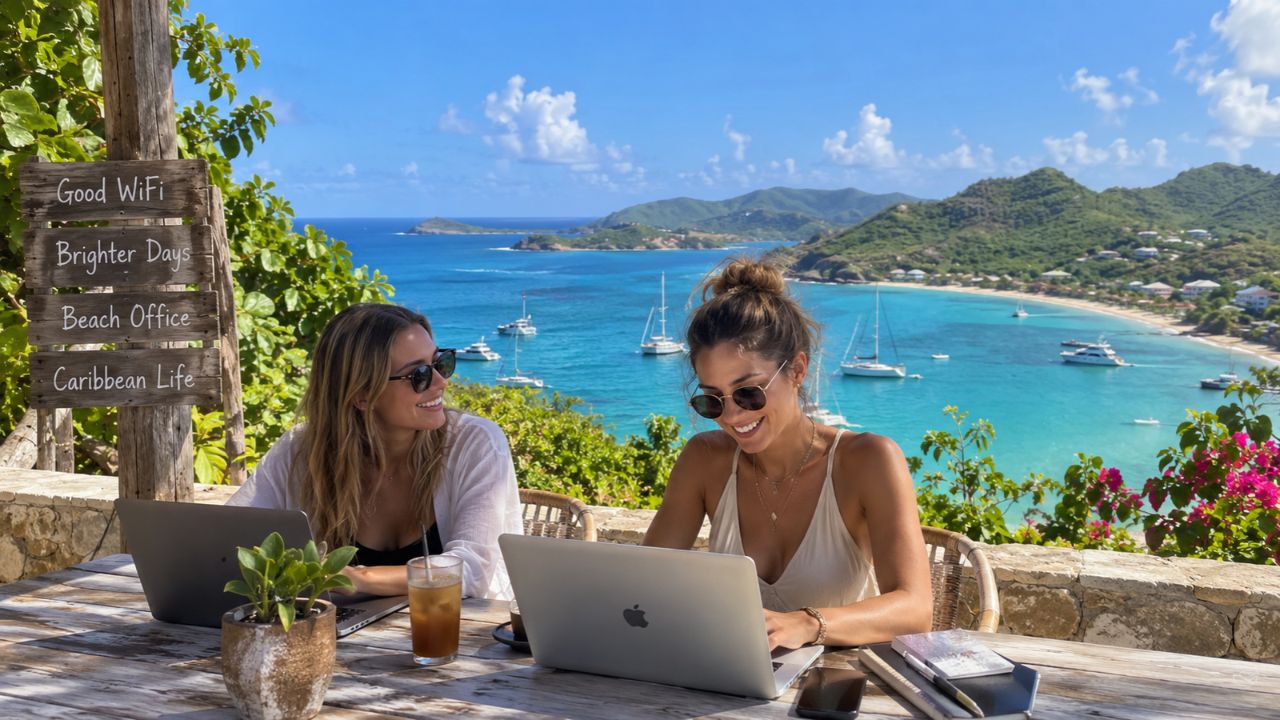
Rather than settling for a rushed seven-day beach holiday, location-independent professionals can now legally establish tropical residencies across the Eastern Caribbean for up to twenty-four months. Moving beyond standard tourist visas, the governments of Antigua and Barbuda, Dominica, and Montserrat have enacted dedicated extended-stay pathways designed specifically for remote executives, digital entrepreneurs, and creative consultants. This regulatory shift allows global workers to swap high-density city apartments for coastal villages where morning team meetings precede afternoon ocean swims and rainforest trail hikes.
The timing of this Caribbean lifestyle evolution aligns with a broader transformation in long-term travel. By venturing south during the September shoulder season—when peak winter crowds have yet to arrive, villa rental rates drop significantly, and regional airlines offer greater seat availability—remote workers can secure prime coastal bases. However, navigating the Atlantic tropical weather season requires practical planning, verified fiber-optic connectivity, and multi-layered power backup strategies.
Three Distinct Island Blueprints: Comparing Extended Stay Programs
Each Eastern Caribbean nation has tailored its long-term residency framework to suit distinct lifestyle and professional needs:
- Antigua and Barbuda (Nomad Digital Residence – Up to 2 Years): The twin-island nation's Nomad Digital Residence (NDR) programme offers a full two-year residency permit for qualified applicants with overseas employers or location-independent enterprises. As highlighted by the Antigua and Barbuda Tourism Authority, Antigua provides high-end marina communities like English Harbour and Jolly Harbour alongside 365 white-sand beaches, while neighboring Barbuda offers secluded pink-sand tranquility.
- Dominica (Work in Nature Extended Stay Visa – Up to 18 Months): Known throughout the region as the "Nature Island," Dominica's Work in Nature (WIN) visa permits stays of up to 18 months. Stripped of mass mega-resorts, the island caters to outdoor enthusiasts who prioritize pristine mountain waterfalls, geothermal springs, and deep cloud forest serenity, anchored by Discover Dominica.
- Montserrat (Remote Worker Stamp – Up to 1 Year): Montserrat's Remote Worker Stamp grants a one-year stay on an intimate volcanic territory renowned for warm community hospitality. Long-term residents gain a profound appreciation of island resilience, living in the shadow of the Soufrière Hills volcano and exploring the buried history of the former capital city of Plymouth.
- Puerto Rico (US Territory Alternative): For American remote workers seeking to bypass international visa paperwork altogether, Puerto Rico provides domestic domestic travel convenience, combining San Juan's high-speed coworking spaces with world-class surfing along the western coast of Rincón.
What Makes Each Island Experience Different
The contrast between these neighboring territories is stark, offering vastly different daily routines for digital nomads:
Antigua functions as the sailing and yachting capital of the Eastern Caribbean. The historical naval dockyards at Nelson's Dockyard provide a dramatic stone backdrop where international sailors and digital professionals mingle over fresh grilled wahoo and rum punch. With established international flight routes connecting V.C. Bird International Airport to London, Miami, and New York, Antigua provides effortless connectivity for executives requiring frequent overseas travel.
Dominica represents the ultimate wilderness sanctuary. Home to the UNESCO-inscribed Morne Trois Pitons National Park, the island features 365 freshwater rivers, boiling volcanic sulfur vents, and the 115-mile Waitukubuli National Trail—the Caribbean's premier long-distance hiking corridor. The daily rhythm revolves around organic farm-to-table cuisine (ital food), herbal teas, and freediving in volcanic marine craters like Champagne Reef.
Montserrat offers a tranquil, off-the-beaten-path sanctuary where community life thrives. With an island population under 5,000, daily life moves at an unhurried, peaceful pace. Residents hike lush trails through the Centre Hills, attend local cricket matches, and support family-run eateries, creating a sense of belonging that high-density tourist hubs cannot match.
Visitor Insider Tips
Establishing a functional, productive remote work base in the Caribbean requires rigorous technical and lifestyle preparation:
- Verify Redundant Internet and Power: Never rely on marketing claims of "fast Wi-Fi." Require your villa host to send a real-time speed test confirming at least 50 Mbps download/upload speeds. Ensure the rental property includes an automatic uninterruptible power supply (UPS) or backup generator to manage brief island power fluctuations.
- Acquire Local Prepaid eSIMs: Upon arrival, purchase a local Digicel or Flow SIM card with a generous mobile data package to use as an instant smartphone personal hotspot if primary home broadband experiences service interruptions.
- Stock Hurricane Season Essentials: If staying between June and November, maintain a storm preparedness kit including portable solar power banks, a minimum of five days of drinking water, non-perishable provisions, and battery-powered LED lanterns.
- Rent a Four-Wheel-Drive Vehicle: On mountainous islands like Dominica and Montserrat, steep topography, narrow hairpin switchbacks, and sudden tropical rainfall demand a reliable 4x4 SUV.
- Participate in Local Island Etiquette: Caribbean island communities value polite greetings. Always say "Good morning" or "Good afternoon" before asking questions or making transactions with local shopkeepers and transit drivers.
Cultural and Environmental Context
Extended-stay digital residency programs represent a highly sustainable alternative to short-stay cruise and resort tourism. Rather than consuming massive resources during compressed 48-hour stops, long-term remote workers integrate into local economies, renting private residential homes, buying fresh produce at municipal agricultural markets, and hiring local service providers year-round.
This model provides continuous economic stability to taxi drivers, dive instructors, and independent artisans during traditional tourism shoulder seasons. Furthermore, extended-stay visitors frequently volunteer with local conservation groups, participating in coral nursery restoration, sea turtle monitoring, and trail maintenance initiatives.
On fragile volcanic islands, respecting environmental constraints is paramount. Managing freshwater consumption, supporting renewable solar energy adoption, and minimizing single-use plastic waste ensures that foreign remote workers leave a positive, enduring mark on the island communities that welcome them.
FAQ: Caribbean Remote Work 2026
What are the minimum income requirements for Caribbean nomad visas?
Income thresholds vary: Antigua and Barbuda requires proof of at least $50,000 annually, Dominica requires $50,000, and Montserrat requires proof of an annual income of at least $70,000.
Can remote workers be employed by local Caribbean businesses on nomad visas?
No. Digital nomad visas and stamps explicitly prohibit local employment; all income must be derived from companies or clients based outside the host country.
What is the best island for reliable international flight connectivity?
Antigua's V.C. Bird International Airport (ANU) offers the most frequent nonstop widebody flights to the United States, Canada, and the United Kingdom.
Do digital nomads pay local income taxes during their stay?
Most Caribbean extended-stay programs, including Antigua and Dominica, exempt nomad visa holders from paying local personal income tax during their authorized stay.
When your office window opens to turquoise Caribbean waves and green volcanic ridges, work ceases to be a grind and becomes part of the island's timeless rhythm.
Related Travel Guides
Disclaimer
This article is for informational and educational purposes only. It does not constitute legal, financial, or professional advice. While we strive to provide accurate and up-to-date information, travel policies, regulations, and conditions change rapidly. Always verify information with official sources before making travel decisions. Nomad Lawyer makes no representations about the accuracy, reliability, completeness, or suitability of the information provided. Readers should consult qualified professionals for advice specific to their circumstances. The views expressed in this article are those of the author and do not necessarily reflect the views of Nomad Lawyer.
Raushan Kumar
Founder & Lead Developer
Full-stack developer with 11+ years of experience and a passionate traveller. Raushan built Nomad Lawyer from the ground up with a vision to create the best travel and law experience on the web.
Learn more about our team →