
Cargo Airlines Boeing 747: Why Operators Still Prefer Aging Freighters in 2026
Cargo airlines Boeing 747 freighters dominate global logistics despite higher operating costs. In 2026, carriers continue choosing the quad-engine workhorse over newer aircraft due to unmatched payload capacity and proven reliability infrastructure.

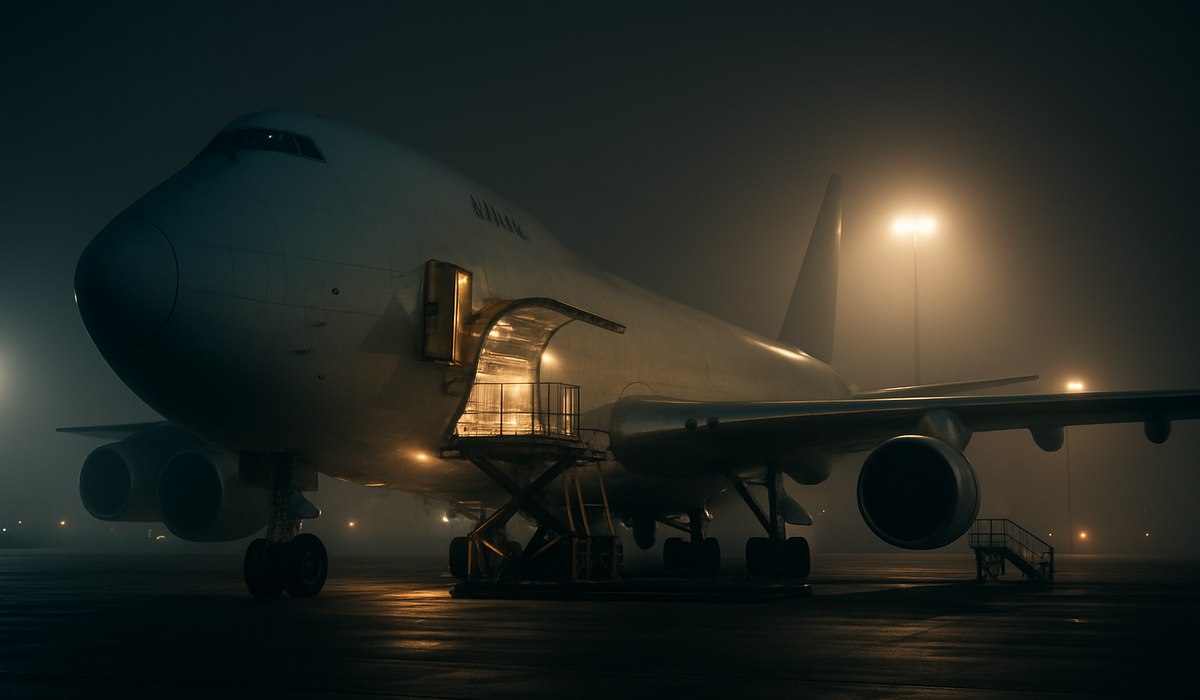
Image generated by AI
The 747 Freighter Defies Industry Modernization Expectations
While passenger Boeing 747s fade into history at major carriers worldwide, cargo airlines continue operating hundreds of 747 freighter variants across global supply chains. The quad-engine jumbo remains the workhorse of international logistics networks, from Memphis to Frankfurt to Shanghai, defying conventional wisdom about aircraft modernization. Despite substantially higher fuel and maintenance expenses compared to twin-engine competitors, carriers like FedEx, UPS, Cathay Pacific Cargo, and Lufthansa Cargo maintain massive 747 fleets because the aircraft's unmatched cargo capacity and proven operational reliability create irreplaceable economic advantages that newer designs simply cannot replicate.
This paradox reflects a fundamental disconnect between passenger aviation evolution and cargo operations. The aviation industry expected modernization to follow the same trajectory across all segments, yet cargo airlines Boeing operations tell a different story. Operating costs remain elevated, but payload advantages and supply chain integration justify continued reliance on these aging giants.
The 747 Freighter's Unmatched Cargo Advantage
The 747-400F and 747-8F variants deliver payload capacity that dominates the competitive landscape. A 747-8F carries approximately 140 metric tons of cargo compared to roughly 80-100 metric tons for modern twin-engine freighters like the Airbus A350F or Boeing 787F. This 40-75% capacity advantage translates directly to superior revenue per flight, allowing operators to move entire container shipments that would require multiple flights on smaller aircraft.
Cargo airlines Boeing freighters offer 858 cubic meters of volumetric capacity in the 747-8F variant. This space advantage proves critical for low-density freight like automotive parts, aerospace components, and consumer electronics that require significant volume relative to weight. A single 747 flight can consolidate shipments destined for multiple geographic markets, reducing overall network costs and improving delivery schedules.
The freighter configuration maximizes usable space through removable main deck cargo door systems, strengthened flooring, and optimized cabin architecture. Operators can load non-standard cargo shapes that would be impossible on passenger-derivative freighters constrained by original certification parameters. This operational flexibility commands premium rates in specialized logistics markets, further justifying continued 747 operation.
Operating Costs vs. Capacity Economics
Quarterly maintenance reserves for 747 freighters typically range from $8,000-$12,000 per flight hour, significantly exceeding costs for modern twin-engine freighters at $5,000-$7,000 per hour. Fuel consumption presents another substantial expense vector, with 747-8F quad engines consuming approximately 12,000 gallons per hour compared to 8,000-9,000 gallons for twin-engine alternatives.
However, this cost analysis fundamentally misleads decision-makers who examine only per-flight expenses. The relevant economic metric is cost-per-ton-mile or cost-per-cubic-meter-available. When cargo airlines Boeing freighter operations move 140 metric tons per flight versus 85 metric tons on competing aircraft, the per-unit economics shift dramatically. A 747-8F completing the same route at double the hourly cost while carrying 65% more cargo creates meaningful unit economics advantage.
Established charter rates in 2026 reflect this advantage. 747-8F charters command $280,000-$350,000 per flight on premium international routes like Hong Kong to Los Angeles, while 787F alternatives range from $200,000-$260,000. The absolute price premium remains true, but per-ton-mile calculations favor the larger aircraft across most route networks.
Fuel surcharge mechanisms embedded in long-term logistics contracts also shift economic burden toward customers. Major freight forwarders contract capacity months in advance at fixed rates, with fuel surcharges calculated separately. This structure insulates cargo airlines Boeing operations from volatile energy markets while allowing capacity-driven pricing to reflect the 747's geometric advantages.
Supply Chain Lock-In and Infrastructure Dependencies
The most underestimated factor sustaining 747 freighter dominance involves infrastructure dependencies that create switching costs nearly impossible to justify for logistics operators. Major distribution hubs including Memphis International Airport, Anchorage Ted Stevens International, and Frankfurt am Main have invested billions in ground handling equipment, loading systems, and terminal infrastructure specifically designed around 747 dimensions and operational requirements.
Loading bridges, cargo handling vehicles, and container systems across North America and European hubs were engineered for 747 upper deck access and specific cargo door heights. Transitioning to competing aircraft would require terminal reconstruction at individual airports, training redesign for ground crews, and reconfiguration of material handling equipment. A single major hub might require $200-500 million in infrastructure investment to optimize alternative freighter operations.
Freight forwarders and integrated carriers like FedEx have designed entire logistics networks around 747 hub-and-spoke models. Scheduled 747 flights connect regional distribution centers on predictable patterns that customers depend upon for just-in-time inventory management. Shifting capacity to newer aircraft would require rerouting through intermediate hubs, extending transit times and degrading service reliability that customers have structured their supply chains around.
Aircraft commonality across fleet operations also influences procurement decisions. Carriers operating both passenger 747s and 747F freighters benefit from shared maintenance infrastructure, pilot training programs, and spare parts inventories. These synergies disappear when introducing dissimilar aircraft types requiring separate technical expertise and supply chains. Legacy infrastructure investments create path-dependent decision-making that perpetuates cargo airlines Boeing fleet preferences despite newer alternatives.
The Modernization Challenge for Competitors
Airbus A350-900F and Boeing 787-9F variants represent technological advancement in fuel efficiency, avionics, and environmental performance, yet neither aircraft has captured significant cargo market share from aging 747 freighters. The A350F offers 140 cubic meters main deck volume—less than one-fifth of 747-8F capacity—fundamentally limiting competitive positioning in consolidated freight operations.
The 787F delivers payload capacity between single-deck 757-200F and 747-8F variants, failing to address the specific market segment where 747s command premium utilization. Newer designs were optimized for passenger route economics where daily frequency and fuel efficiency generate revenue, not for consolidated cargo consolidation economics where unit cost per available ton-mile dictates profitability.
Manufacturers face a market demand problem: new-generation twin-engine freighters cannot achieve 140+ metric ton payloads within structural and regulatory constraints, while quadjet alternatives like potential A380F conversions face even higher operating costs than current 747 operations. The cargo market essentially demands aircraft characteristics (enormous volumetric capacity, quad-engine redundancy, proven reliability) that modern efficiency-focused design philosophy increasingly cannot deliver.
Leasing companies maintain 747 freighter values between $15-25 million per airframe despite aircraft ages exceeding 20-25 years. This sustained secondary market reflects cargo operators' willingness to purchase aging airframes rather than lease modern alternatives—a direct indication that newer aircraft fail to deliver superior economic value. Until manufacturers develop true 140-ton-capacity freighters with modern operating costs, cargo airlines Boeing 747 preference will persist.
Key Data Points: 747 Freighter Operations in 2026
| Metric | Boeing 747-8F | Airbus A350-900F | Boeing 787-9F |
|---|---|---|---|
| Maximum Payload | 140 metric tons | 60 metric tons | 80 metric tons |
| Main Deck Volume | 858 cubic meters | 168 cubic meters | 240 cubic meters |
| Fuel Consumption | 12,000 gal/hour | 8,500 gal/hour | 8,800 gal/hour |
| Maintenance Cost | $10,000/flight hour | $6,000/flight hour | $6,200/flight hour |
| Estimated Life |
Disclaimer
This article is for informational and educational purposes only. It does not constitute legal, financial, or professional advice. While we strive to provide accurate and up-to-date information, travel policies, regulations, and conditions change rapidly. Always verify information with official sources before making travel decisions. Nomad Lawyer makes no representations about the accuracy, reliability, completeness, or suitability of the information provided. Readers should consult qualified professionals for advice specific to their circumstances. The views expressed in this article are those of the author and do not necessarily reflect the views of Nomad Lawyer.
Kunal K Choudhary
Co-Founder & Contributor
A passionate traveller and tech enthusiast. Kunal contributes to the vision and growth of Nomad Lawyer, bringing fresh perspectives and driving the community forward.
Learn more about our team →