
Caracas Joins La Guaira, Aragua, Carabobo, Miranda and Others Rocked as Venezuela Earthquake Triggers National Emergency, Tsunami Warnings, Mass Destruction, Airport Shutdowns and Widespread Travel Chaos Across the Caribbean Region
A rare doublet earthquake sequence (7.2 and 7.5 magnitude) hits northern Venezuela, causing mass destruction in Caracas,

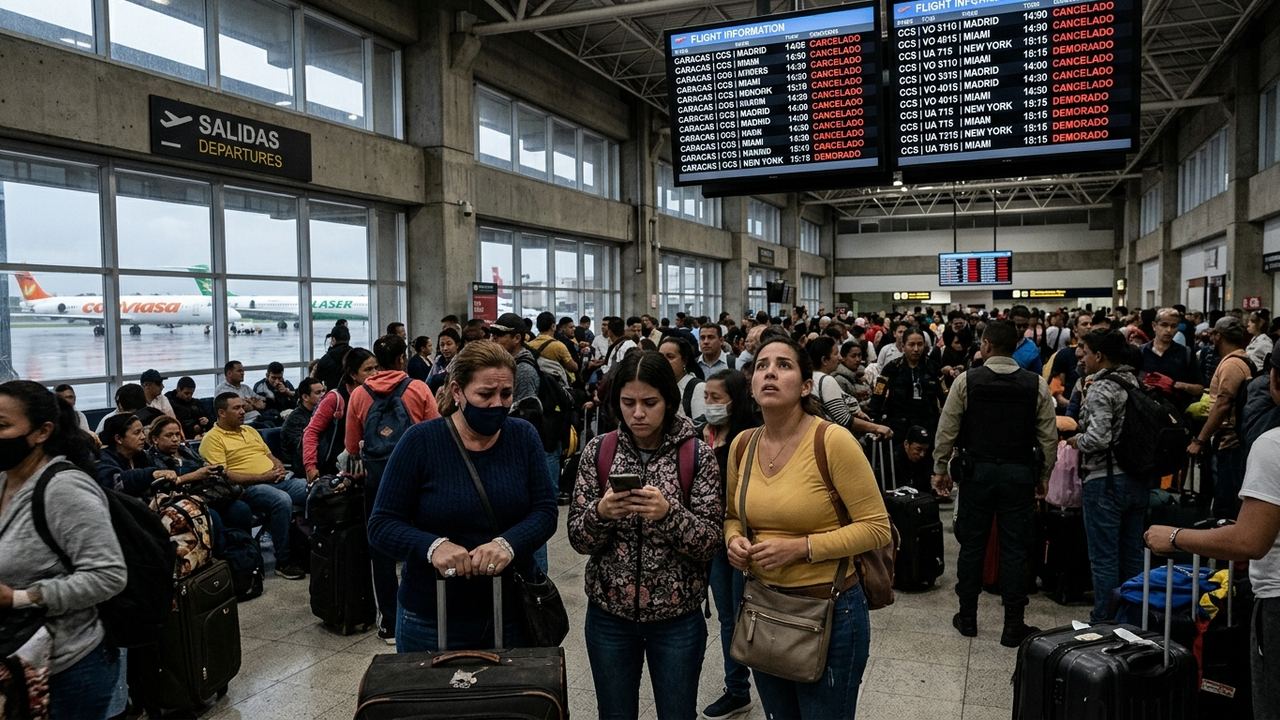
Image generated by AI
[Caracas, June 25, 2026] — A catastrophic doublet earthquake sequence has devastated northern Venezuela, triggering a national state of emergency after two massive tremors struck within one minute of each other. The seismic events, consisting of a magnitude 7.2 quake followed by a magnitude 7.5 mainshock, have resulted in at least 32 confirmed deaths and over 700 injuries, causing widespread structural collapses and the immediate shutdown of major aviation hubs.
The disaster centered on the Morón coastal fault system, where shallow ruptures—occurring at depths between 10 and 13 kilometers—unleashed violent ground shaking across the most densely populated regions of the country. The rapid succession of the tremors created a "cascading failure" effect, where infrastructure weakened by the first shock was completely leveled by the second. In addition to the terrestrial destruction, the event triggered urgent tsunami warnings across the Caribbean basin, including alerts for Puerto Rico, the US Virgin Islands, Aruba, Curaçao, and Bonaire, though these were later rescinded after oceanographic data confirmed no destructive waves had formed.
Rare Doublet Earthquake Sequence Amplifies Urban Destruction
The scale of the devastation was exacerbated by the rare nature of a "doublet earthquake," a phenomenon where two high-magnitude tremors occur in nearly the same location within a very short timeframe. According to seismic data aligned with the United States Geological Survey (USGS), the first event occurred on June 24, 2026, at 18:04:33 VET (22:04 UTC), registering a magnitude of 7.2. This initial shock caused immediate panic and structural stress throughout the northern corridor.
Only 39 to 60 seconds later, at 18:05:11 VET (22:05 UTC), a second, more powerful quake struck with a magnitude of 7.5. Because the interval was too short for structures to stabilize or for residents to find complete safety, the second shock acted as a trigger for total collapse in many urban areas. Seismologists note that the shallow focus of both quakes significantly increased the ground acceleration, making the impact far more lethal than a deeper quake of similar magnitude.
| Parameter | First Earthquake | Second Earthquake (Mainshock) | Combined Impact Notes |
|---|---|---|---|
| Event type | Foreshock | Mainshock | Doublet earthquake sequence |
| Date | 24 June 2026 | 24 June 2026 | Occurred within same seismic episode |
| Time (VET) | 18:04:33 | 18:05:11 | ~39–60 seconds apart |
| Time (UTC) | 22:04 UTC | 22:05 UTC | Rapid succession event |
| Magnitude | ~7.2 | ~7.5 | Second quake stronger |
| Depth | ~13 km | ~10 km | Both shallow-focus earthquakes |
| Epicentre location | Near Morón, northern coastal Venezuela | Near same rupture zone (~few km offset) | Clustered rupture system |
| Seismic classification | Shallow crustal quake | Shallow crustal quake | “Doublet earthquake” system |
| Ground impact level | Severe shaking across northern Venezuela | Extreme shaking + collapse trigger | Structural failure cascade |
| Primary affected zones | Caracas, La Guaira, Carabobo, Aragua, Miranda | Same + expanded collapse zones | Urban intensification after second shock |
| Structural outcome | Initial cracking, partial failures | Major building collapses, infrastructure failure | Progressive collapse mechanism |
| Energy effect | High ground acceleration | Higher energy release | Amplified destructive load |
| After-effect trigger | Panic evacuation, early outages | Widespread collapse, system failure | Disaster escalation phase |
Regional Devastation Across Caracas, La Guaira, and Neighboring States
The geographic distribution of the damage reflects a combination of soil composition and urban density. Caracas, the capital, saw the highest concentration of high-rise building collapses, leaving hospitals overwhelmed and utility grids unstable. The US Embassy in Caracas is reportedly monitoring the situation closely, providing updates for citizens trapped in the disaster zone.
In the coastal city of La Guaira, the disaster was intensified by "coastal amplification," where soft sedimentary soils magnified the seismic waves, leading to severe port damage and landslides. Meanwhile, the industrial hubs of Carabobo faced significant operational shutdowns as factories and transport corridors suffered critical structural failures. In Aragua and Miranda, the impact manifested as widespread residential damage and the collapse of mid-rise structures, forcing mass evacuations of urban centers.
| Region | Primary Impact Level | Key Damage Characteristics | Infrastructure Status | Emergency Outcome |
|---|---|---|---|---|
| Caracas | Extreme | High-rise collapses, hospital overload, power disruption | Metro suspended, utilities unstable | Full emergency activation |
| La Guaira | Severe | Coastal soil amplification, port damage, landslides | Road blockages, port disruption | Mass evacuation zones |
| Aragua | Moderate–High | Structural cracking, mid-rise damage | Transport interruptions | Local emergency response |
| Carabobo | High | Industrial facility stress, transport corridor damage | Partial industrial shutdown | Safety inspections activated |
| Miranda | High | Residential damage, evacuations, utility failure | Network instability | Civil protection deployment |
| Falcón & Others | Localised | Injuries, missing persons, rural damage | Limited access routes affected | Search and rescue operations |
Aviation Crisis and Simón Bolívar International Airport Shutdown
The seismic activity caused an immediate paralysis of the aviation sector. Simón Bolívar International Airport in Caracas was forced to cease all operations following the 7.5 magnitude shock to allow for urgent structural integrity assessments. This shutdown created a ripple effect across the Caribbean and South American flight corridors.
Commercial flights were diverted or cancelled on a massive scale, specifically affecting the high-traffic routes between Caracas, Bogotá, and Panama City. Passengers were left stranded in terminals that were themselves under stress, leading to severe congestion and logistical chaos. While regional airlines implemented precautionary rerouting to avoid the airspace over northern Venezuela, the short-term shock to business and leisure travel was profound.
| Category | Impact Level | Description | Key Outcome | Status |
|---|---|---|---|---|
| Caracas International Airport | Extreme | Full operational shutdown after structural inspection orders | Flight cancellations & diversions | Temporarily closed |
| Regional Flight Network | High | Disruption across Caribbean and South American routes | Rerouting and delays | Partially disrupted |
| Passenger Flow Systems | Severe | Terminal overcrowding and stranded travellers | Rebooking chaos | Overloaded |
| Airspace Management | Moderate–High | Precautionary routing changes over northern Venezuela | Extended flight times | Controlled disruption |
| Tourism & Business Travel | High | Cancellations and itinerary suspensions | Short-term demand shock | Temporarily affected |
National Emergency Response and Caribbean Tsunami Alerts
Within hours of the mainshock, the Venezuelan government declared a national state of emergency, mobilizing military and civil protection units for urban search-and-rescue operations. Emergency triage protocols were activated in hospitals to handle the surge of casualties, and public schools and sports complexes were converted into temporary shelters.
The offshore nature of the rupture initially sparked fears of a regional tsunami. Warning systems alerted coastal authorities in Venezuela and across the Caribbean basin, specifically targeting the ABC islands (Aruba, Bonaire, Curaçao) and the US territories of Puerto Rico and the Virgin Islands. However, after coordination with international monitoring bodies, it was determined that the seabed displacement was insufficient to generate a destructive wave, and all alerts were subsequently cancelled.
| Category | Contact / System | Purpose | Notes |
|---|---|---|---|
| Primary Emergency Line | VEN 911 | Central emergency coordination | 24/7 national disaster response |
| Police Assistance | 911 (via VEN 911) | Public safety, evacuation support | Routed through central command |
| Fire & Rescue Services | VEN 911 dispatch | Building collapse rescue | Activated automatically |
| Medical Emergency | VEN 911 Medical Unit | Ambulance dispatch, triage support | Hospitals on emergency protocols |
| Civil Protection | Protección Civil | Evacuation zones, shelters | State-level deployment |
| International Support | Embassy / Consulate | Travel assistance, citizen support | For foreign nationals |
| Disaster Safety Advisory | N/A | Safety instructions and alerts | Phone networks |
The ongoing crisis underscores the extreme vulnerability of metropolitan coastal corridors to shallow crustal ruptures. As rescue teams continue to sift through the rubble in Caracas and La Guaira, the focus remains on restoring critical utilities and assessing the long-term viability of damaged transport infrastructure. The event serves as a stark reminder of the destructive potential of doublet seismic sequences in high-density urban environments.
Related Travel Guides
Disclaimer
This article is for informational and educational purposes only. It does not constitute legal, financial, or professional advice. While we strive to provide accurate and up-to-date information, travel policies, regulations, and conditions change rapidly. Always verify information with official sources before making travel decisions. Nomad Lawyer makes no representations about the accuracy, reliability, completeness, or suitability of the information provided. Readers should consult qualified professionals for advice specific to their circumstances. The views expressed in this article are those of the author and do not necessarily reflect the views of Nomad Lawyer.
Raushan Kumar
Founder & Lead Developer
Full-stack developer with 11+ years of experience and a passionate traveller. Raushan built Nomad Lawyer from the ground up with a vision to create the best travel and law experience on the web.
Learn more about our team →