
Cancún Aligns With Cozumel as Record 96151 Tonnes of Sargassum Threaten Quintana Roo Beach Tourism in Late 2026
Record sargassum seaweed arrivals impact Quintana Roo beach destinations in late 2026 as Mexico deploys naval collection fleets and containment barriers.

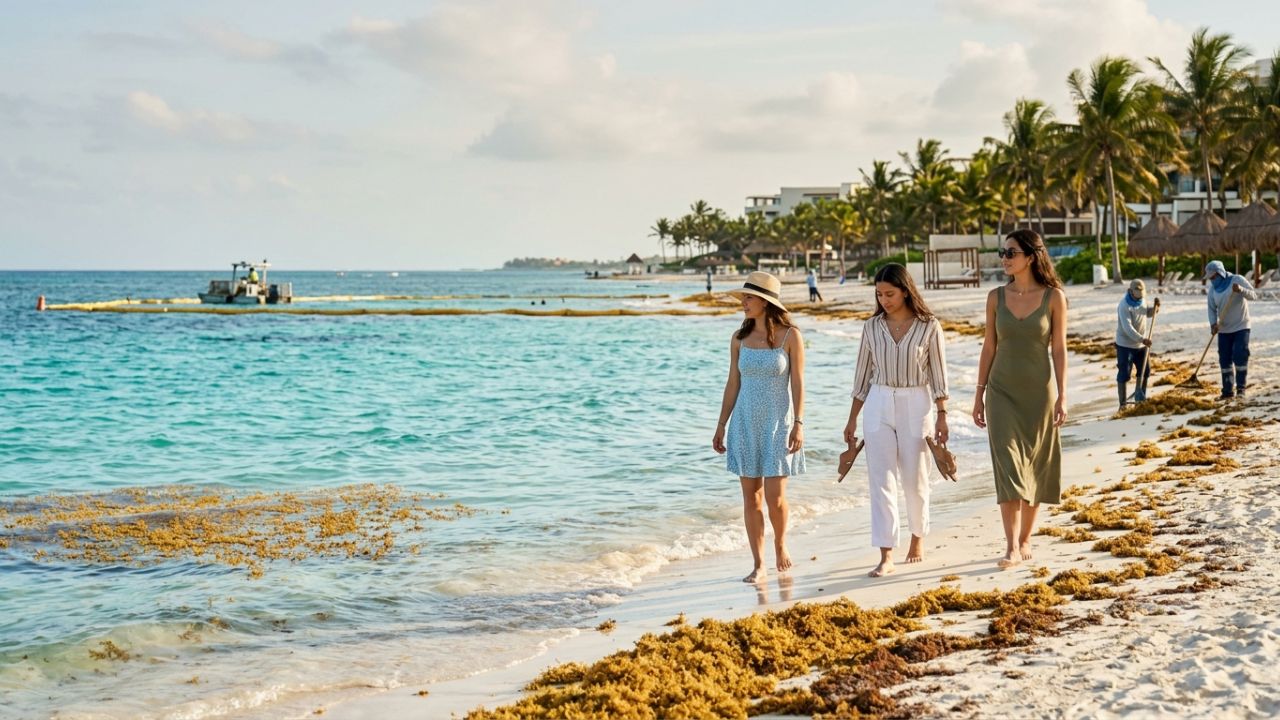
Image generated by AI
Mexico’s Caribbean coast is facing an unprecedented sargassum invasion in late 2026, with municipal clean-up teams collecting a record 96,151 tonnes of floating brown seaweed across Quintana Roo by July 30.
State environmental authorities confirm that sargassum accumulation in 2026 has already surpassed the 92,782 tonnes collected throughout all of 2025, marking the two highest collection years on record. While heavy accumulation impacts major mainland beach resorts including Cancún, Playa del Carmen, Tulum, and Puerto Morelos, offshore islands such as Cozumel, Isla Mujeres, and Holbox report significantly lower exposure, providing vital alternative routing for international travelers.
Quintana Roo Sargassum Surge Exceeds Historical Records
The scale of the 2026 sargassum wave presents major environmental and operational challenges for Mexico’s Caribbean tourism industry. Data from the Secretaría de Medio Ambiente y Recursos Naturales (SEMARNAT) indicates that between 40,000 and 90,538 tonnes of sargassum move through Mexican Caribbean waters on any given day, with approximately 10% reaching the Quintana Roo coastline due to ocean currents and wind patterns.
The economic fallout is reflected in regional hotel performance. Average hotel occupancy across principal Quintana Roo destinations fell to 59.6% during the week of July 4–10. While sargassum accumulation is a key contributing factor to softer summer bookings, regional tourism officials note that reduced aviation capacity and broader international economic conditions have also influenced overall passenger volume.
Regional Sargassum Collection and Environmental Data Matrix 2026
The severity of sargassum accumulation varies dramatically based on coastal geography and prevailing maritime currents. The table below details official municipal collection metrics, naval asset deployments, and destination impact levels recorded across Quintana Roo by late July 2026:
| Destination / Metric Parameter | 2026 Official Figure | Relative Situational Risk | Primary Operational Measures |
|---|---|---|---|
| Playa del Carmen (Solidaridad) | 31,413 tonnes collected | Critical Impact Hotspot | 5 km marine barriers, daily manual beach clearing |
| Benito Juárez (Cancún) | 20,880 tonnes collected | Severe Impact Zone | Offshore collection vessels, dynamic barrier priority |
| Puerto Morelos | 10,572 tonnes collected | Significant Impact Zone | Reef protection barriers, naval vessel interception |
| Tulum | 9,663 tonnes collected | Significant Impact Zone | Reinforced coastal barriers, eco-resort manual sweeps |
| Othón P. Blanco (Mahahual) | 9,446 tonnes collected | Significant Impact Zone | Nearshore containment nets, manual removal teams |
| Isla Mujeres | 3,348 tonnes collected | Low to Moderate Impact | Island ferry transfers, localized barrier sweepers |
| Cozumel | 1,113 tonnes collected | Low Impact | Western shore protection, deep-water diver monitoring |
| Lázaro Cárdenas (Holbox Area) | 36.25 tonnes collected | Minimal Impact | Natural sandbar protection, minimal accumulation |
| Total Quintana Roo State Collection | 96,151 tonnes (by July 30) | State Record Surge | Exceeds total 2025 collection (92,782 tonnes) |
| Daily Seaweed Transiting Waters | 40,000–90,538 tonnes/day | Persistent Threat | 10% estimated daily shoreline landfall |
| Naval Fleet & Containment Barriers | 16,030 metres barriers deployed | Active Defense | 1 ocean vessel, 11 coastal ships, 18 small craft |
Destination Breakdown: Mainland Hotspots Versus Protected Islands
Mainland Resort Corridors Face Unprecedented Accumulation
Playa del Carmen represents the hardest-hit municipality in Quintana Roo, recording 31,413 tonnes collected by July 20. Local authorities deployed five kilometers of marine barriers alongside satellite monitoring systems. During a single mobilization on June 6, over 2,000 workers removed 70 tonnes of seaweed from public beaches.
In Cancún (Benito Juárez municipality), authorities cleared 20,880 tonnes by mid-July (up from 20,469 tonnes reported in earlier tallies). While resort amenities, pools, and dining options operate normally, decomposing algae can turn nearshore waters brown and produce strong sulfur odors. Puerto Morelos recorded 10,572 tonnes removed, threatening its reef-based diving tourism, while Tulum cleared 9,663 tonnes. Tulum’s long-term hotel occupancy averaged 62.6% between July 2025 and June 2026, compared to 70.8% in Cancún and 65.4% in Playa del Carmen.
Island Destinations Offer Cleaner Coastal Alternatives
Geographic orientation provides natural protection for Quintana Roo's offshore islands. Cozumel recorded only 1,113 tonnes collected through July—a fraction of the totals seen on the mainland. The island’s western beaches, where major resorts and dive operations are concentrated, remain largely shielded from eastern Caribbean seaweed drifts.
Isla Mujeres recorded 3,348 tonnes, making it an accessible day-trip alternative for tourists staying in nearby Cancún hotels. Meanwhile, Holbox (Lázaro Cárdenas municipality) logged just 36.25 tonnes in state reporting, demonstrating how local wind and current dynamics keep the northern gulf waters relatively clear.
Traveler Logistics Guide: Navigating Mexican Caribbean Beach Options
Travelers planning vacations to Quintana Roo during late 2026 can optimize their itineraries by applying real-time monitoring and strategic routing tactics:
-
Real-Time Beach Monitoring and Satellite Tracking
- State Monitoring Tools: Consult the Quintana Roo Sargassum Monitoring Network (Red de Monitoreo del Sargazo de Quintana Roo) and Sentinel-2 satellite bulletins before selecting specific beaches.
- Daily Wind Inspections: Beaches facing west or protected by natural coves (such as Playa Norte on Isla Mujeres or El Cielo in Cozumel) often stay clear even when east-facing mainland beaches experience heavy seaweed landings.
-
Strategic Island Transfers and Day Trips
- Cancún to Isla Mujeres: Passengers can take Ultramar or Jetway ferries from Puerto Juárez or the Cancún Hotel Zone (Playa Tortugas, Caracol) for a 20-minute crossing to cleaner island beaches.
- Playa del Carmen to Cozumel: When mainland beaches in Playa del Carmen experience heavy sargassum accumulation, take the 45-minute passenger ferry from the downtown pier to San Miguel de Cozumel for scuba diving and clear water swimming.
-
Resort Booking and Property Selection
- Private Containment Infrastructure: Book luxury properties equipped with proprietary offshore deflection barriers and dedicated heavy-machinery removal teams.
- Alternative Resort Amenities: Select properties featuring expansive swimming lagoon complexes, rooftop pools, and private cenote access to ensure enjoyable water activities regardless of daily sea conditions.
-
Flexible Booking Terms and Travel Insurance
- Flexible Cancellation Policies: Reserve accommodations that permit penalty-free date adjustments or property shifts within the Mexican Caribbean.
- Comprehensive Coverage: Ensure travel protection policies cover unexpected itinerary changes caused by severe environmental disruptions or localized flight cancellations.
Federal Defense Strategy and Multi-Billion Peso Infrastructure Investment
To combat the long-term threat to its tourism economy, the Mexican Secretariat of the Navy (SEMAR) and state authorities have shifted from reactive beach cleaning to offshore interception. By late July, naval forces had deployed 16,030 meters of containment barriers, 11 coastal sargassum vessels, 1 ocean-going collector ship, 1 amphibious collector, and 18 small support boats.
The federal government announced an initial investment of 768.7 million pesos to boost offshore collection capacity from 1,227 tonnes per day to a first-stage target of 1,870 tonnes per day. A wider 2 billion peso long-term strategy aims to expand capacity to 4,000 tonnes daily, incorporating 50 kilometers of dynamic coastal barriers across Playa del Carmen, Cancún, Tulum, Puerto Morelos, and Mahahual alongside advanced satellite oceanography tracking.
Related Travel Guides
The 10 Best Sargassum-Free Beaches in the Caribbean, According To Reddit
Disclaimer
This article is for informational and educational purposes only. It does not constitute legal, financial, or professional advice. While we strive to provide accurate and up-to-date information, travel policies, regulations, and conditions change rapidly. Always verify information with official sources before making travel decisions. Nomad Lawyer makes no representations about the accuracy, reliability, completeness, or suitability of the information provided. Readers should consult qualified professionals for advice specific to their circumstances. The views expressed in this article are those of the author and do not necessarily reflect the views of Nomad Lawyer.
Raushan Kumar
Founder & Lead Developer
Full-stack developer with 11+ years of experience and a passionate traveller. Raushan built Nomad Lawyer from the ground up with a vision to create the best travel and law experience on the web.
Learn more about our team →