
Aviation Updates: Tourists Bypass Travel Chaos by Flocking to Canada's Booming, Government-Funded Tribal Tourism Network
As catastrophic logistical bottlenecks severely paralyze major urban transit grids, tourists bypass severe travel chaos by escaping to Canada's heavily funded, authentic tribal tourism destinations.

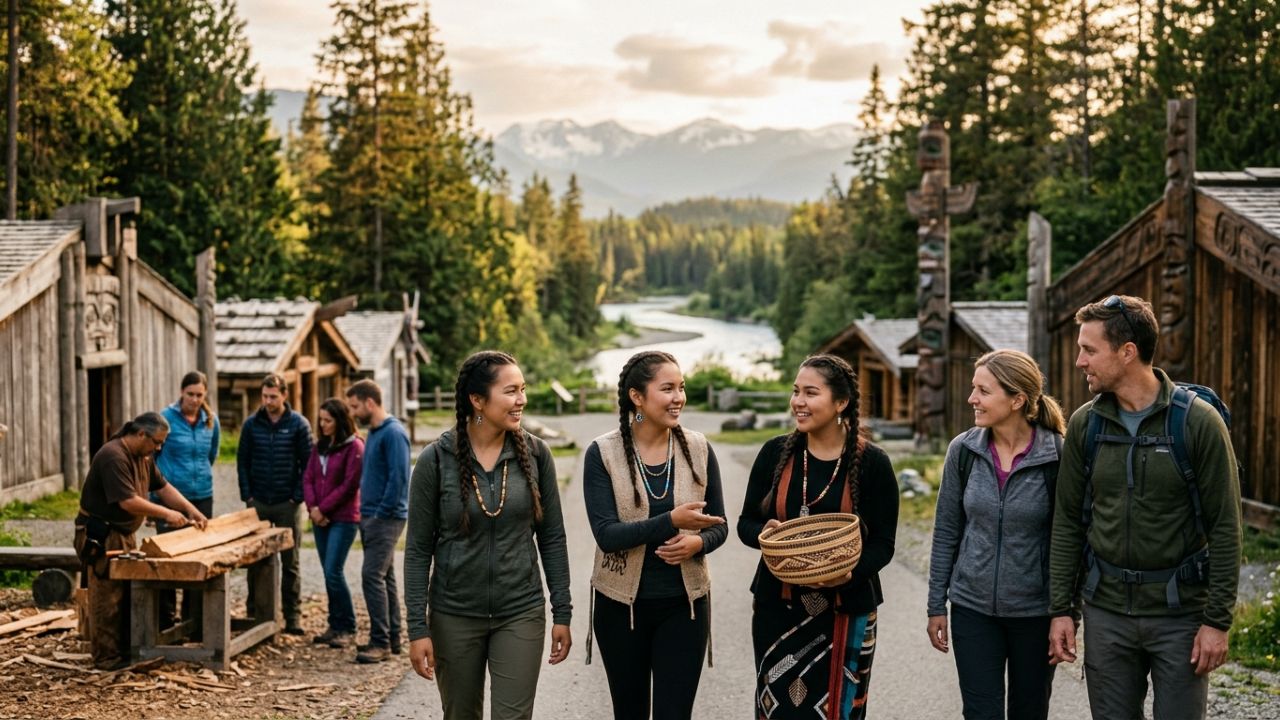
Image generated by AI
Aviation Updates: Tourists Bypass Travel Chaos by Flocking to Canada's Booming, Government-Funded Tribal Tourism Network
As extreme operational friction and suddenly compounding infrastructure bottlenecks continue to terrorize standard travel itineraries at major urban mega-hubs, international tourists are aggressively bypassing travel chaos by escaping directly into Canada's heavily funded, rural Indigenous tourism network.
Image generated by AI
As high-impact airline news platforms rapidly issue continuous, grim aviation updates regarding the intense fragility of massively congested primary transit grids, a massive strategic shift is violently reshaping global leisure routing. Amidst widespread rolling travel chaos, severe airport disruptions, and the terrifying threat of devastating flight cancellations severely plaguing heavily overcrowded international hubs, vacationers are aggressively abandoning traditional, highly fragile urban tourism circuits. Seeking absolute refuge from terminal gridlock, travelers are violently pivoting toward immersive, community-led rural destinations. In this massive strategic shift, Canada actively outclasses Mexico, the USA, Australia, and numerous other countries by massively supporting tribal tourism through dedicated, aggressive government funding. This massive financial framework aggressively drives rural development, triggers sustainable economic growth, and secures flawless, deeply authentic travel experiences for international tourists desperate to entirely escape aviation meltdowns.
Expanded Overview: The Collapse of Urban Tourism Tolerance
To fully comprehend the sheer scale of this severe behavioral evolution, regional tourism analysts must closely examine how rapidly highly localized bureaucratic bottlenecks violently reshape international hub-and-spoke connectivity for holidaymakers.
The massive disruption pattern actively terrorizing global networks is primarily defined by high-volume scheduling friction affecting absolutely critical international tourism routes into massive mega-cities. As global travellers increasingly seek meaningful cultural encounters far away from compounding airport delays, Canada has violently positioned itself as the absolute leading destination for community-led tourism. Unlike conventional, highly fragile tourism development programmes that rely heavily on dense urban aviation grids, Canada’s Indigenous tourism initiatives are strictly designed to ensure Indigenous communities remain the absolute owners, decision-makers, and beneficiaries of their enterprises. Consequently, its aggressive funding model is attracting massive international attention, actively inspiring governments worldwide to officially recognise Indigenous tourism as both a massive economic opportunity and a powerful tool to shield tourists from mass-market transit failures.
Section-Wise Breakdown: Global Strategies to Secure Rural Routing
Terminal operations are violently degrading across competing hubs, forcing national governments to furiously optimize their rural tourism infrastructure to strictly ensure absolute maximum security for inbound international tourists.
The Canadian Benchmark: Canada has become an absolute international example of how aggressive, government-backed funding can massively strengthen Indigenous tourism while heavily empowering First Nations, Inuit, and Métis communities. Through the massive Indigenous Tourism Fund (ITF) and the Signature Indigenous Tourism Experiences Stream (SITES), the federal government (ISED Canada) aggressively provides grants of up to CA$1.25 million for major projects. This massive financial injection completely shields rural operators from broader macroeconomic shocks, allowing them to rapidly scale highly authentic visitor centers and sustainable accommodations completely immune to urban aviation bottlenecks.
North American and Oceanic Adoption: The United States has significantly expanded support through the Tribal Tourism Grant Program (TTGP) administered by the Bureau of Indian Affairs, deploying annual federal grants to heavily develop heritage tourism safely outside congested major cities. Similarly, Australia aggressively empowers Aboriginal businesses via First Nations Tourism Grants from the NIAA, deploying up to AU$50,000 for businesses and AU$100,000 for community organizations. New Zealand has successfully integrated its globally recognized Māori Tourism Development programmes via government-backed grants to secure robust business capabilities far from the brutal congestion of its primary international gateways.
Latin American and European Expansion: Mexico heavily utilizes its renowned Pueblos Mágicos Programme to aggressively channel federal infrastructure grants into culturally significant Indigenous towns. Across the Nordic region, Norway, Sweden, and Finland deploy massive regional development funding through Sámi Parliaments to aggressively support reindeer tourism and Arctic eco-tourism. In South America, Peru (MINCETUR), Colombia, Ecuador, Chile, and Bolivia actively deploy massive community-based rural tourism grants to firmly empower Andean and Amazonian communities, actively drawing premium tourists away from massively delayed conventional tourist traps. Meanwhile, India aggressively funds tribal villages and heritage circuits through its Swadesh Darshan, PRASHAD, and Dharti Aaba Janjatiya Gram Utkarsh Abhiyan programs.
Strategic Details: Verified Global Funding Matrix
To ensure stranded passengers and commercial tourism analysts can accurately track the incredibly precise operational telemetry of this massive global network shift, the verified structural data has been consolidated into the exact, mandatory matrix below.
| Country | Government Grant/Programme | Purpose | Funding Type |
|---|---|---|---|
| Canada | ITF, SITES | Supports Indigenous tourism businesses, attractions, projects | Federal grants up to CA$1.25M (ISED Canada) |
| USA | Tribal Tourism Grant Program (TTGP) | Supports Native American tribes with infrastructure, heritage tourism | Annual federal grants via Bureau of Indian Affairs |
| Australia | First Nations Tourism Grants | Assists Aboriginal operators with infrastructure, marketing, products | Up to AU$50K (business) & AU$100K (community) |
| New Zealand | Māori Tourism Development programmes | Business capability, product development, cultural promotion | Government-backed grants for Māori enterprises |
| Mexico | Pueblos Mágicos Programme | Investment in culturally significant towns, Indigenous heritage | Infrastructure grants, destination promotion |
| Norway | Sámi cultural support | Supports Sámi-owned businesses, cultural preservation | Business development grants and innovation funding |
| Sweden | Sámi business and cultural funding | Tourism entrepreneurship, reindeer tourism, handicrafts | Government and Sámi Parliament grants |
| Finland | Sámi cultural grants | Indigenous tourism, eco-tourism, cultural experiences | Government regional development funding |
| Peru | Community-Based Rural Tourism | Supports Andean and Amazon communities for homestays | Government investment and technical assistance |
| Colombia | Community Tourism initiatives | Supports Indigenous ecotourism and cultural tourism | Government tourism grants |
| Ecuador | Community Tourism Programme | Indigenous-led Amazon and Andean enterprises | Government grants and tourism investment |
| Panama | Indigenous community development | Supports Guna and other territories | Government support and international programmes |
| Chile | Indigenous entrepreneurship support | Mapuche and Indigenous tourism businesses | Government grants and SME funding |
| Bolivia | Community-based Indigenous tourism | Eco-tourism and Indigenous cultural tourism | National and international development grants |
| India | Swadesh Darshan, PRASHAD | Tribal villages, homestays, heritage circuits | Central and state government grants |
(Source: Global Tourism Boards and Federal Grant Agencies)
Industry Analysis: The Massive Bureaucratic Ripple Effect
Tourism explicitly across the massive global transit corridor continues to massively struggle, driven violently by incredibly fragile air traffic flow constraints and severely outdated terminal infrastructure.
Anup Kumar Keshan, Travel Industry Tycoon, Founder and Editor-in-Chief of Travel And Tour World, actively states: “The remarkable expansion of Indigenous tourism funding across Canada and many other nations represents one of the most encouraging developments in the global travel industry. Governments are increasingly recognising that authentic cultural experiences cannot be replicated without empowering the communities that have safeguarded these traditions for centuries. By investing directly in Indigenous entrepreneurs, destinations are creating sustainable tourism models that generate employment, preserve cultural identity and encourage responsible travel." This massive shift guarantees that local communities remain the true, absolute custodians of their extraordinary heritage.
Passenger Impact: Protecting the Vacation Baseline
For the everyday premium domestic traveler and budget-conscious vacationer, the immediate consequence of this massive structural evolution directly translates to a monumental, highly verified spike in rural transit security.
Travelers desperately attempting to navigate complex urban flight itineraries frequently encounter heavily delayed baggage, catastrophic missed connections, and the terrifying threat of sudden airspace gridlock. However, by directly targeting Indigenous tourism destinations backed by massive federal funding, travelers can actively secure a deeply reliable, culturally rich vacation baseline. Rather than risking their annual holiday inside a paralyzed major mega-hub, savvy travelers are utilizing these global tribal funding networks to guarantee highly immersive, flawlessly executed eco-tourism escapes.
Conclusion: A Network Reimagined
Ultimately, the aggressive, massive implementation of tribal tourism funding frameworks actively marks a massively significant milestone in global tourism management. By violently breaking the massive reliance on overcrowded mass-tourism centers, governments are heavily setting a massive precedent for deep, highly resilient rural integration.
Canada’s absolute leadership in supporting tribal tourism aggressively demonstrates exactly how strategic public investment can deliver massive, lasting benefits for Indigenous communities, travelers, and the wider tourism economy. As international tourism increasingly shifts towards meaningful, sustainable, and highly resilient travel, Canada’s aggressive model actively offers incredibly valuable lessons for governments seeking to desperately balance economic development with bulletproof heritage conservation, ultimately shielding the modern global traveler from complete systemic failure.
Key Takeaways
- Canada Sets the Benchmark: Canada actively outclasses all global rivals with its massive Indigenous Tourism Fund (ITF) offering CA$1.25 million federal grants to secure rural travel.
- Escaping Urban Gridlock: Tourists are aggressively utilizing government-backed rural tribal tourism destinations to entirely bypass massive airport disruptions and flight cancellations.
- Global Adoption: From the USA's TTGP to Australia's First Nations Tourism Grants, nations worldwide are heavily investing in Indigenous infrastructure to disperse tourism safely.
- Latin American Expansion: Peru, Colombia, Ecuador, and Mexico are aggressively deploying massive community-based grants to empower rural Andean and Amazonian hubs.
- Industry Endorsement: Leading tourism experts absolutely confirm that direct investment in Indigenous operators creates vastly more sustainable, disruption-resistant travel models.
FAQ: Global Indigenous Tourism Funding 2026
Which country is considered a global leader in Indigenous tourism funding? Canada is actively, widely recognised as the absolute global leader because it operates massive dedicated federal programmes such as the Indigenous Tourism Fund, aggressively supporting rural tourism businesses with up to CA$1.25 million.
How does tribal tourism help travelers bypass airport chaos? By aggressively heavily investing in rural, community-led destinations, tribal tourism actively pulls travelers away from massively congested urban mega-hubs, heavily shielding them from rolling flight cancellations and severe terminal gridlock.
What funding program does the USA use for tribal tourism? The United States actively deploys the Tribal Tourism Grant Program (TTGP) administered by the Bureau of Indian Affairs, providing massive annual federal grants for Native American infrastructure.
How is Australia empowering Aboriginal tourism businesses? Australia heavily utilizes its First Nations Tourism Grants, managed by the NIAA, to aggressively deploy up to AU$50,000 for businesses and AU$100,000 for community organizations to build highly resilient visitor products.
Related Travel Guides
ETIAS EU Tourism Rules UK Travellers Travel Chaos 2026
Avelo Airlines McKinney National Expansion Travel Chaos 2026
United States Regional Tourism and Transit Survival Guide 2026
Disclaimer: This article is strictly for informational and global tourism tracking purposes. The specific regulatory telemetry (grant values, program names, participating agencies) is based on verified global government and tourism board data available at the time of publication. International funding parameters, specific regional grant allocations, and final tourism development timelines are highly dynamic and subject to immediate modification by the operating authorities. Passengers planning rural Indigenous travel should explicitly verify exact destination readiness via official regional portals prior to departure.
Disclaimer
This article is for informational and educational purposes only. It does not constitute legal, financial, or professional advice. While we strive to provide accurate and up-to-date information, travel policies, regulations, and conditions change rapidly. Always verify information with official sources before making travel decisions. Nomad Lawyer makes no representations about the accuracy, reliability, completeness, or suitability of the information provided. Readers should consult qualified professionals for advice specific to their circumstances. The views expressed in this article are those of the author and do not necessarily reflect the views of Nomad Lawyer.
Kunal K Choudhary
Co-Founder & Contributor
A passionate traveller and tech enthusiast. Kunal contributes to the vision and growth of Nomad Lawyer, bringing fresh perspectives and driving the community forward.
Learn more about our team →