
Canada Invests Millions in Acadian Heritage to Boost Cultural Tourism for National Acadian Day 2026
The Canadian government has announced significant funding for Acadian heritage preservation and cultural celebrations to enhance regional tourism and Francophone identity.

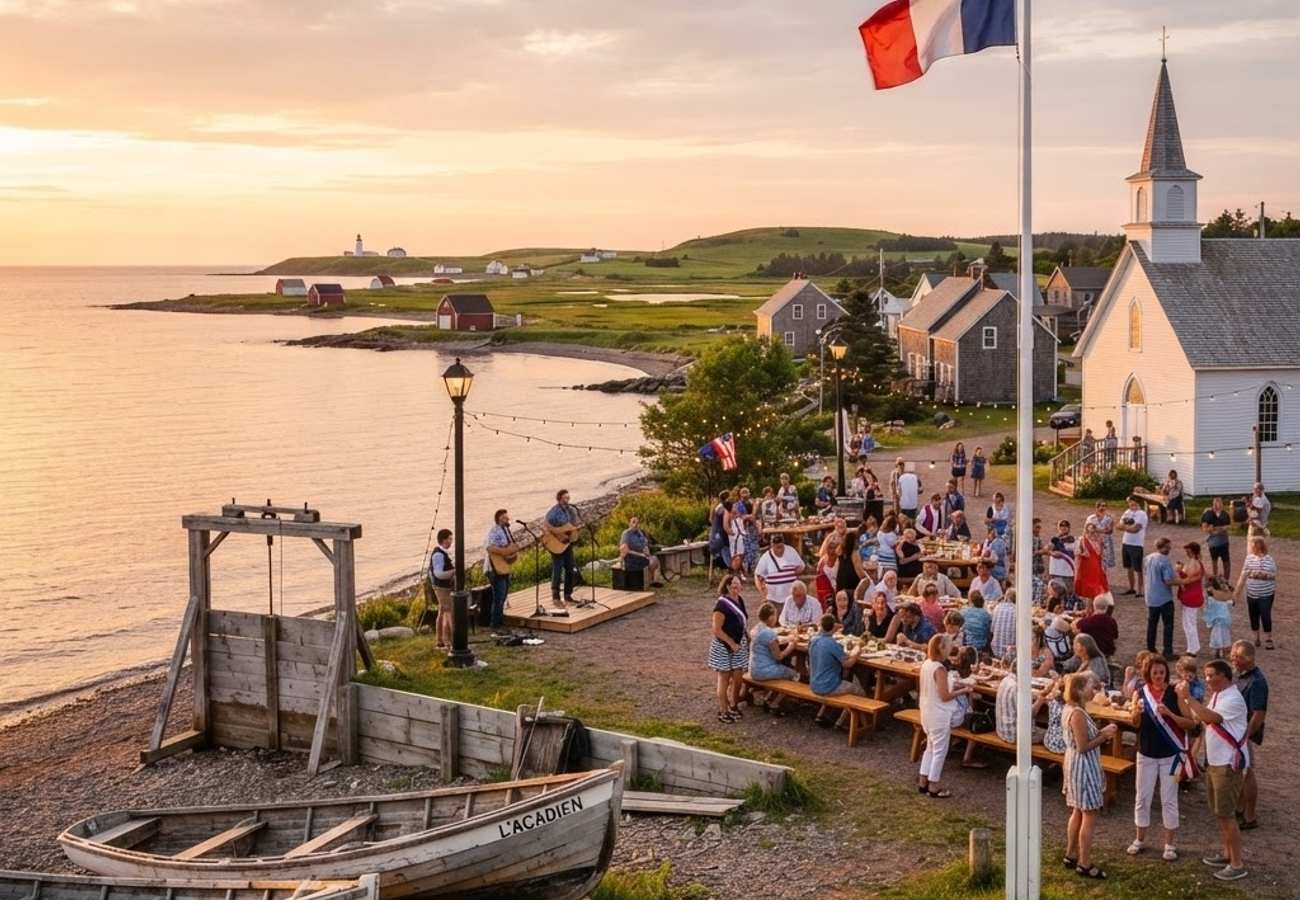
Image generated by AI
Canada is leveraging a $5.75 million federal investment to transform Acadian heritage into a primary driver for regional tourism, coinciding with the National Acadian Day celebrations on August 15, 2026. This strategic move aims to preserve the resilience of one of North America's oldest Francophone communities while attracting global travelers seeking authentic, non-standardized cultural experiences.
The Acadian people have influenced the social and cultural fabric of Canada for over four centuries. Their enduring presence—marked by a distinct language, unique musical traditions, and a history of survival against adversity—now serves as a cornerstone for Canada's identity-based tourism strategy. By funding the preservation of cultural spaces and community events, the government is effectively turning living history into a sustainable economic asset for smaller regional hubs.
Federal Funding Allocated for Acadian Preservation
To ensure the longevity of these traditions, the Canadian government has unveiled a targeted financial package. A joint investment of $750,000 has been directed specifically toward the Place du Drapeau acadien. Furthermore, the federal government is committing $5 million over a five-year period, starting in the 2026–2027 fiscal year, through the Celebrations and Commemorations Program managed by Canadian Heritage.
These funds are designed to move beyond simple monument maintenance. Instead, the capital will support the staging of large-scale community celebrations and the protection of cultural spaces where the Acadian way of life is still practiced. For the travel sector, this means a more robust infrastructure for visitors to engage with the Francophone world, from local gastronomy to historical archives.
Transforming Heritage into Immersive Travel Experiences
Modern travelers are increasingly rejecting "cookie-cutter" tourism in favor of immersive, identity-rich journeys. Acadian culture provides a diverse array of touchpoints that meet this demand, ranging from the architectural curiosity of historic aboiteaux to the high-energy atmosphere of Tintamarre celebrations.
The cultural appeal is not limited to history books; it is a living experience. Visitors can engage with contemporary Acadian creativity through:
- Music and Arts: The influence of artists like Lisa LeBlanc and the historical resonance of 1755.
- Performance: Local theater and literature that explore the Acadian diaspora and resilience.
- Community Events: Festivals that blend traditional cuisine with modern entrepreneurial spirit.
By integrating these elements into the broader tourism portfolio, Canada is positioning its Francophone regions as destinations where history is encountered through active participation rather than passive observation.
Economic Impact on Regional Tourism Hubs
Acadian communities are not confined to a single province; they are spread across every province and territory in Canada. This geographic dispersion allows the government to distribute tourism spending away from major metropolitan gateways and into smaller, rural communities.
The development of specific "heritage routes" and community-led festival programs allows local businesses—such as boutique hotels, regional eateries, and artisan shops—to benefit directly from the influx of cultural tourists. This model of sustainable tourism ensures that the economic value generated by these visits is reinvested into the community, helping to preserve the very traditions that attract the visitors in the first place.
The Role of National Acadian Day in Maintaining Visibility
August 15 serves as more than a date on the calendar; it is a strategic tool for maintaining the visibility of a living heritage. Marc Miller, Minister of Canadian Identity and Culture and Minister responsible for Official Languages, noted in an Ottawa statement that the resilience of the Acadian people is a source of collective pride.
The Tintamarre, a tradition characterized by loud, joyous noise-making using instruments and household objects, serves as a highly visible manifestation of this identity. For the tourism industry, such events create "peak moments" that are highly shareable and memorable, driving interest in the region long after the celebrations have ended.
Strategic Funding Breakdown for 2026
| Funding Source/Project | Amount | Duration/Timeline | Primary Objective |
|---|---|---|---|
| Place du Drapeau acadien | $750,000 | Immediate/Joint Investment | Site preservation and enhancement |
| Celebrations & Commemorations Program | $5,000,000 | 5 Years (Starting 2026-27) | Heritage preservation and event staging |
Why This Matters: The Shift Toward Experiential Tourism
For the traveler, the investment in Acadian heritage represents a shift from "sightseeing" to "insight-seeking." In a global market where luxury is increasingly defined by authenticity and exclusivity, the ability to access a 400-year-old living culture provides a competitive edge for Canadian tourism.
From a logistical standpoint, this creates a blueprint for how other minority cultural groups in Canada can leverage their heritage for economic gain without sacrificing authenticity. When tourism is community-led, it prevents the "museumification" of culture—where traditions are performed solely for tourists—and instead keeps them relevant for the younger generations of Acadians. For the visitor, this ensures that the experience is genuine, rooted in real community life rather than a scripted tourist attraction.
The intersection of federal funding and grassroots cultural pride is turning the Acadian story into a premier destination for the conscious traveler.
Related Travel Guides
Disclaimer
This article is for informational and educational purposes only. It does not constitute legal, financial, or professional advice. While we strive to provide accurate and up-to-date information, travel policies, regulations, and conditions change rapidly. Always verify information with official sources before making travel decisions. Nomad Lawyer makes no representations about the accuracy, reliability, completeness, or suitability of the information provided. Readers should consult qualified professionals for advice specific to their circumstances. The views expressed in this article are those of the author and do not necessarily reflect the views of Nomad Lawyer.
Preeti Gunjan
Contributor & Community Manager
A passionate traveller and community builder. Preeti helps grow the Nomad Lawyer community, fostering engagement and bringing the reader experience to life.
Learn more about our team →