
Air Canada, Porter, WestJet, and PAL Airlines Ground Flights Triggering Widespread Canada Flight Cancellations and Delays Across Toronto, Vancouver, Montreal, and Ottawa: New Aviation Updates
A massive aviation gridlock hits Canada as Air Canada, Porter, WestJet, and PAL Airlines suffer 331 flight delays and 54 cancellations nationwide.

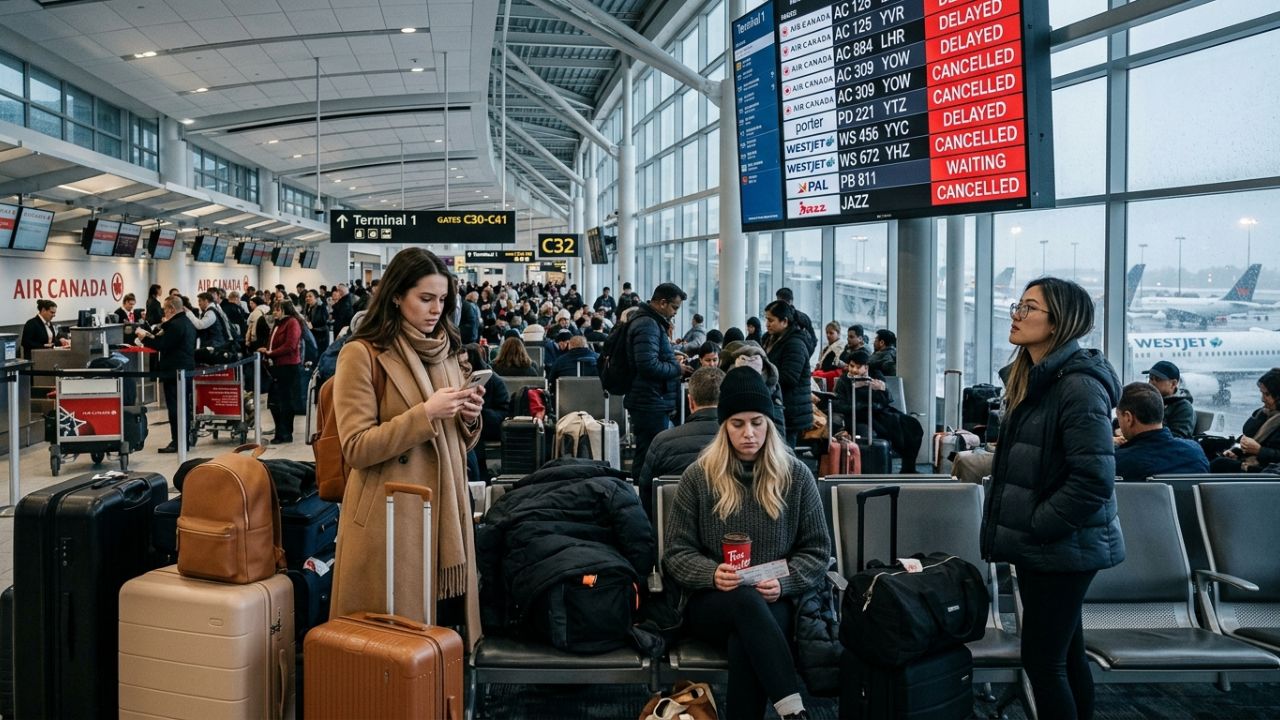
Image generated by AI
In a dramatic wave of operational gridlock that has swept across the Canadian aviation sector, thousands of domestic, regional, and international travelers are facing severe disruptions. On May 18, 2026, leading Canadian carriers—including flag carrier Air Canada, regional operators Porter Airlines and PAL Airlines, and transcontinental rival WestJet—grounded dozens of operations and triggered a massive wave of 331 flight delays and 54 cancellations across the country. This latest airline news update outlines the intense pressure on Canada's primary and regional gateways, causing extensive travel chaos and airport disruptions that have left travelers stranded and facing extended terminal wait times.
Subheading: Nationwide Air Gridlock Strands Thousands of Passengers as Major Canadian Hubs and Regional Gateways Suffer 331 Delays and 54 Cancellations
Aviation data suggests that the widespread operational bottleneck was driven by a combination of spring weather systems, air traffic control (ATC) restrictions, and localized crew scheduling constraints. In compliance with strict safety directives, airlines actively adjusted schedules to manage high-frequency commuter routes and transborder connections. Because Canada's domestic air network is highly integrated, minor delays at primary international hubs like Toronto Pearson and Montreal-Trudeau quickly cascade through regional networks, disrupting flight rotations for remote communities.
The timing of these disruptions is particularly critical as Canadian carriers optimize seat capacity and fleet deployment ahead of the summer travel surge. Major carriers like Air Canada and regional feeder Jazz Aviation manage massive passenger volumes, making them vulnerable to crew allocation constraints and gate delays when weather restricts runway arrival rates. Meanwhile, regional and northern carriers face concentrated operational challenges, directly isolating remote northern settlements.
Detailed Section-Wise Breakdown of Canadian Airport Disruptions
The scheduling bottleneck has affected twelve domestic, regional, and northern gateways across Canada, forcing passengers to navigate long queues, crowded terminals, and rapidly changing departure boards:
Primary Canadian Hubs Faced Severe Travel Congestion
As Canada's busiest international gateway, Toronto Pearson International Airport (YYZ) experienced the highest volume of disruptions, recording 109 delays and 5 cancellations. Major carriers including Air Canada, Jazz (ACA), Air Canada Rouge, WestJet, Air Transat, and Porter Airlines were heavily affected.
On the West Coast, Vancouver International Airport (YVR) experienced 65 delays and 2 cancellations, impacting domestic and transpacific routes. Meanwhile, Montreal-Trudeau International Airport (YUL) registered the highest cancellation total among major hubs, reporting 59 delays and 11 cancellations involving Air Canada, PAL Airlines, Air Transat, and Royal Air Maroc.
Regional and Capital Hub Disruption: Halifax, Ottawa, and Toronto City Centre
The operational gridlock extended across Atlantic Canada and the national capital region:
- Halifax Stanfield International (YHZ): Recorded 17 delays and 8 cancellations involving PAL Airlines, WestJet, and Porter Airlines.
- Ottawa Macdonald-Cartier International (YOW): Registered 15 delays and 8 cancellations, primarily impacting PAL Airlines and Porter.
- Toronto City Centre Billy Bishop Airport (YTZ): Logged 27 delays and 1 cancellation, heavily impacting Porter’s business-commuter shuttle corridor.
- Winnipeg James Armstrong Richardson International (YWG): Reported 16 delays and 2 cancellations.
- Quebec Jean Lesage International (YQB): Experienced 17 delays and 2 cancellations, affecting local Transat and PAL flights.
Northern and Atlantic Communities Faced Critical Isolation
Smaller regional and northern airports suffered the most concentrated cancellation activity, leaving remote communities temporarily isolated without essential air links:
- Kangirsuk Airport (YKG): Suffered severe disruptions with 6 cancellations affecting Air Inuit operations.
- Aupaluk Airport (YAK): Reported 4 cancellations connected to Air Inuit.
- Wabush Airport (YWK): Experienced 2 delays and 3 cancellations, primarily impacting PAL Airlines.
- St. John’s International (YYT): Logged 4 delays and 2 cancellations involving Air Saint Pierre.
Flight Details and Canadian Airport Carrier Operational Matrix
The following table outlines the detailed breakdown of the scheduling disruptions across domestic, regional, and northern carriers operating in Canada, highlighting the scope of the operational pressure:
Summary of Canadian Flight Disruptions by Major Hub
| Airport Hub | Code | Delayed Flights | Cancelled Flights | Strategic Impact / Regional Status |
|---|---|---|---|---|
| Toronto Pearson | YYZ | 109 | 5 | Major International Gateway Congestion |
| Vancouver International | YVR | 65 | 2 | West Coast Transpacific Corridor Stagger |
| Montreal-Trudeau | YUL | 59 | 11 | Highest Hub Cancellation Rate |
| Toronto City Centre | YTZ | 27 | 1 | Billy Bishop Commuter Corridor Disruptions |
| Halifax Stanfield | YHZ | 17 | 8 | Atlantic Canada Regional Delays |
| Quebec Jean Lesage | YQB | 17 | 2 | Quebec Regional Bottlenecks |
| Winnipeg Richardson | YWG | 16 | 2 | Mid-Canada Transit Congestion |
| Ottawa Macdonald-Cartier | YOW | 15 | 8 | Capital Gateway Cancellations |
| Kangirsuk / Aupaluk / Wabush / St. John's | YKG/YAK/YWK/YYT | 6 | 15 | Northern & Atlantic Communities Isolation |
| Total Nationwide Disruptions | - | 331 | 54 | Severe Nationwide Air Gridlock |
Passenger Impact and Canadian Air Passenger Rights
The emotional and financial toll of these airport disruptions extends far beyond simple scheduling inconveniences. Stranded passengers across Toronto, Vancouver, and Montreal reported long lines at check-in, security screening, and boarding gates. Because many domestic travelers utilize YYZ and YUL as major transit gateways, these flight delays resulted in numerous missed domestic and transoceanic connections, requiring airlines to coordinate extensive hotel re-accommodations and baggage re-routing.
Importantly, regional passengers in northern communities like Kangirsuk and Wabush faced severe isolation, as flights to smaller airports represent their only connection to vital medical and commercial services. Under the Canadian Air Passenger Protection Regulations (APPR), passengers may be entitled to alternative transportation, meal vouchers, and financial compensation depending on whether the delays were within the carrier's control.
Industry Analysis: Root Causes of Canadian Flight Disruptions
Aviation analysts explain that Canada’s domestic air network is highly sensitive to cascading delays:
- Regional Weather Systems: Spring low visibility ceilings and marine layer fog frequently restrict regional arrival rates.
- Air Traffic Flow Control: High-density airspace around the Quebec-Windsor corridor requires wider flight separation distances under restricted visibility.
- Crew Duty-Hour Limits: Widespread flight delays push crew allocations past legal duty-hour restrictions, forcing subsequent flight cancellations.
- Tight Hub Rotation Schedules: As Air Canada's primary hub, delayed inbound regional flights quickly trigger subsequent delays across domestic networks.
Conclusion: Recovery Outlook and Stabilizing Operations
Despite the current turbulence, Canadian airport authorities and airline dispatch teams are working to stabilize flight schedules and restore passenger confidence. Departure boards continue to show updated times, and flight dispatchers are gradually returning delayed aircraft to their regular rotations. While terminals remain crowded, Canadian aviation experts are optimistic that domestic operations will steadily stabilize over the next 12 hours.
Key Takeaways
- Scale of Disruptions: Exactly 54 flights were cancelled and 331 flights delayed across Canada on May 18, 2026.
- Hub Carrier Impact: Air Canada logged the highest delay volume with 71 flights, and reported 9 cancellations.
- Most Impacted Carriers: PAL Airlines faced the country’s highest cancellation total with 24 cancelled flights across Atlantic routes.
- Northern Isolation: Air Inuit cancellations heavily disrupted northern communities including Kangirsuk and Aupaluk.
- Advice for Travelers: Monitor real-time FlightAware data, utilize official carrier apps, understand APPR rights, and remain flexible.
Related Travel Guides
- Alaska Airlines, Delta, and SkyWest Ground Flights Triggering Widespread Seattle-Tacoma Flight Delays and Cancellations Across SEA, San Francisco, Chicago, and Dublin: New Aviation Updates
- China Aviation Gridlock: Hainan Airlines, China Eastern, Lucky Air, and China Express Ground Flights Triggering Widespread China Flight Cancellations and Delays Across Beijing, Shenzhen, Shanghai, Guangzhou, and Kunming: New Aviation Updates
- The 10 Best Travel Tips for Flying in Canada, According to Reddit
Disclaimer
This article is for informational and educational purposes only. It does not constitute legal, financial, or professional advice. While we strive to provide accurate and up-to-date information, travel policies, regulations, and conditions change rapidly. Always verify information with official sources before making travel decisions. Nomad Lawyer makes no representations about the accuracy, reliability, completeness, or suitability of the information provided. Readers should consult qualified professionals for advice specific to their circumstances. The views expressed in this article are those of the author and do not necessarily reflect the views of Nomad Lawyer.
Kunal K Choudhary
Co-Founder & Contributor
A passionate traveller and tech enthusiast. Kunal contributes to the vision and growth of Nomad Lawyer, bringing fresh perspectives and driving the community forward.
Learn more about our team →