
Canada Expands Regional Tourism Map with $206,733 Investment in Rainy River District 2026
Canada is diversifying its tourism economy through a decentralized strategy, highlighted by a $206,733 investment in Ontario's Rainy River District to implement AI booking systems and marina upgrades.

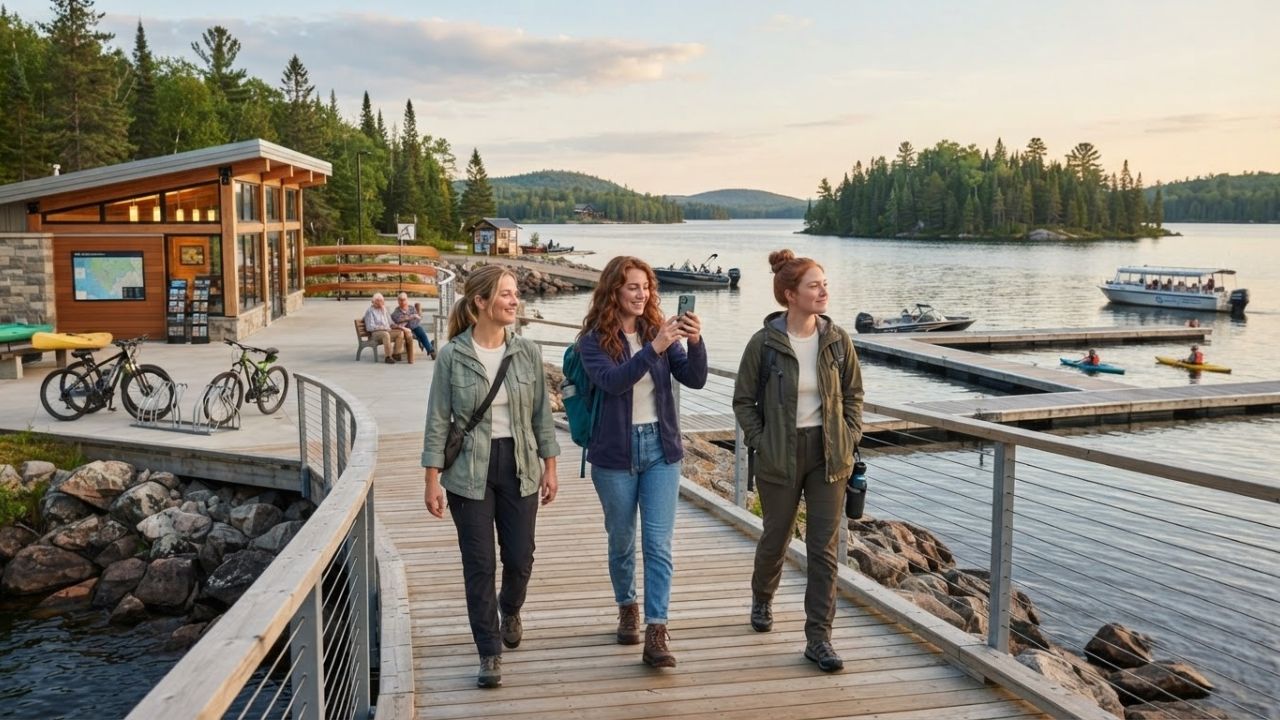
Image generated by AI
Redefining how travelers discover Canada's wilderness, a fresh $206,733 FedNor investment in the Rainy River District is launching AI-enabled booking tools and waterfront upgrades to boost local economies. By upgrading Sorting Gap Marina and Atikokan's digital booking platforms, the federal government is decentralizing tourism to put smaller, nature-rich communities firmly on the map.
FedNor Deploys Capital for Digital and Waterfront Revitalization
The Government of Canada is investing $206,733 through FedNor in two projects designed to strengthen tourism, modernise visitor services, and improve public infrastructure in Ontario’s Rainy River District. Announced on August 10, 2026, in Fort Frances, this capital injection will support local economic development by helping municipal tourism businesses and outfitters adapt to modern travel demands. The announcement was made by Marcus Powlowski, Member of Parliament for Thunder Bay—Rainy River, on behalf of Patty Hajdu, Minister of Jobs and Families and Minister responsible for FedNor.
The $206,733 funding package is split between two distinct community-led projects. The largest share, totaling $171,108, is directed to the Atikokan Economic Development Corporation for its Travel to the North of Ontario – Visit Atikokan project. The remaining $35,625 is allocated to the Town of Fort Frances to support essential upgrades at the Sorting Gap Marina. Together, these initiatives represent a coordinated effort to improve the way travelers discover Northwestern Ontario while upgrading the physical facilities that support waterfront travel and outdoor recreation.
Atikokan's AI Booking Solution: Simplifying Outdoor Travel Discovery
The Atikokan Economic Development Corporation will utilize its $171,108 allocation to develop and launch an integrated online booking system that connects local hotels, lodges, and independent tourism outfitters. In remote nature-focused destinations, travelers often face the challenge of fragmented booking, requiring them to contact multiple outfitters and lodging providers individually via phone or email. This new platform will integrate these separate operations into an AI-enabled online portal, streamlining the customer journey from initial discovery to confirmed booking.
By providing outfitters, such as Canoe Canada Outfitters, with modern digital tools, the project helps local businesses expand their reach into international markets and manage seasonal visitor demand more effectively. Atikokan, recognized as the Canoeing Capital of Canada, serves as the primary gateway to Quetico Provincial Park. The Atikokan Economic Development Corporation, a community-focused non-profit, serves as the main coordinator for these regional business support initiatives, extending its reach across Atikokan, Upsala, and the Seine River, Lac la Croix, and Lac des Mille Lacs First Nations. By simplifying how travelers plan and book their wilderness trips, the digital booking system ensures that local businesses can participate fully in the growing global digital travel marketplace, converting online interest into sustained local revenue.
Fort Frances and Killarney: Upgrading Key Marine Gateways
The Town of Fort Frances is directing its $35,625 allocation to upgrade the Sorting Gap Marina, a key waterfront facility located at the meeting point of Rainy Lake and the Rainy River. The revitalisation of this marina supports small business development, expands visitor programming, and strengthens the town’s waterfront identity. This project upgrades docks and facilities to transform the marina into an active hub for boaters, day travelers, and local residents.
Sorted Gap Marina upgrades in Fort Frances will directly benefit the region's seasonal tourism economy, ensuring that the facility continues to serve as a reliable municipal hub for outdoor enthusiasts who travel to the area for year-round activities like ice fishing and winter snowmobiling. This marine investment is part of a larger provincial trend to upgrade waterfront infrastructure. For comparison, the municipality of Killarney received $917,654 under a regional FedNor package to expand and elevate its municipal wharf. Waterfront upgrades improve safety, support local fishing charters, and create space for vendor markets and community events. By maintaining and upgrading facilities like the Sorting Gap Marina and Killarney’s wharf, Northern Ontario is ensuring that waterfront destinations can successfully capture more spending from recreational boaters, day visitors, and cruise passengers.
Expanding Campground and Cultural Infrastructure Across First Nations
Beyond marinas and digital booking, federal support is expanding outdoor and cultural tourism in partnership with local First Nations. Whitefish River First Nation received $279,000 to develop the waterfront at the community-owned Hilly Acres Campground. The project includes building a boardwalk to improve access to 32 boat slips on the Whitefish River, enhancing access to Lake Huron, and supporting the future expansion of the trailer park.
Additionally, Wahnapitae First Nation is upgrading its Pow-Wow grounds to enhance local events, community gatherings, and authentic visitor experiences. Indigenous cultural tourism is a strategic priority across Canada, with approximately 15% of the federal $108 million Tourism Growth Program funding earmarked for Indigenous-led initiatives. By investing in campgrounds and Pow-Wow grounds, regional programs help First Nations communities develop and control visitor experiences that celebrate their heritage, ensuring that tourism spending remains within local community economies.
A Decentralized Strategy: Expanding the Canadian Tourism Map Coast to Coast
The Rainy River District investments reflect Canada's broader decentralized strategy to build its tourism economy from the ground up. Through the $108 million Tourism Growth Program, regional development agencies are investing in nature-rich communities beyond major urban gateways. In Northern Ontario, this strategy includes supporting Sudbury's $1.61 million allocation for six projects, Timmins' $4.19 million for nine initiatives, and the Temagami Outpost’s $54,000 grant to modernize its off-grid operations and become an all-season resort.
This regional development philosophy is being implemented across Canada. Quebec has allocated $21.1 million through the Tourism Growth Program to develop products in rural and remote regions. Similarly, Atlantic Canada has received $10.6 million through the Atlantic Canada Opportunities Agency (ACOA) to support community-based tourism. In the Prairies, PrairiesCan delivers funding across Alberta, Saskatchewan, and Manitoba, while British Columbia’s strategy is managed by PacifiCan. In the northern territories, CanNor covers remote destination development in Yukon, the Northwest Territories, and Nunavut. This coordinated approach helps smaller communities develop unique agritourism, cycling, and winter recreation products that encourage travelers to explore further.
Visitor Guide: Local Dining, Cultural Etiquette, and Insider Tips
For travelers exploring Northern Ontario, the expanding infrastructure makes it easier to experience remote wilderness areas. Navigating these routes requires understanding local seasonal windows, cultural protocols, and regional specialties.
Atikokan is the gateway to Quetico Provincial Park, a world-class wilderness destination with over 2,000 interconnected lakes. Visitors entering the park must reserve wilderness permits in advance. Because there is no cell service inside the park's interior, travelers should carry a physical map and a GPS communication device. Local outfitters can assist with route planning and canoe rentals. In Atikokan, visitors can enjoy scenic walks around Little Falls and explore the Atikokan Centennial Museum. For dining, local favorites include PJ’s Pizza & Pasta and the seasonal Chips 'R' Us stand on Main Street, famous for its homemade fries between May and October. The best off-peak window is September, which offers vibrant fall foliage and fewer insects.
In Fort Frances, the Sorting Gap Marina offers access to Rainy Lake’s world-class bass and walleye fishing. Visitors can climb the 115 steps of the Lookout Tower and view the historic Logging Tug Hallett. For waterfront dining, La Place Rendez-Vous is a popular local spot.
When visiting Indigenous communities or participating in cultural events like Pow-Wows at Wahnapitae First Nation, visitors must follow respectful etiquette. Travelers should stand during the Grand Entry, avoid taking photos of dancers in traditional regalia without explicit permission, and purchase authentic crafts directly from First Nations vendors to support the local economy.
Related Travel Guides
Disclaimer
This article is for informational and educational purposes only. It does not constitute legal, financial, or professional advice. While we strive to provide accurate and up-to-date information, travel policies, regulations, and conditions change rapidly. Always verify information with official sources before making travel decisions. Nomad Lawyer makes no representations about the accuracy, reliability, completeness, or suitability of the information provided. Readers should consult qualified professionals for advice specific to their circumstances. The views expressed in this article are those of the author and do not necessarily reflect the views of Nomad Lawyer.
Preeti Gunjan
Contributor & Community Manager
A passionate traveller and community builder. Preeti helps grow the Nomad Lawyer community, fostering engagement and bringing the reader experience to life.
Learn more about our team →