
California Relocates 200 Historic Olive Ridley Sea Turtle Eggs to Escape Hurricane Polo
Biologists have evacuated approximately 200 olive ridley sea turtle eggs from Southern California beaches to the Aquarium of the Pacific to prevent destruction by Hurricane Polo's storm surge.

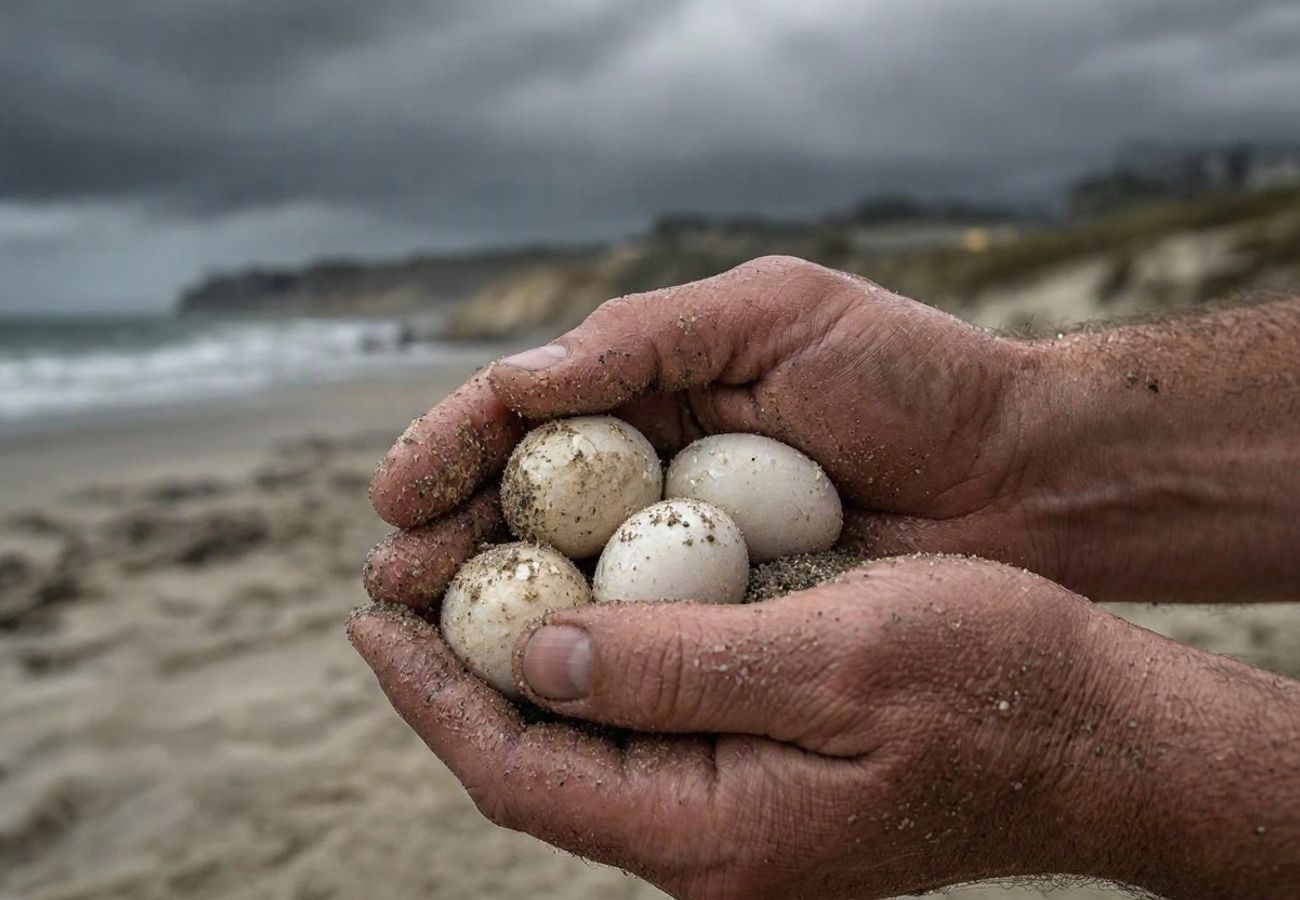
Image generated by AI
[Orange County, September 30, 2026] — Biologists have successfully relocated approximately 200 olive ridley sea turtle eggs from Southern California beaches to prevent them from being destroyed by the incoming surge of Hurricane Polo. The emergency operation targeted nests located at Seal Beach and Huntington Beach, where hazardous surf and coastal erosion posed an immediate threat to the embryos.
The rescue was coordinated by animal-care specialists from the Aquarium of the Pacific and biologists from the NOAA Southwest Fisheries Science Center. The eggs, discovered in mid-September, are historically significant as they represent the first documented instance of sea turtle nesting on the United States West Coast.
Hurricane Polo's Threat to Historic Nests
The decision to intervene was triggered by the rapid deterioration of coastal conditions. As Hurricane Polo approached, officials identified three primary environmental risks: powerful surf, severe beach erosion, and flooding. These factors can instantly expose subterranean nests to saltwater or shift sand temperatures, both of which are lethal to developing embryos.
On September 25, teams extracted the eggs from two primary nesting sites. Because olive ridley development is highly sensitive to moisture and heat, the eggs were transported to a controlled facility to replicate their natural incubation environment.
Impacted Locations and Nest Data
The following table details the specifics of the nesting discovery and the current relocation status.
| Detail | Information |
|---|---|
| Species | Olive Ridley Sea Turtle |
| Total Eggs Relocated | Approximately 200 |
| Primary Locations | Seal Beach & Huntington Beach (Orange County, CA) |
| Relocation Site | Aquarium of the Pacific, Long Beach |
| Relocation Date | September 25, 2026 |
| Estimated Incubation | 45 to 60 Days |
| Regulatory Authority | US Fish and Wildlife Service |
What This Means for Travelers
For tourists and residents visiting Orange County beaches, this event transforms the coastline into a high-sensitivity conservation zone. While the eggs are currently safe at the aquarium, the area remains under monitoring for further nesting activity.
Passenger and Visitor Impact:
- Restricted Access: Visitors should expect temporary closures or cordoned-off sections of Seal Beach and Huntington Beach if new nests are identified.
- Observation Rules: Travelers are strictly prohibited from approaching suspected nesting sites or disturbing sand patterns.
- Reporting Protocol: Anyone spotting sea turtle tracks or distressed animals must avoid direct contact and immediately notify the West Coast Sea Turtle Stranding Hotline.
- Tourism Shift: The rare presence of these turtles is expected to increase wildlife-tourism interest, but officials warn that "responsible observation" is the only permitted form of interaction.
Scientific Significance and Next Steps
The appearance of olive ridley turtles—typically found in tropical Pacific, Indian, and Atlantic waters—on the California coast is an anomaly. Researchers are investigating whether shifting oceanographic patterns or El Niño conditions drove the turtles northward.
The US Fish and Wildlife Service has authorized the Aquarium of the Pacific to maintain the eggs in sand-filled containers. Staff are currently regulating temperature and humidity to ensure successful hatching.
Once the hatchlings emerge, the conservation team plans to transport them back to the original beaches in Seal Beach and Huntington Beach. This ensures the turtles experience the natural transition from sand to surf in the environment where their mothers originally nested.
FAQ: California Sea Turtle Rescue 2026
Where are the sea turtle eggs being kept? The eggs are currently housed at the Aquarium of the Pacific in Long Beach, California, where they are kept in sand-filled containers under strict temperature and humidity controls.
Why is this discovery considered historic? These nests are the first recorded instances of sea turtles nesting on the US West Coast, providing critical data on species distribution and the impact of climate change on marine behavior.
Can tourists visit the nests on the beach? No. The original nests have been relocated for safety. Any new nesting sites discovered on the beach are protected areas and must not be approached by the public.
When will the turtles be released? Hatchlings are expected to emerge within 45 to 60 days of the original nesting date, at which point they will be returned to their native beaches for release.
A race against the storm to save a West Coast first.
Related Travel Guides
Disclaimer
This article is for informational and educational purposes only. It does not constitute legal, financial, or professional advice. While we strive to provide accurate and up-to-date information, travel policies, regulations, and conditions change rapidly. Always verify information with official sources before making travel decisions. Nomad Lawyer makes no representations about the accuracy, reliability, completeness, or suitability of the information provided. Readers should consult qualified professionals for advice specific to their circumstances. The views expressed in this article are those of the author and do not necessarily reflect the views of Nomad Lawyer.
Raushan Kumar
Founder & Lead Developer
Full-stack developer with 11+ years of experience and a passionate traveller. Raushan built Nomad Lawyer from the ground up with a vision to create the best travel and law experience on the web.
Learn more about our team →