
Bungendore Harvest Festival Celebrates Local Food and Farming in NSW
Bungendore Harvest Festival 2026 positions regional NSW as a sustainable agritourism destination, amplifying women farmers and community-led agricultural economics.

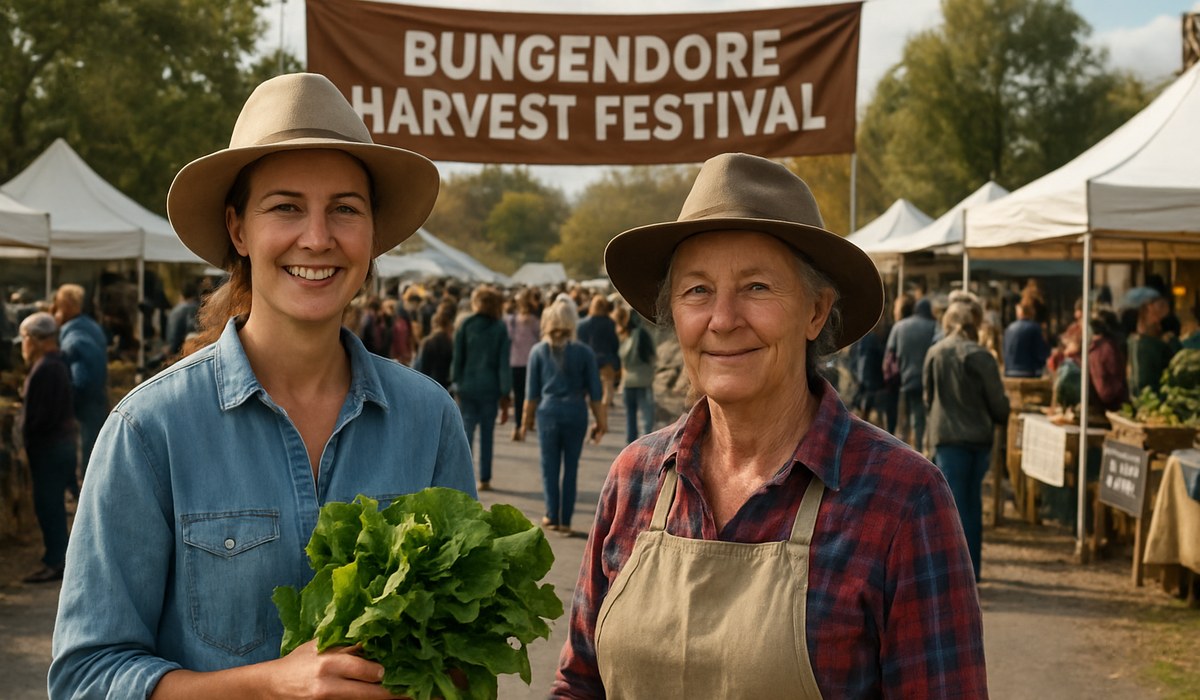
Image generated by AI
Quick Summary
- Bungendore Harvest Festival emerges as Australia's leading agritourism model centered on sustainability and gender equity in farming
- Women agricultural entrepreneurs headline the event, driving economic participation in rural NSW's food production sector
- Festival visitors access farm-to-table experiences that directly support local supply chains and community resilience
- Sustainable tourism credentials align with UNWTO international standards for responsible regional development
Beyond the Selfie: Why Bungendore's Harvest Festival Represents the Future of Australian Tourism
Bungendore Harvest Festival is carving a distinct pathway through Australia's crowded tourism landscape. While major cities and iconic landmarks continue absorbing international visitor flows, this regional NSW gathering is attracting a different cohort—travelers seeking genuine connection with food systems, farming families, and the economic narratives behind rural communities.
The festival operates as far more than a seasonal market. It functions as a working demonstration of how regional destinations can build tourism economics without sacrificing local agricultural autonomy or community character. March 2026 marks a pivotal moment as the event consolidates its position within Australia's emerging sustainable tourism corridor, drawing conscious travelers who prioritize impact over Instagram moments.
The distinction matters. Mass tourism typically extracts value from destinations; this model inverts the equation. Visitors pay directly for farm experiences, purchase directly from producers, and engage in educational exchanges about sustainable practices. According to frameworks established by the UN World Tourism Organization's sustainable tourism framework, such models represent the intersection of economic development and cultural preservation—precisely what rural Australia urgently requires.
Tourism authorities have noted increasing pressure on regional hospitality infrastructure to accommodate visitors genuinely interested in agricultural tourism. This demand reflects broader global patterns: travelers increasingly seek transparency in their consumption and want to understand the human and environmental dimensions of what they purchase.
Women Leading the Fields: Female Farmers Redefining Agricultural Tourism in Rural NSW
The festival's structural pivot toward women agricultural leaders distinguishes it from conventional agritourism programming. Female farmers across the Bungendore region—ranging from organic vegetable producers to sustainable livestock operations—occupy central positions in festival design, not peripheral booths.
This intentional programming addresses a critical gap. Australian agriculture remains historically male-dominated in land ownership and formal sector participation, despite women comprising approximately 40 percent of the agricultural workforce. The festival creates visible pathways for women entrepreneurs to monetize their expertise and build direct consumer relationships, bypassing traditional wholesale distribution channels that historically squeezed profit margins.
Several operations showcase innovative models. Women-led regenerative farming enterprises demonstrate rotational grazing techniques, soil health monitoring, and biodiversity integration—practices increasingly demanded by consumers conscious of environmental footprints. Educational sessions paired with on-farm tastings allow visitors to understand the technical decisions underpinning food quality and flavor variation across small-scale producers.
National Geographic's coverage of agritourism and rural experiences increasingly highlights women farmers as storytellers and innovators rather than auxiliary laborers. The Bungendore festival aligns with this emerging narrative, positioning female agricultural entrepreneurs as core attractions rather than supplementary content.
Economic participation matters most. Festival ticket revenue, farm gate sales, and accommodation bookings directed toward women-owned operations create measurable income streams. These funds reinvest directly into farm operations—purchasing equipment, expanding production capacity, or funding knowledge-sharing networks among female producers.
From Farm to Festival: How Local Food Systems Drive Sustainable Community Growth
Bungendore's food system architecture reveals how sustainable tourism economics function at operational levels. The festival creates a compressed timeframe during which regional production reaches maximum visibility. Farmers typically operate within wholesale or farmers market contexts where volume pressures and price negotiations erode margins. The festival inverts this by foregrounding scarcity, craftsmanship, and direct consumer valuation of quality.
Participating producers range across vegetable cultivation, heritage livestock, artisanal dairy, grain milling, and value-added products like preserves and fermented goods. Festival planning coordinates harvest timing such that peak seasonal production aligns with peak visitor attendance. This orchestration ensures authentic abundance rather than manufactured scarcity—visitors encounter genuine harvest conditions rather than curated displays.
Food sovereignty emerges as the underlying principle. When regional communities control their agricultural narratives and direct distribution channels, they reduce dependence on distant supply chains and corporate intermediaries. School groups, restaurant networks, and institutional food services increasingly source festival-connected producers, extending economic benefits beyond the single event weekend.
Community resilience strengthens through diversified income streams. Farmers operating solely within commodity markets face acute vulnerability to price volatility and climate disruption. Agritourism income, farm shop revenue, and value-added production create revenue stabilization that allows long-term farm planning rather than seasonal survival mode.
Climate considerations add urgency. Rural NSW experiences increasing drought and weather volatility. Farms that establish tourism enterprises and develop local market relationships build adaptive capacity—multiple income sources mean crop failure or livestock loss no longer threatens operational viability entirely.
Combined with Victoria's new free transit program in 2026, visiting regional NSW festivals has never been more accessible. Improved transport connectivity removes friction from visitor journeys, increasing attendance likelihood from day-trip range audiences in Melbourne and Canberra.
Planning Your Visit: Accessibility, Logistics, and What to Expect at Bungendore
Practical travel information shapes actual visitor experience. Bungendore sits approximately 30 kilometers northeast of Canberra, positioning it within day-trip range for Australia's capital region population. Regional driving times from Sydney (approximately 3.5 hours) and Melbourne (approximately 7 hours) make weekend visits feasible.
Public transport connections via Canberra improve incrementally, though private vehicle remains most flexible option for accessing dispersed farm locations. Festival organizers typically coordinate shuttle services between central gathering points and participating properties, reducing parking friction across small rural areas.
Accommodation spans established regional hotels, farm stay properties, and increasingly, tourism operators launching hospitality ventures targeting agritourism visitors. Australia's hospitality expansion trends demonstrate capital movement into regional Australia as developer recognize sustained demand from experience-focused travelers. Bungendore benefits directly from this investment cycle, with several property operators launching new guest accommodations specifically timed for festival season.
Lonely Planet's destination guides for rural Australia increasingly recommend agritourism festivals as primary draw for regional visitors. Practical planning sections highlight festival timing, booking procedures, farm visit protocols, and dining options across participating venues.
Visa requirements depend on visitor origin country; most international travelers from established Western democracies access Australia on Electronic Travel Authority (ETA) or visa exemption provisions. Currency is Australian dollars. Climate in March approaches autumn; expect mild daytime temperatures (around 20-24°C) with cool mornings and evenings. Rainfall patterns vary; check weather forecasts close to travel dates.
Safety considerations are minimal; rural NSW experiences very low crime rates and strong community policing. Standard travel precautions apply—secure valuables, use main roads, and maintain vehicle maintenance if driving. Travel insurance remains advisable for international visitors.
Festival-specific logistics include booking farm visits in advance (popular properties fill quickly), planning physical distance capacity if visiting multiple sites on foot, and confirming operating hours since many farms operate seasonally or by appointment outside festival weekends.
FAQ: Sustainable Agritourism in Australia
Q: What makes Bungendore's festival different from other Australian farmers markets?
A: The festival operates as an immersive farm experience rather than a marketplace. Visitors access working agricultural properties, participate in educational sessions about farming practices, and engage directly with producers. Programming explicitly centers women farmers, sustainable practices, and community economic benefit. This contrasts with conventional
Disclaimer
This article is for informational and educational purposes only. It does not constitute legal, financial, or professional advice. While we strive to provide accurate and up-to-date information, travel policies, regulations, and conditions change rapidly. Always verify information with official sources before making travel decisions. Nomad Lawyer makes no representations about the accuracy, reliability, completeness, or suitability of the information provided. Readers should consult qualified professionals for advice specific to their circumstances. The views expressed in this article are those of the author and do not necessarily reflect the views of Nomad Lawyer.
Raushan Kumar
Founder & Lead Developer
Full-stack developer with 11+ years of experience and a passionate traveller. Raushan built Nomad Lawyer from the ground up with a vision to create the best travel and law experience on the web.
Learn more about our team →