
Budapest Leads Central Europe’s Push for Asia’s Next Generation of High-Spending Travellers with Direct Flights
The concept of continental travel is getting disrupted due to the Central European gateway pivot because there is now a redef

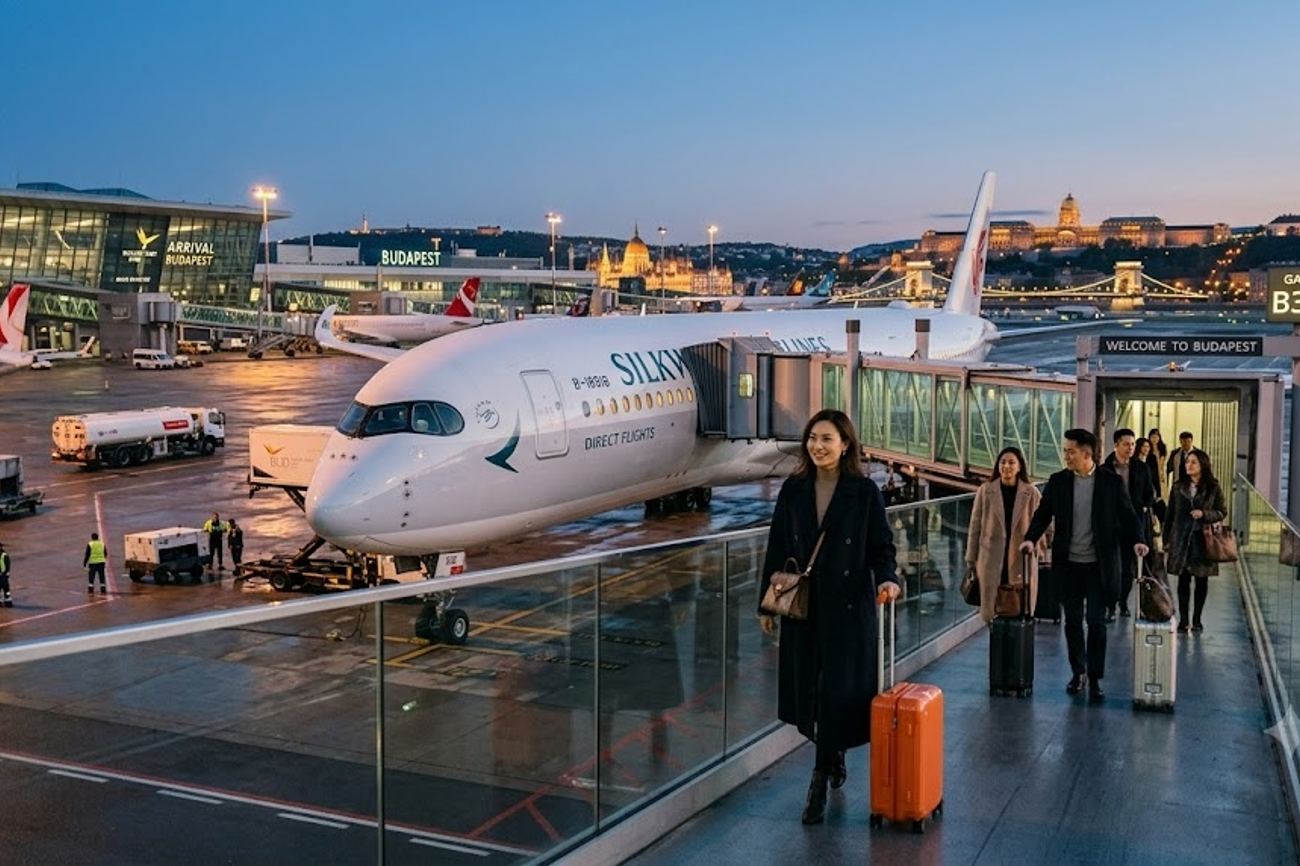
Image generated by AI
The concept of continental travel is getting disrupted due to the Central European gateway pivot because there is now a redefinition of European exploration of tourists from around the world, thanks to dynamic aviation connections, high speed rail and fintech. Conventional western gateways are being circumvented as a result of the creation of direct flights to cities like Vienna, Prague, Budapest and Warsaw. Overcrowded destinations are now being skipped by the young independent tourists from Asia because of their use of contactless mobile payment, instant digital tax rebates and algorithms. This is all in order to maximize revenue through the creation of regional loops in Bohemia, Moravia, Silesia and Danube basin.
The Geopolitical and Aeronautical Realignment of Central European Gateways The Transcontinental Airlift: Breaking Western Transit Hub Hegemony
For decades, an entrenched structural monopoly governed the flow of long-haul passenger traffic between East Asia and the European continent. Intercontinental travellers departing from major commercial centres such as Beijing, Shanghai, Tokyo, or Seoul were funneled almost exclusively through Western European mega-hubs: London Heathrow, Paris Charles de Gaulle, Frankfurt am Main, and Amsterdam Schiphol. Secondary, peripheral status was relegated to Central and Eastern Europe—destinations accessed primarily through regional feeder flights, long coach transfers, or hurried multi-country whistle-stop excursions.
By 2026, this hub-and-spoke paradigm has been fundamentally disrupted. The Central European gateway pivot has been driven by a strategic synchronisation of state aviation bilateral agreements, aggressive airport capital expenditure, and fleet deployments by East Asian and Central European network carriers. Non-stop long-haul air corridors that bypass congested Western European airspace entirely have been established by sovereign gateway hubs across the Visegrád nations and Austria, positioning Central Europe as an autonomous, primary entry platform.
This aeronautical shift is illustrated by Budapest Ferenc Liszt International Airport (BUD). Driven by bilateral foreign policy initiatives, airport ownership restructuring under sovereign Hungarian control, and targeted infrastructure expansion, 14 weekly direct flights serving Mainland China are tracked from the Hungarian capital. Operated by premier Chinese network carriers including Air China, China Eastern Airlines, and Hainan Airlines, alongside regional subsidiary Shanghai Airlines, direct connections are maintained between Budapest and major economic engines: Beijing Capital (PEK), Shanghai Pudong (PVG), Guangzhou Baiyun (CAN), Xi’an Xianyang (XIY), Chongqing Jiangbei (CKG), and Ningbo Lishe (NGB). Budapest Airport’s overall annual passenger traffic surpassed 17 million travellers, expanding foreign air passenger throughput by more than 1 million passengers year-on-year, while consistent high-yield international arrivals are delivered directly into the Danubian basin.
The critical northeastern intercontinental bridgehead is provided by Warsaw Chopin Airport (WAW). Under the strategic network development of Polish flag carrier LOT Polish Airlines, augmented by Star Alliance partner Air China, up to 30 weekly direct flights connecting Poland directly to East Asian destinations are scheduled. Direct widebody connections linking Warsaw with Beijing Capital, Tokyo Narita, and Seoul Incheon are included in this network. Through the capture of point-to-point corporate, diplomatic, and premium leisure demand, a transition has been made from a domestic origin-and-destination terminal into an intercontinental transfer platform.
Budapest is leading Central Europe's push for Asia's next generation of high-spending travellers with the introduction of direct flights from major Asian hubs. According to the Hungarian Tourism Agency, the country is expecting a significant increase in tourist arrivals from Asia, driven by the launch of new direct flights from airlines such as China Eastern. This move is expected to boost tourism revenue and cement Budapest's position as a premier destination in Central Europe.
In Austria, the historic role of an elite alpine-danubian turnstile is maintained by Vienna International Airport (VIE). Daily direct widebody services operated by Air China, Austrian Airlines, EVA Air, and Korean Air connect the Austrian federal capital to Beijing, Shanghai, Taipei, and Seoul. High-yield business class capacity is combined with transit intermodality, providing arrivals with direct access to southern and western Central European rail corridors.
Concurrently, double-digit intercontinental capacity growth has been achieved by Prague Václav Havel Airport (PRG), tracking a +12.6 per cent increase in scheduled seasonal long-haul seat capacity. Over 2,500 weekly direct seats in each direction are delivered via the resumption and frequency expansion of services by Hainan Airlines on the Beijing Capital–Prague corridor—utilising widebody Airbus A330-300 aircraft operating three times weekly—alongside direct rotations to Taipei maintained by China Airlines and operations from Seoul Incheon by Korean Air. It is demonstrated by aggregate seasonal operations accommodating over 6.4 million terminal passengers that traditional Western hubs can be bypassed by direct point-to-point long-haul capacity.
Gateway Hub Primary Direct East Asian Corridors Key Operating Carriers Weekly Capacity & Connectivity Metrics Strategic Gateway Role
Passenger logistics are being streamlined to accommodate the influx of new travellers, with Budapest Ferenc Liszt International Airport investing heavily in infrastructure upgrades and expansion plans. The airport is working closely with airlines and tourism stakeholders to ensure a seamless travel experience for Asian visitors, including the introduction of new visa procedures and immigration facilities. As a result, passengers can expect a more efficient and convenient travel experience when arriving in Budapest. Budapest Ferenc Liszt (BUD) Beijing (PEK), Shanghai (PVG), Guangzhou (CAN), Xi’an (XIY), Ningbo (NGB), Chongqing (CKG) Air China, China Eastern Airlines, Hainan Airlines, Shanghai Airlines 14 weekly direct Mainland China services; >17M annual airport passengers. Primary Danubian intercontinental hub; key commercial, wellness, and leisure bridgehead. Warsaw Chopin (WAW) Beijing (PEK), Tokyo (NRT), Seoul (ICN) LOT Polish Airlines, Air China Up to 30 weekly direct East Asian flights; daily widebody frequencies. Northern intercontinental transit axis; gateway to Poland, the Baltic basin, and Silesia. Vienna International (VIE) Beijing (PEK), Shanghai (PVG), Taipei (TPE), Seoul (ICN), Tokyo (NRT) Austrian Airlines, Air China, EVA Air, Korean Air Daily widebody long-haul rotations; high premium-cabin seat configuration. Premium Alpine-Danubian entry hub; major international air-rail intermodal node.
Tourism insights suggest that Asian travellers are drawn to Budapest's rich cultural heritage and historic landmarks, such as the Parliament Building and Buda Castle. For more information on travel requirements and regulations, visitors can consult the Ministry of Foreign Affairs and Trade of Hungary website, which provides detailed guidance on visa applications and travel documentation. By understanding the needs and preferences of Asian travellers, Budapest is well-positioned to capitalize on the growing demand for travel to Central Europe. Prague Václav Havel (PRG) Beijing (PEK), Taipei (TPE), Seoul (ICN) Hainan Airlines, China Airlines, Korean Air +12.6% seasonal seat capacity growth; 2,567 weekly direct Far East inbound seats. Bohemian cultural gateway; direct transit artery to UNESCO sites and Western Czech spa triangles. Cross-Border Rail Transit Corridors: High-Speed Horizontal Dispersion
Only the initial half of the Central European gateway pivot is formed by aviation connectivity. The operational catalyst converting gateway arrivals into distributed, multi-destination regional stays is provided by the integrated cross-border electrified railway network. In the borderless environment of the Schengen Area, short-haul domestic flights and long-distance motorcoach travel are directly outcompeted in speed, sustainability, and passenger comfort by electrified passenger rail functioning as an intercity transit corridor.
Multi-country connectivity across the region has been expanded by state rail entities, led by Austrian Federal Railways (ÖBB), České dráhy (ČD), and Hungarian State Railways (MÁV-Start), alongside private open-access carriers such as RegioJet. Vienna, Bratislava, and Budapest are linked by the high-speed Railjet network, while Prague, Brno, and Vienna are connected by the northern radial corridor. Concurrently, international leisure volume has been captured by Czech open-access operator RegioJet through the provision of competitive intercity rail tickets with transparent multilingual booking systems, digital seat reservations, and on-board catering. A +35 per cent increase in cross-border rail bookings across the Vienna–Bratislava–Budapest and Prague–Brno–Vienna corridors is targeted, reflecting strong passenger demand for rail transit.
The operational demands of the new Asian independent traveller are matched by this dense rail infrastructure. Complex, multi-city journeys are planned by young independe
FAQ: Budapest Leads Central Europe’s Push for 2026
What airlines offer direct flights to Budapest from Asia? LOT Polish Airlines and China Eastern Airlines offer direct flights.
How long are direct flights from Asia to Budapest? Flights range from 9 to 12 hours depending on the route.
What attractions await in Budapest for Asian travelers? Thermal baths, historic landmarks, and vibrant cultural festivals.
Can I use English in Budapest as a tourist? Yes, many locals speak English, especially in tourist areas and services.
Related Travel Guides
Disclaimer
This article is for informational and educational purposes only. It does not constitute legal, financial, or professional advice. While we strive to provide accurate and up-to-date information, travel policies, regulations, and conditions change rapidly. Always verify information with official sources before making travel decisions. Nomad Lawyer makes no representations about the accuracy, reliability, completeness, or suitability of the information provided. Readers should consult qualified professionals for advice specific to their circumstances. The views expressed in this article are those of the author and do not necessarily reflect the views of Nomad Lawyer.
Raushan Kumar
Founder & Lead Developer
Full-stack developer with 11+ years of experience and a passionate traveller. Raushan built Nomad Lawyer from the ground up with a vision to create the best travel and law experience on the web.
Learn more about our team →