
Malaysia Emerges Alongside Thailand And Asia’s Leading Tourism Markets As Airport Hubs Redraw Travel Routes
Suvarnabhumi Airport Asia’s aviation network is entering a new phase as mega-hubs and direct flights expand simultaneously. The latest c

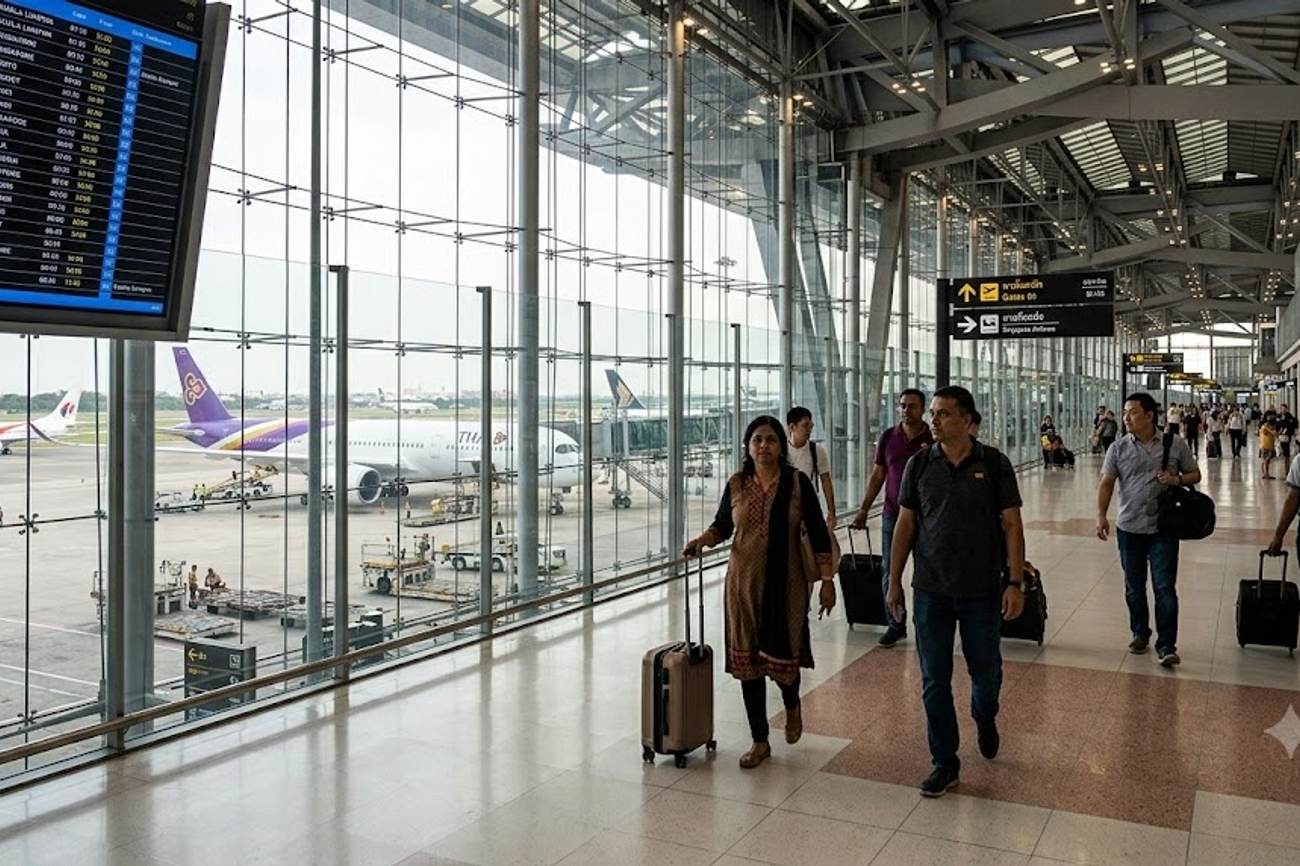
Image generated by AI
**Suvarnabhumi Airport
Asia’s aviation network is entering a new phase as mega-hubs and direct flights expand simultaneously. The latest connectivity data shows Asia-Pacific air connectivi**
Asia’s aviation network is entering a new phase as mega-hubs and direct flights expand simultaneously. The latest connectivity data shows Asia-Pacific air connectivity rose 10% in 2025, while international city pairs increased 10%. Major gateways continue strengthening their transfer networks, yet low-cost carriers are opening more direct links between secondary cities and tourism destinations. Kuala Lumpur now ranks fourth globally among Megahubs, with 154 destinations and 35,749 potential connections. Meanwhile, Southeast Asia’s low-cost carriers account for 51% of seats. The shift matters for travellers because direct services can shorten journeys, while major hubs still provide broader long-haul choices. Asia’s tourism map is therefore becoming more distributed, not simply more concentrated.
The New Shape of Asian Air Travel
Asia’s aviation expansion is no longer following one clear model. Traditional hubs continue to attract airlines, transfer passengers and international capacity. At the same time, point-to-point networks are giving travellers more ways to bypass established gateways.
ACI Asia-Pacific and Middle East recorded 10% growth in Asia-Pacific air connectivity during 2025. Across the region, 74% of the 315 airports covered by its index recorded positive connectivity growth. International city pairs also increased by 10%, showing that network expansion is reaching beyond the largest airports.
The distinction matters because connectivity does not simply mean passenger volume. A hub may carry enormous numbers of connecting travellers without those passengers spending money in the host destination. Conversely, a smaller airport can have a strong tourism effect when direct services bring visitors who stay locally.
That creates a more useful way to understand Asia’s aviation transformation. Hub strength measures network reach, while direct connectivity can measure destination accessibility.
Kuala Lumpur Shows The Hybrid Model
Kuala Lumpur offers perhaps the clearest example of the two systems developing together. OAG’s 2026 Megahubs analysis places Kuala Lumpur International Airport fourth globally and first among Asian Megahubs.
The airport serves 154 destinations, with 35,749 potential connections and about 40 million seats in the September 2025-August 2026 measurement period. AirAsia holds a 34% share of flights, giving the airport an unusually strong combination of full-service and low-cost connectivity.
Malaysia's strategic location and investment in airport infrastructure have positioned it as a significant player in Asia's tourism market, alongside Thailand and other leading destinations. According to the Malaysia Airports Holdings Berhad!, the country's main airport hubs, such as Kuala Lumpur International Airport, are experiencing significant growth in passenger traffic. This growth is expected to continue, driven by increasing demand for travel to and from the region.
Kuala Lumpur also leads OAG’s global Low-Cost Megahubs ranking. It records almost 15,000 possible low-cost connections across 154 destinations. That makes it more than a conventional transfer airport.
It is simultaneously a transfer platform and a launchpad for direct leisure travel. For travellers, this means Kuala Lumpur can remain useful when a direct flight exists, while still providing an alternative when a journey requires a connection.
Selected Asian Airport 2026 Global Megahub Rank Destinations Key Connectivity Feature Kuala Lumpur 4 154 Strong FSC and LCC mix Seoul Incheon 6 198 High LCC and international reach Tokyo Haneda 8 — Dense regional and long-haul network Singapore Changi 11 167 Major regional transfer gateway Bangkok Suvarnabhumi 12 — Strong tourism and regional connectivity Shanghai Pudong 14 — Rapid connectivity improvement Delhi 28 178 Strong domestic feed and LCC growth Jakarta 29 — Large Southeast Asian catchment
OAG ranks 17 Asia-Pacific airports among the global Top 50 Megahubs. Eight are inside the global Top 20, illustrating how deeply Asia’s aviation system remains anchored in major gateways.
Direct Flights Are Spreading Tourism
The more subtle change is occurring beneath the headline airport rankings. Direct international services are increasingly connecting secondary cities, island destinations and regional tourism centres.
ACI’s 2025 connectivity index identifies Phu Quoc, Surabaya, Da Nang, Hanoi and Ho Chi Minh City among airports showing notable connectivity improvements in their respective passenger categories. The organisation specifically links these improvements with route expansion, tourism recovery and regional development.
This creates a different tourism dynamic. A traveller visiting Da Nang does not necessarily need to enter Vietnam through a traditional national gateway and then transfer domestically. A direct international service can turn the destination airport itself into the tourism gateway.
The Malaysian government has implemented various initiatives to enhance passenger logistics and improve the overall travel experience, including the introduction of new visa policies and expanded airport facilities. For more information on these initiatives, visitors can refer to the Official Portal of the Ministry of Tourism, Arts and Culture Malaysia!. By streamlining passenger processes and improving infrastructure, Malaysia aims to increase its competitiveness as a tourist destination and attract more visitors from around the world.
That difference can influence hotel demand, airport transfers, local transport and spending patterns. It can also encourage tourism businesses outside capital cities to develop international markets.
The effect is particularly visible across Southeast Asia, where LCC networks have expanded rapidly. OAG reports that low-cost carriers now represent 51% of all seats across Southeast Asia, compared with a global average of 34%.
Why Mega-Hubs Still Matter
The rise of direct flights does not make mega-hubs obsolete. Instead, their role is becoming more specialised.
Long-haul travellers still require efficient transfer points where airlines can consolidate demand across numerous origins and destinations. Major hubs also allow carriers to serve markets that may not generate sufficient demand for nonstop flights.
ACI’s latest connectivity analysis shows that major hubs continue to lead regional connectivity growth. Between 83% and 97% of major hub airports recorded growth in 2025. Dubai remained the region’s leading hub, followed by Shanghai Pudong, Incheon, Hamad International and Guangzhou Baiyun.
The scale of these gateways remains considerable. ACI World estimates that Dubai handled 95.2 million international passengers in 2025. Incheon handled 73.6 million, while Singapore Changi handled 69.4 million international passengers.
Those figures demonstrate why hub aviation remains fundamental to Asian tourism. A traveller heading from a smaller Asian city to Europe, Africa or another distant market may still find a one-stop itinerary through a major hub more practical than waiting for a rare nonstop service.
Tourism insights suggest that Malaysia's unique cultural heritage, natural attractions, and modern cities are becoming increasingly popular among travelers, with many opting to use the country as a hub for exploring Southeast Asia. The Tourism Malaysia! website provides a wealth of information on the country's tourist attractions, events, and activities, helping travelers plan their trips and make the most of their time in Malaysia. With its rich diversity and modern amenities, Malaysia is poised to become a leading destination in the region, attracting visitors from around the globe.
The Passenger Is Not Always A Tourist
Airport statistics can create misleading impressions if passenger movements are treated as tourism arrivals. A passenger passing through an airport can be counted in airport traffic without becoming a visitor to the destination.
This distinction becomes particularly important for airports with extensive sixth-freedom networks. Such airports connect passengers between two foreign markets, generating enormous traffic while producing a different local tourism effect.
ACI’s 2025 figures illustrate the scale. The world’s international passenger leaders include Dubai, Heathrow, Incheon, Singapore, Amsterdam, Istanbul, Hong Kong and Doha. Their international passenger totals reflect the enormous role of aviation hubs in global mobility, but they should not be interpreted as equivalent tourism-arrival figures.
For travel businesses, the more meaningful question is therefore whether passengers terminate their journey at the airport. That distinction affects hotels, attractions, restaurants, tour operators and local transport providers.
India’s Gateway Network Is Expanding
India provides another important example of this transition. Delhi ranked 28th globally in OAG’s 2026 Megahubs ranking, while IndiGo accounted for 40% of flights at the airport. Delhi also ranked ninth globally in the Low-Cost Megahubs ranking, with 11,045 potential LCC connections across 178 destinations.
India’s enormous domestic market provides a powerful feeder system. Airlines can combine domestic demand with international traffic, allowing airports to support routes that might otherwise struggle.
Yet the tourism numbers show why
FAQ: Malaysia Emerges Alongside Thailand And 2026
What airports serve Malaysia? Kuala Lumpur International Airport and others.
How has tourism changed in Malaysia? Increased flights and routes have boosted tourism.
What attractions does Malaysia offer? Beaches, rainforests, and cultural cities.
Are visas required for Malaysia? Citizens of many countries are visa-exempt.
Related Travel Guides
Disclaimer
This article is for informational and educational purposes only. It does not constitute legal, financial, or professional advice. While we strive to provide accurate and up-to-date information, travel policies, regulations, and conditions change rapidly. Always verify information with official sources before making travel decisions. Nomad Lawyer makes no representations about the accuracy, reliability, completeness, or suitability of the information provided. Readers should consult qualified professionals for advice specific to their circumstances. The views expressed in this article are those of the author and do not necessarily reflect the views of Nomad Lawyer.
Kunal K Choudhary
Co-Founder & Contributor
A passionate traveller and tech enthusiast. Kunal contributes to the vision and growth of Nomad Lawyer, bringing fresh perspectives and driving the community forward.
Learn more about our team →