
Ontario Trail Angels: How Volunteer Shuttles Revolutionized the 900-Kilometre Bruce Trail
Trail Angel volunteers transform hiking logistics across Ontario's 900 km Bruce Trail, providing vital trailhead shuttles from Niagara to Tobermory.

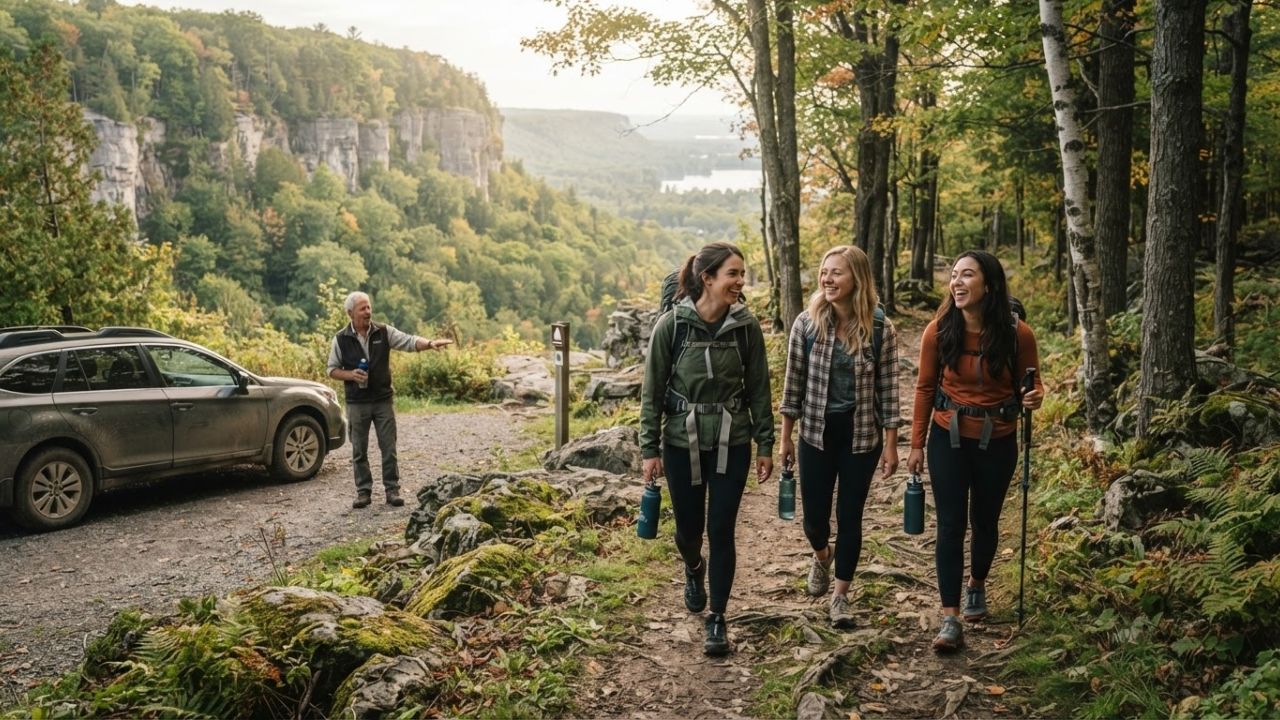
Image generated by AI
Spanning 900 kilometres from Niagara to Tobermory along the UNESCO-recognized Niagara Escarpment, Ontario’s iconic Bruce Trail is experiencing an outdoor renaissance driven by the dedicated volunteer network known as Trail Angels.
COLLINGWOOD, Ontario — Long-distance trekking in North America presents immense physical rewards, but negotiating the ground logistics of vehicle staging across hundreds of kilometers of backcountry terrain has historically deterred all but the most seasoned adventurers. Along Canada’s oldest and longest marked footpath—the 900-kilometre Bruce Trail—a grassroots volunteer initiative is revolutionizing accessibility.
Known as Trail Angels, this community-powered network of local outdoor enthusiasts provides complimentary vehicle shuttles, safety advice, and trail conditions updates between remote access points. By bridging difficult transport gaps across forests, cliffs, and rural townships, the initiative has transformed the Bruce Trail into one of North America’s most welcoming and ecologically responsible multi-day hiking corridors.
The Local Trend Revealed: Overcoming Remote Trailhead Logistics
The logistical reality of point-to-point long-distance hiking often requires complex maneuvers: leaving one vehicle at a trailhead, driving a second vehicle to the starting point, or paying exorbitant regional taxi fares across rural townships where rideshare services do not operate.
Experienced long-distance hikers Ann and Jim Burkholder encountered these exact transportation obstacles while trekking the Bruce Trail across several seasons. During a hike through the rugged Dufferin Hi-Lands section in 2019, they learned about informal "Trail Angel" concepts pioneered on American long trails like the Appalachian Trail and Pacific Crest Trail. Recognizing an urgent logistical void in Ontario, the couple spearheaded a formalized volunteer support network through the Blue Mountains Bruce Trail Club.
Officially launched in February 2020, the structured program organized local volunteers willing to ferry hikers between trailheads. Following a brief pause during early pandemic restrictions, the network surged back with expanded volunteer ranks. Today, Trail Angels operate across multiple regional clubs along the trail's nine divisions, allowing solo hikers and small groups to complete consecutive day segments with logistical confidence.
The Bruce Trail & Trail Angel Network at a Glance
| Trail Metric / Parameter | Operational Data & Features | Significance for Hikers |
|---|---|---|
| Total Route Distance | 900 kilometres (plus over 400 km of side trails) | Canada's oldest continuous marked public footpath |
| Geographic Span | Queenston Heights (Niagara) to Tobermory (Georgian Bay) | Follows the ancient limestone brow of the Niagara Escarpment |
| Program Founders | Ann and Jim Burkholder | Conceived in 2019 (Dufferin Hi-Lands); established February 2020 |
| Parent Organization | Blue Mountains Bruce Trail Club / Bruce Trail Conservancy | Supported across 9 regional member clubs |
| Core Service Offered | Trailhead shuttles, vehicle relocation advice, safety alerts | Eliminates two-car staging and costly rural taxi fares |
| Ecological Designation | UNESCO Niagara Escarpment Biosphere Reserve | Protects rare karst topography, 1,000-year-old cedars, and wetlands |
Cultural & Environmental Value: Land Stewardship and Escarpment Ecology
The Bruce Trail is far more than an endurance route; it is an ecological lifeline running through southern and central Ontario. Following the Niagara Escarpment—designated a UNESCO World Biosphere Reserve—the footpath ribbons through ancient hardwood forests, thundering waterfalls, delicate limestone karst crevices, and cliffs harboring ancient, stunted eastern white cedars dating back more than a millennium.
The Trail Angel network directly reinforces sustainable tourism principles championed by the Bruce Trail Conservancy (BTC). By coordinating shared volunteer rides, the program reduces vehicle emissions, curbs illegal roadside parking along rural concession roads, and minimizes soil erosion around sensitive rural road verges.
In addition, the personal interaction between hikers and local volunteers creates meaningful social bonds. Trail Angels frequently educate visitors on local conservation efforts, invasive species mitigation, and the importance of staying strictly on marked white-blazed paths to protect endangered flora like the hart's-tongue fern.
Local Visitor Insider Tips: Navigating the Bruce Trail Like an Expert
Travelers preparing to hike sections of the 900-kilometre trail should implement these seasoned recommendations:
- How to Arrange a Trail Angel Shuttle: Contact the relevant regional Bruce Trail Club (e.g., Niagara, Iroquoia, Toronto, Caledon, Dufferin Hi-Lands, Blue Mountains, Beaver Valley, Sydenham, or Peninsula) via the official Bruce Trail Conservancy portal at least 48 to 72 hours before your hike. Provide your exact group size, planned starting point, finishing trail marker, and estimated hike duration. While services are volunteer-led, offering a modest cash gas contribution or making a direct donation to the Bruce Trail Conservancy is customary trail etiquette.
- Optimal Autumn Hiking Window: Plan your trek between mid-September and late October. Autumn brings comfortable hiking temperatures (12°C–18°C), crisp air, and brilliant crimson-gold canopy foliage across the escarpment without the biting blackflies and mosquitoes common in early summer.
- Must-See Scenic Sections: If short on time, prioritize the high-drama escarpment views. Explore the Beaver Valley section near Kimberley to climb Old Baldy for sweeping valley panoramas; navigate the dramatic crevice caves at Nottawasaga Bluffs in the Blue Mountains; or trek the clifftop vistas overlooking turquoise Georgian Bay waters at Lion’s Head in the Peninsula section.
- Regional Farm-to-Table Dining: Conclude trail days with authentic regional gastronomy. Along the Blue Mountains and Beaver Valley sections, follow the Apple Pie Trail to savor fresh artisanal hard ciders, orchard-baked pies, and Georgian Bay whitefish in Thornbury. In the Niagara wine belt, pair your hikes with tastings of cool-climate Riesling and local farmstead goat cheeses along the Twenty Valley wine route.
- Footwear & Karst Safety: The Niagara Escarpment’s terrain is famously rugged. Limestone rocks are polished and slippery when wet, and hidden crevices beneath moss require sturdy, ankle-support hiking boots with aggressive Vibram soles. Pack trekking poles for steep ascents and descents.
Tourism Outlook: Community Volunteerism Redefines Canadian Adventure Travel
The success of the Bruce Trail Angel program highlights a transformative shift in international adventure travel. Modern explorers are increasingly turning away from isolated resort tourism in favor of community-rooted experiences where human kindness, mutual respect, and environmental stewardship intersect.
By transforming logistical obstacles into opportunities for hospitality, the volunteers along the Bruce Trail have built a durable model for sustainable outdoor tourism across Canada. As interest in long-distance trekking and wellness travel accelerates worldwide, the Trail Angels of Ontario demonstrate that the soul of a great trail lies not only in its breathtaking natural vistas, but in the generosity of the communities that watch over it.
Related Travel Guides
Disclaimer
This article is for informational and educational purposes only. It does not constitute legal, financial, or professional advice. While we strive to provide accurate and up-to-date information, travel policies, regulations, and conditions change rapidly. Always verify information with official sources before making travel decisions. Nomad Lawyer makes no representations about the accuracy, reliability, completeness, or suitability of the information provided. Readers should consult qualified professionals for advice specific to their circumstances. The views expressed in this article are those of the author and do not necessarily reflect the views of Nomad Lawyer.
Raushan Kumar
Founder & Lead Developer
Full-stack developer with 11+ years of experience and a passionate traveller. Raushan built Nomad Lawyer from the ground up with a vision to create the best travel and law experience on the web.
Learn more about our team →