
Brooklyn and Global Hubs Transform Urban Infrastructure into Bicycle Tourism Engines 2026
Brooklyn, Seattle, and European capitals are leveraging protected bike lanes and waterfront greenways to drive economic growth through a surge in global bicycle tourism.

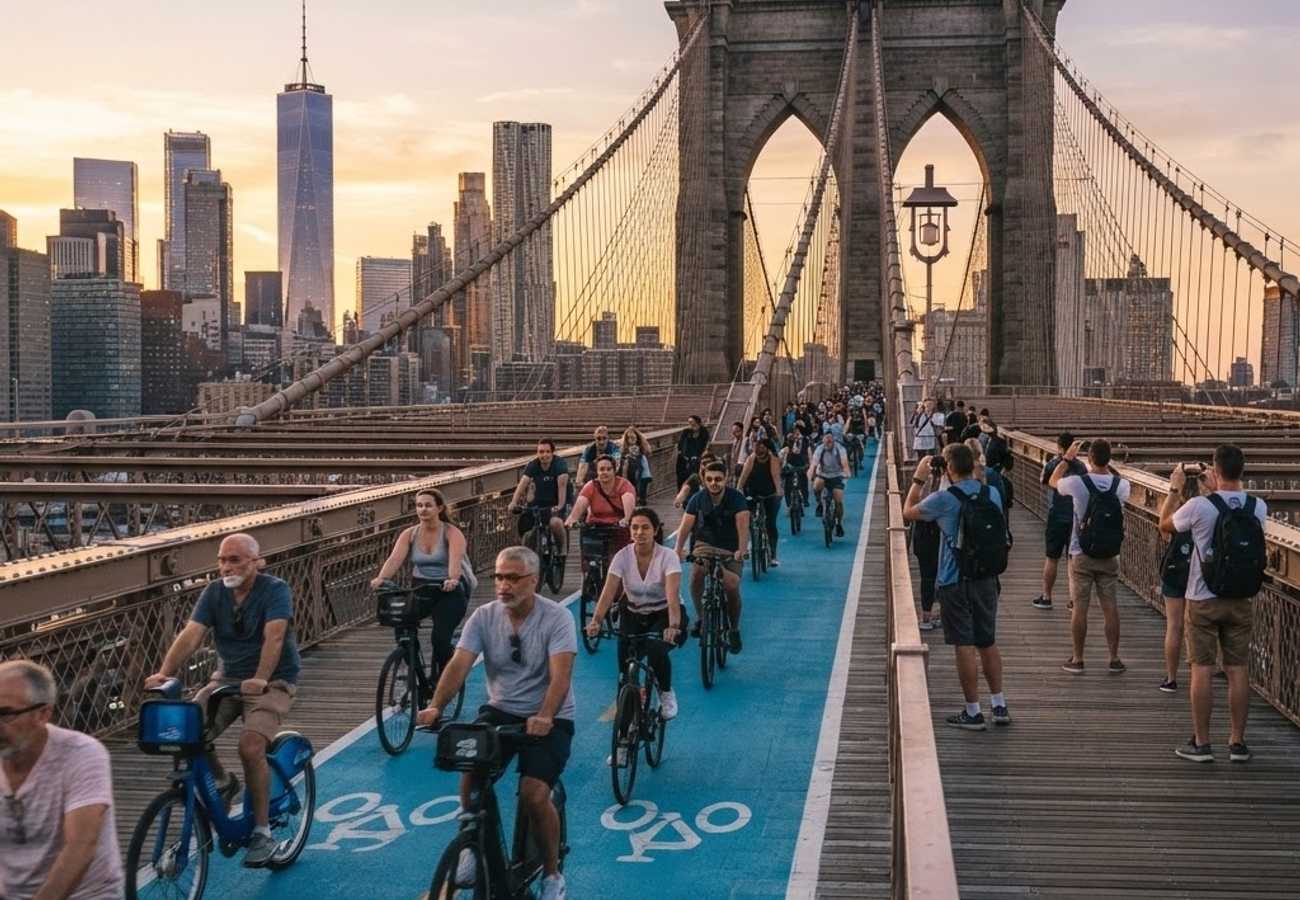
Image generated by AI
Major urban centers are converting car-centric corridors into protected cycling networks, triggering a shift in visitor economies toward active, car-free exploration.
The global travel landscape is witnessing a pivot toward "low-stress" urban exploration. Cities are no longer viewing bike lanes merely as commuter tools but as primary tourism assets. From the waterfronts of Brooklyn and Seattle to the redesigned streets of Paris and Copenhagen, protected infrastructure is now a key driver for destination branding and visitor spending.
Brooklyn: The New U.S. Cycling Benchmark
Brooklyn has transitioned from a series of car-heavy corridors to a premier cycling showcase. This shift is directly impacting the borough's visitor economy. Data from New York City transportation agencies reveals that bicycle ridership across East River bridges hit record levels for the fifth consecutive year in 2025.
The impact is most visible on the Brooklyn Bridge, where daily bike counts have more than doubled following the introduction of a dedicated cycling lane. The bridge now serves a dual purpose: a critical commuter artery and a high-traffic photo destination for tourists.
Current urban planning indicates this is only the beginning. A 2025 comprehensive plan details new protected corridors linking Bay Ridge, DUMBO, and Greenpoint. These projects integrate with the Brooklyn Waterfront Greenway and the Brooklyn-Queens greenway concept, creating a seamless network for visitors to access beaches, parks, and cultural districts without a vehicle.
North American Expansion: Seattle and National Trends
The trend of "rideable waterfronts" extends to the West Coast. Seattle completed a major streetscape project in 2025, installing a protected bike lane along Alaskan Way. This corridor connects ferry docks and cruise terminals directly to the Center City bike network.
This design allows cruise passengers and ferry travelers to exit their vessels and immediately enter a separated bike facility, removing the "barrier to entry" for families and novice riders.
Across the U.S., the scale of this shift is significant:
- Infrastructure Growth: A 2025 PeopleForBikes inventory confirms the U.S. has surpassed 4,000 directional miles of protected bike lanes and side paths.
- Ridership Data: Analysis of shared-bike trip data shows that ridership on protected lanes is growing significantly faster than on streets lacking dedicated infrastructure.
European Leadership: Copenhagen and Paris
While the U.S. accelerates, Europe continues to set the global standard for integrated mobility.
Copenhagen remains the primary laboratory for bicycle tourism. Its cycling strategy, extending through 2025, focuses on "cycle superhighways" connecting suburbs to the urban core. The 2025 municipal budget allocated record investment to cycling, prioritizing upgraded junctions and expanded bike parking at cultural hubs. This allows visitors to navigate the city using the same intuitive infrastructure as locals.
Paris has executed one of the most aggressive transitions in history. By 2024, Paris registered one of the highest increases in the share of daily cycling trips globally, according to the Copenhagenize Index. The city has replaced former traffic arteries with linear parks and radial "express" routes, leading to a sharp increase in demand for e-bike rentals and guided cycling packages.
Global Cycling Infrastructure Summary
| City | Key Infrastructure Development | Primary Impact |
|---|---|---|
| Brooklyn | East River Bridge lanes / Waterfront Greenway | Record ridership (5 consecutive years to 2025) |
| Seattle | Alaskan Way protected lane (2025) | Direct cruise/ferry terminal bike access |
| Copenhagen | Cycle Superhighways / 2025 Budget Surge | Integrated resident/visitor mobility |
| Paris | Radial "express" routes / Linear parks | Steep decline in central car use; e-bike surge |
Why This Matters: The Industry Implication
From a logistical perspective, this shift represents a fundamental change in how "city breaks" are sold. For years, urban tourism relied on the "hub-and-spoke" model—hotels in the center with taxi or metro trips to attractions. The rise of protected networks enables a "linear exploration" model.
Our analysis suggests that for tour operators and hoteliers, the value proposition has shifted. We are seeing a move toward "active itineraries" where the transit is the attraction. When a city like Brooklyn or Paris removes the fear of traffic via protected lanes, it unlocks "micro-tourism"—visitors spending more time and money in smaller neighborhood pockets (like Red Hook or outlying Parisian districts) that were previously too inconvenient to reach by foot and too congested to reach by car.
Forward Outlook
The next phase of bicycle tourism will likely center on "intermodal seamlessness." We expect to see more cities integrating bike-share data directly into tourism apps and expanding "bike-and-ride" facilities at airports and rail hubs. As EU member states continue allocating billions of euros to cycling through 2027, the gap between "cycling cities" and "car cities" will widen, with the former capturing a larger share of the sustainable travel market.
The era of the car-centric city break is ending; the era of the protected pedal is here.
Related Travel Guides
Disclaimer
This article is for informational and educational purposes only. It does not constitute legal, financial, or professional advice. While we strive to provide accurate and up-to-date information, travel policies, regulations, and conditions change rapidly. Always verify information with official sources before making travel decisions. Nomad Lawyer makes no representations about the accuracy, reliability, completeness, or suitability of the information provided. Readers should consult qualified professionals for advice specific to their circumstances. The views expressed in this article are those of the author and do not necessarily reflect the views of Nomad Lawyer.
Kunal K Choudhary
Co-Founder & Contributor
A passionate traveller and tech enthusiast. Kunal contributes to the vision and growth of Nomad Lawyer, bringing fresh perspectives and driving the community forward.
Learn more about our team →