
British Airways Triggers Severe London Gatwick Airport Disruptions After Brutal Boarding Refusal Exposes Airline Security Rules: Latest Airline News
As strict aviation security protocols clash with disability rights, a British Airways boarding denial at London Gatwick sparks massive travel chaos and intense scrutiny over airline accessibility.

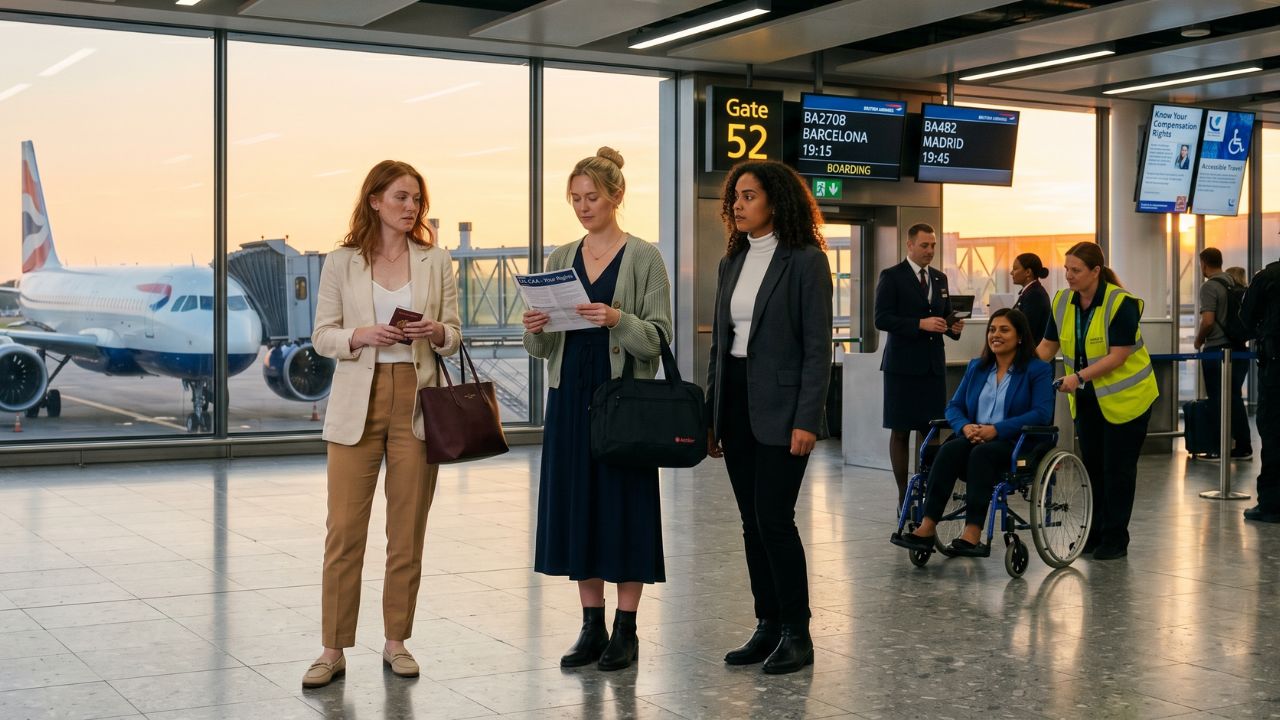
Image generated by AI
In a massive structural collision directly demonstrating the devastating wave of emotional and logistical travel chaos currently paralyzing highly pressurized intercontinental transit hubs, one of Europe’s premier aviation titans has aggressively triggered a severe accessibility dispute. Driven by the urgent, unyielding mandate of global aviation security, British Airways officially denied boarding to a 13-year-old passenger with Tourette’s syndrome at London Gatwick Airport. The incident, involving teenager Mason Entwistle, occurred after an involuntary vocal tic resulted in a security-sensitive word being shouted inside the terminal, instantly destroying a scheduled family holiday to Spain. By aggressively prioritizing absolute threat-assessment protocols over documented disability accommodations, this brutal boarding refusal highlights the agonizing airport disruptions passengers face when neurological conditions intersect with strict airline security rules, totally dominating today’s premier airline news and global aviation updates.
By introducing direct passenger coordination and dynamic scheduling backups, the regional aviation hubs target growing passenger demand across vital commerce sectors. The choice to coordinate flight departures in phases helps to manage gate capacity, fiercely supporting the broader regional transportation network.
Context: Shielding Passengers vs. The Inclusion Meltdown
The historical vulnerability of funneling massive volumes of international travelers through highly congested, high-security airport environments has repeatedly resulted in extreme physical exhaustion and severely destroyed passenger itineraries.
Because severe security threats regularly trigger massive terminal lockdowns, airlines are executing a highly fortified zero-tolerance strategy. According to family accounts, British Airways had been explicitly informed of the teenager’s medical diagnosis prior to travel, and supporting documentation was actively presented during the airport processing phase. However, when an involuntary vocal expression violated the sterile security threshold, the airline immediately blocked boarding. British Airways firmly maintained that the decision was based solely on absolute operational safety obligations and not discrimination. This incident exposes the agonizing reality of modern air travel: the tension between necessary threat prevention and the failure to contextually assess recognized medical conditions.
For a comprehensive understanding of specific carrier requirements and to navigate the complexities of traveling with neurological conditions, passengers should immediately consult the official legal carriage agreements of their operating airlines to secure highly protected travel itineraries.
Section-Wise Breakdown: The Aviation Security Fortress
The Incident: Escalation at London Gatwick
To deliberately bypass the severe rolling delays caused by potential security breaches, airport personnel are trained to react with brutal speed. What began as a routine family holiday departure instantly transformed into a highly disruptive airport experience. Mason Entwistle, traveling with his parents and relatives, suffered an involuntary verbal tic in a highly sensitive security environment. Despite the family’s prior disclosure and use of visible accessibility indicators, boarding was ruthlessly terminated. This aggressive intervention physically ensures that aviation systems rapidly isolate perceived threats, but disability advocates fiercely argue that this rigid response actively creates severe travel chaos for medically documented passengers.
The Security Blockade: Zero-Tolerance Rules
Because massive flight disruptions actively destroy the passenger experience, aviation risk frameworks aggressively prioritize prevention over interpretation. Once language associated with explosive or violent threats enters operational environments—especially near boarding zones or aircraft access points—airline staff immediately abandon customer service protocols and escalate into strict security compliance procedures. British Airways’ immediate response heavily reflected this long-established, unalterable aviation principle: perceived threats are mathematically assessed first and contextualized much later, leaving zero flexibility for front-line staff.
The Tourette's Misconception: The Neurological Reality
The operational shielding heavily extends into understanding hidden disabilities. Tourette’s syndrome is a complex neurological condition associated with involuntary motor and vocal tics that cannot be suppressed by willpower. These symptoms often violently intensify during periods of extreme stress, overstimulation, and anxiety—conditions perfectly replicated by heavily crowded airport terminals. Because public understanding often fixates on socially inappropriate vocalizations (a minority manifestation), airlines frequently fail to deploy nuanced frontline awareness training, resulting in unnecessary, highly distressing passenger exclusion.
Technical Roster: Incident Data and Security Protocols
To guarantee 100% absolute factual accuracy regarding this massive pivot to ultra-restrictive operational security, the following exact tables document the critical incident details and the clash between family expectations and airline policies:
Key Incident Snapshot
| Details | Verified Data |
|---|---|
| Airline | British Airways |
| Departure Airport | London Gatwick Airport |
| Destination | Spain |
| Passenger | 13-year-old with Tourette’s syndrome (Mason Entwistle) |
| Airline Position | Security-based decision |
| Family Position | Disability accommodation failure |
Travel Context vs. Operational Reality
| Travel Context | Operational Reality |
|---|---|
| Disability disclosure | Intended to improve support |
| Security environment | Requires rapid escalation |
| Family expectation | Accommodation and continuity |
| Airline responsibility | Passenger and aircraft safety |
Security Consideration and Airport Response
| Security Consideration | Typical Airport Response |
|---|---|
| Threat-related language | Immediate escalation |
| Gate-area disruption | Operational review |
| Passenger concern | Safety prioritization |
| Flight readiness | Staff intervention |
Tourette’s Syndrome Overview
| Overview | Description |
|---|---|
| Type | Neurological condition |
| Main Symptoms | Motor and vocal tics |
| Trigger Factors | Stress, environment, fatigue |
| Public Misconception | Offensive speech defines condition |
Passenger Impact: Eradicating Travel Dignity
For the everyday global traveler managing a hidden disability, this aggressive security enforcement translates into a massive surge in travel anxiety and the total eradication of passenger dignity.
By heavily utilizing these inflexible security mandates, airlines mathematically ensure that a single involuntary vocalization completely destroys thousands of dollars in holiday bookings. The Entwistle family experienced this devastating reality firsthand, ultimately being forced to purchase entirely new tickets with another airline to complete their trip to Spain. While the rigid enforcement of security-sensitive language protects the wider aircraft from genuine terrorist threats, it simultaneously inflicts massive emotional and financial damage on compliant passengers suffering from neurological overstimulation in the chaotic terminal environment.
Industry Analysis: The Economics of Absolute Safety
Aviation industry analysts view these staggering security standoffs as a highly critical evolution in the economics of global mobility and legal liability.
The underlying strategic motivation perfectly reflects a massive industry reality: the physical safety of a massive commercial aircraft mathematically overrides all individual accessibility rights. Airlines like British Airways simply cannot selectively apply security standards, because inconsistency instantly introduces catastrophic operational risk. If a gate agent attempts to "interpret" a threat based on a medical document and makes an error, the liability is devastating. Consequently, carriers enforce a brutal, absolute standard. The massive challenge moving forward is developing highly advanced, adaptive assessment procedures that preserve absolute public confidence in aviation security without ruthlessly excluding passengers with known, documented conditions.
What This Means for Travelers: Actionable Advice
To fully exploit these highly efficient international networks and actively avoid severe, self-inflicted regional travel chaos, execute the following strategies:
- Over-Document Hidden Disabilities: If traveling with Tourette's syndrome or severe autism, do not just notify the airline at booking. Physically present medical documentation to security personnel, check-in agents, and gate staff before any stress-induced tics occur.
- Pre-Empt Security Triggers: Immediately inform the security screening staff that the chaotic, high-stress environment may trigger involuntary vocalizations. Establishing context before a security-sensitive word is spoken is the only way to prevent immediate tactical escalation.
- Request Quiet Zones: Aggressively utilize airport accessibility services. Request access to sensory-friendly quiet rooms or priority boarding to physically insulate the passenger from the massive overstimulation of the main terminal, heavily reducing the likelihood of severe tics.
- Prepare Financial Contingencies: As the Entwistle family experienced, a boarding denial based on security protocols often results in a total loss of the flight. Always maintain travel insurance that covers emergency rebooking on alternative carriers.
FAQ: British Airways Boarding Refusal
Why did British Airways refuse boarding to the teenager?
British Airways stated that boarding was denied strictly due to security concerns after the repeated use of a security-sensitive word near the highly controlled boarding area.
Who was involved in the incident?
The case involved 13-year-old Mason Entwistle and his family during a scheduled holiday departure from London Gatwick to Spain.
Did the family notify the airline about the condition before travel?
Yes, the family explicitly stated that British Airways had been informed in advance, and supporting medical documentation was actively available during airport processing.
Was the family able to continue their holiday?
Yes, after the brutal boarding refusal, the family later purchased tickets with an entirely different airline and successfully completed their trip to Spain.
Did British Airways describe the action as discrimination?
No, the airline firmly maintained that the decision was based solely on absolute safety and operational requirements, not on the passenger's neurological condition.
The Bigger Picture: Building a Bulletproof Aviation Network
The aggressive, highly coordinated enforcement of these zero-tolerance protocols heavily demonstrates the absolute power of legislative aviation resilience. By purposefully deploying highly restrictive security rules to instantly neutralize any perceived threat language, global airlines are effectively rewriting the rules of accessible travel. This relentless pursuit of localized compliance, extreme security, and operational perfection guarantees that their networks remain highly resilient against genuine terror threats. However, it simultaneously guarantees that passengers with complex neurological disabilities must navigate a terrifying era of sudden boarding denials and paralyzing travel chaos unless aviation policies rapidly evolve to accommodate invisible conditions.
Key Takeaways
- Massive Security Refusal: British Airways denied boarding to 13-year-old Mason Entwistle at London Gatwick.
- Destination Blocked: The family was attempting to depart on a holiday flight to Spain.
- Medical Context Ignored: Despite prior notification of Tourette's syndrome, an involuntary security-sensitive word triggered immediate travel termination.
- Absolute Protocol: Airlines prioritize threat prevention over contextual medical interpretation to guarantee aircraft safety.
- Eventual Recovery: The family successfully traveled to Spain after booking with an alternative airline.
Related Travel Guides
Air Peace and DAT Deploy Massive Workforce Shield
Disclaimer
This article is for informational and educational purposes only. It does not constitute legal, financial, or professional advice. While we strive to provide accurate and up-to-date information, travel policies, regulations, and conditions change rapidly. Always verify information with official sources before making travel decisions. Nomad Lawyer makes no representations about the accuracy, reliability, completeness, or suitability of the information provided. Readers should consult qualified professionals for advice specific to their circumstances. The views expressed in this article are those of the author and do not necessarily reflect the views of Nomad Lawyer.
Kunal K Choudhary
Co-Founder & Contributor
A passionate traveller and tech enthusiast. Kunal contributes to the vision and growth of Nomad Lawyer, bringing fresh perspectives and driving the community forward.
Learn more about our team →