
British Airways Leads Airline Entertainment Loyalty Push as UK Joins US, Canada, France, Germany, Japan, Australia in 2026
Airlines across seven nations are transforming live entertainment partnerships into premium loyalty strategies, with British Airways anchoring a new venue presence in London's Olympia district.

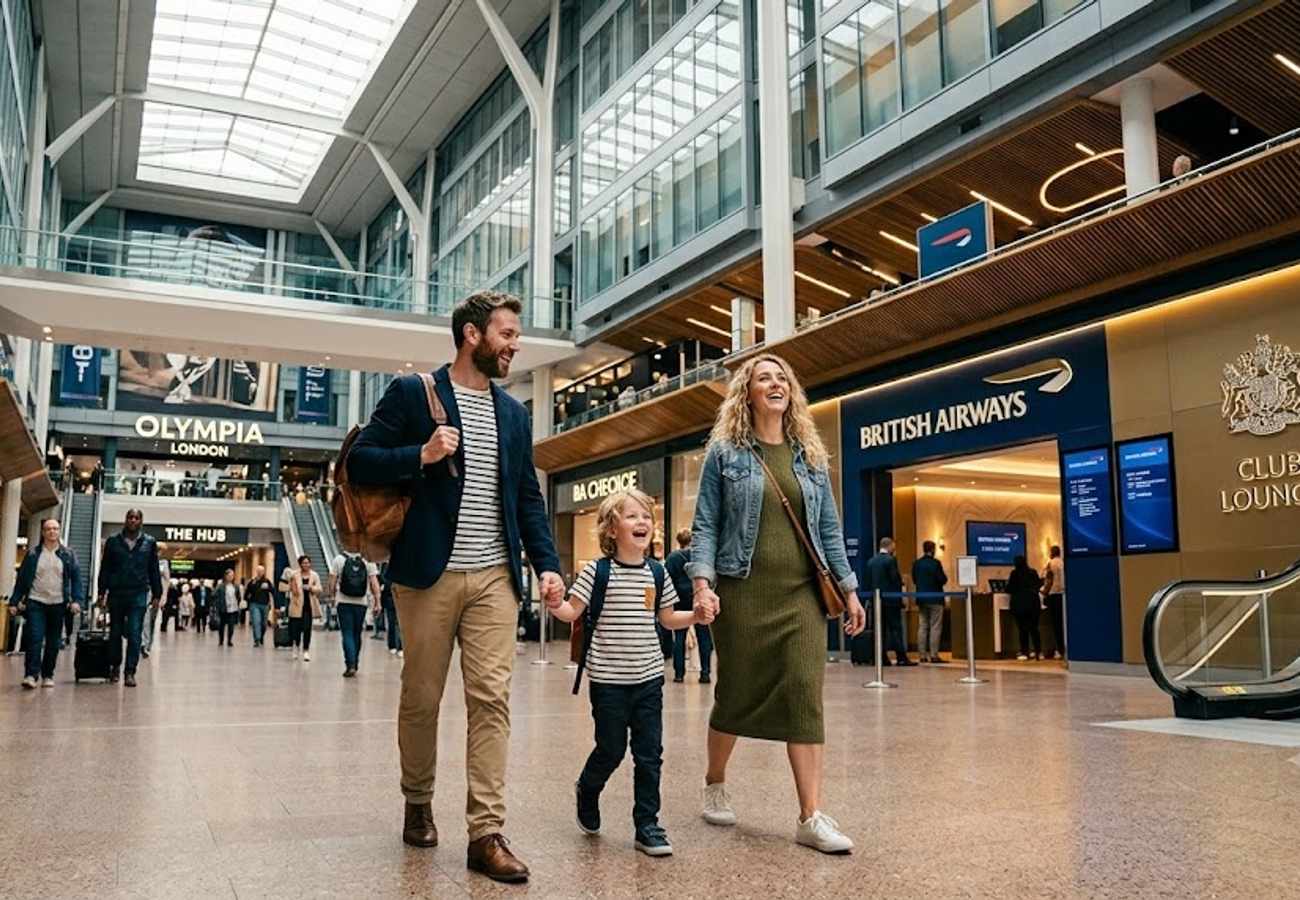
Image generated by AI
[London, July 5, 2026] — Airlines across seven major markets are rapidly converting live entertainment partnerships into cornerstone loyalty strategies, with British Airways anchoring a new venue presence inside London's emerging Olympia entertainment district. The move signals a structural shift in how carriers compete for high-value customers, extending brand engagement far beyond flight cabins and airport lounges into year-round cultural experiences.
The strategy spans the United Kingdom, the United States, Canada, France, Germany, Japan, and Australia, where carriers are leveraging loyalty programs to unlock priority ticketing, VIP hospitality, and exclusive event access for premium members.
British Airways Anchors London's Olympia Entertainment District
British Airways has secured a substantial presence within London's developing Olympia entertainment district, marking the carrier's most significant step yet into venue-based brand integration. Industry sources indicate the arrangement goes well beyond conventional sponsorship frameworks, instead embedding the airline into the cultural routines of its customer base throughout the calendar year.
The initiative centers on creating a premium venue experience tied directly to the airline's brand identity. Eligible loyalty members and selected customers will gain access to exclusive hospitality offerings before and during live performances, effectively extending the carrier's premium cabin philosophy into the entertainment space.
This development follows a prolonged evolution in airline marketing. For decades, carriers competed primarily through route expansion, fleet modernization, frequent flyer mileage programs, and premium cabin service. Current engagement strategies now reach well past the travel journey itself, with live entertainment functioning as an additional platform for sustained customer relationships.
Multiple global airlines have pursued comparable strategies by partnering with concert promoters, sports organizations, music festivals, theater operators, and entertainment venues. These collaborations are engineered to strengthen loyalty ecosystems while reinforcing premium brand positioning in crowded markets.
For destinations like London, entertainment districts gain amplified visibility through airline marketing channels, while carriers gain exposure to audiences who may subsequently become premium travelers.
Seven Nations Converge on Entertainment-Driven Loyalty Models
The entertainment-as-loyalty approach is not isolated to the United Kingdom. Airlines across six additional nations are deploying similar frameworks, each tailored to regional market dynamics but unified by the same underlying logic: experiences drive retention more effectively than transactional rewards.
In the United States, airlines are collaborating with major sports franchises and entertainment venues to capture event-driven travel demand. Canadian carriers are pursuing event sponsorships and hospitality initiatives that support urban tourism growth. French airlines are focusing on premium cultural partnerships that enhance luxury tourism appeal, while German carriers are integrating business travel with entertainment offerings to strengthen conference and event tourism retention.
Japanese airlines are developing lifestyle-focused experiences that diversify tourism offerings and deepen premium loyalty development. Australian carriers are investing in sporting and entertainment collaborations that support regional tourism expansion and broaden customer engagement.
Countries Aligning with the Strategy
| Country | Industry Role | Tourism Benefit | Connectivity Impact |
|---|---|---|---|
| United Kingdom | British Airways entertainment partnerships | Stronger cultural tourism appeal | Enhanced premium customer engagement |
| United States | Airlines collaborate with sports and entertainment venues | Higher event-driven travel demand | Increased loyalty program value |
| Canada | Event sponsorships and hospitality initiatives | Growth in urban tourism | Improved premium travel offerings |
| France | Premium cultural partnerships | Luxury tourism enhancement | Stronger international visitor appeal |
| Germany | Business and entertainment integration | Conference and event tourism | Greater customer retention |
| Japan | Lifestyle-focused airline experiences | Tourism diversification | Premium loyalty development |
| Australia | Sporting and entertainment collaborations | Regional tourism growth | Expanded customer engagement |
How Entertainment Partnerships Reshape International Travel
For international travelers, the evolution of airline loyalty programs delivers tangible benefits that extend well past airport terminals. Premium members increasingly receive early access to ticket sales, preferred seating at entertainment venues, invitations to exclusive events, access to hospitality lounges, and curated travel experiences tied to cultural calendars.
These offerings encourage travelers to maintain engagement with airline brands throughout the year rather than interacting only during flight bookings. International visitors may also benefit from integrated travel packages combining flights, accommodation, entertainment tickets, and destination experiences into single booking flows.
Event-driven tourism continues expanding globally, with concerts, festivals, theatrical performances, and sporting competitions motivating millions of international trips each year. Airlines embedded within these ecosystems can simplify travel planning while increasing perceived value for loyalty program members.
As digital booking platforms grow more sophisticated, travelers are likely to encounter greater personalization through recommendations that link flight itineraries with destination events. This approach creates opportunities for multi-city trips organized around major entertainment calendars, encouraging longer stays and increased tourism spending at each stop.
Economic Ripple Effects Across Hospitality and Tourism Sectors
Entertainment partnerships generate measurable economic benefits across multiple interconnected sectors. Airlines strengthen customer retention by offering lifestyle benefits that incentivize repeat bookings and premium membership participation.
Tourism destinations gain increased visitor spending through event-driven travel patterns. International visitors attending concerts or theatrical performances frequently extend their stays to explore nearby attractions, generating additional hotel nights, restaurant visits, and retail activity.
Local businesses situated around entertainment districts benefit from elevated foot traffic before and after events. Airports may experience increased passenger volumes correlated with major international performances or festivals, particularly when carriers actively promote event-linked travel packages.
Hospitality providers — including hotels, restaurants, transportation companies, and retail operators — capture revenue from visitors combining entertainment with leisure travel. From a macroeconomic perspective, stronger visitor spending supports employment across tourism-related industries while underwriting urban regeneration projects focused on cultural infrastructure development.
Bleisure Travel Amplifies Airline-Entertainment Convergence
Business travelers represent a particularly important audience for entertainment-linked loyalty strategies. Corporate customers increasingly combine work obligations with leisure activities, a pattern widely recognized as "bleisure" travel. Entertainment partnerships help airlines maintain relevance before, during, and after business journeys, giving corporate accounts additional reasons to maintain loyalty with specific carriers.
International tourism boards have increasingly recognized that cultural attractions contribute significantly to destination competitiveness. Airlines partnering with entertainment venues indirectly strengthen broader tourism ecosystems by promoting destinations alongside premium experiences, creating a compounding effect that benefits both aviation and local hospitality sectors.
The strategy also reflects intensifying competition among global carriers seeking differentiation beyond pricing and schedules. With route networks and fleet capabilities increasingly standardized among major carriers, lifestyle partnerships offer a distinct avenue for brand differentiation that competitors cannot easily replicate.
Why This Matters: Aviation's Pivot from Transportation to Lifestyle
The convergence of aviation and entertainment represents a fundamental repositioning of what airlines sell. For most of commercial aviation's history, the product was transportation — moving passengers between cities efficiently and safely. Loyalty programs reinforced that core proposition through flight rewards and tiered cabin service.
What is now unfolding across seven major markets represents something structurally different. Airlines are no longer merely transporting travelers to entertainment destinations; they are becoming participants in the entertainment economy itself. By securing venue presences, offering priority ticketing, and building hospitality experiences tied to live performances, carriers are claiming a share of the leisure spending that traditionally accrued entirely to event organizers, hospitality companies, and local businesses.
This shift carries significant implications for how the travel industry measures customer lifetime value. A loyalty member who books two flights annually but attends four airline-sponsored events per year generates a fundamentally different engagement profile than one who flies frequently but has no off-flight interaction with the brand. Carriers investing in entertainment partnerships are betting that sustained cultural engagement produces deeper retention than mileage accrual alone.
The seven-nation alignment also suggests this is not a localized experiment. When carriers across North America, Europe, Asia, and the Pacific simultaneously pursue entertainment-linked loyalty strategies, the industry is signaling a collective judgment about where premium traveler attention now resides. Airlines that fail to build comparable lifestyle ecosystems risk losing high-value customers to competitors offering more than just seats and miles.
For travelers, the practical effect is a blurring of boundaries between booking a flight and booking an experience. The airlines that succeed in this transition will be those that make the connection feel seamless — where attending a concert in London, a sporting event in Sydney, or a festival in Tokyo feels like a natural extension of a loyalty relationship rather than a marketing add-on.
The airlines transforming loyalty into lifestyle are betting that experiences, not miles, will define the next decade of premium travel competition.
Related Travel Guides
Disclaimer
This article is for informational and educational purposes only. It does not constitute legal, financial, or professional advice. While we strive to provide accurate and up-to-date information, travel policies, regulations, and conditions change rapidly. Always verify information with official sources before making travel decisions. Nomad Lawyer makes no representations about the accuracy, reliability, completeness, or suitability of the information provided. Readers should consult qualified professionals for advice specific to their circumstances. The views expressed in this article are those of the author and do not necessarily reflect the views of Nomad Lawyer.
Kunal K Choudhary
Co-Founder & Contributor
A passionate traveller and tech enthusiast. Kunal contributes to the vision and growth of Nomad Lawyer, bringing fresh perspectives and driving the community forward.
Learn more about our team →