
South America Tourism Revenue Surges on Brazil and Colombia Extended Stays
Brazil and Colombia travel boom fuels South America tourism currency surge. Extended stays boost foreign exchange earnings across the continent in 2026.

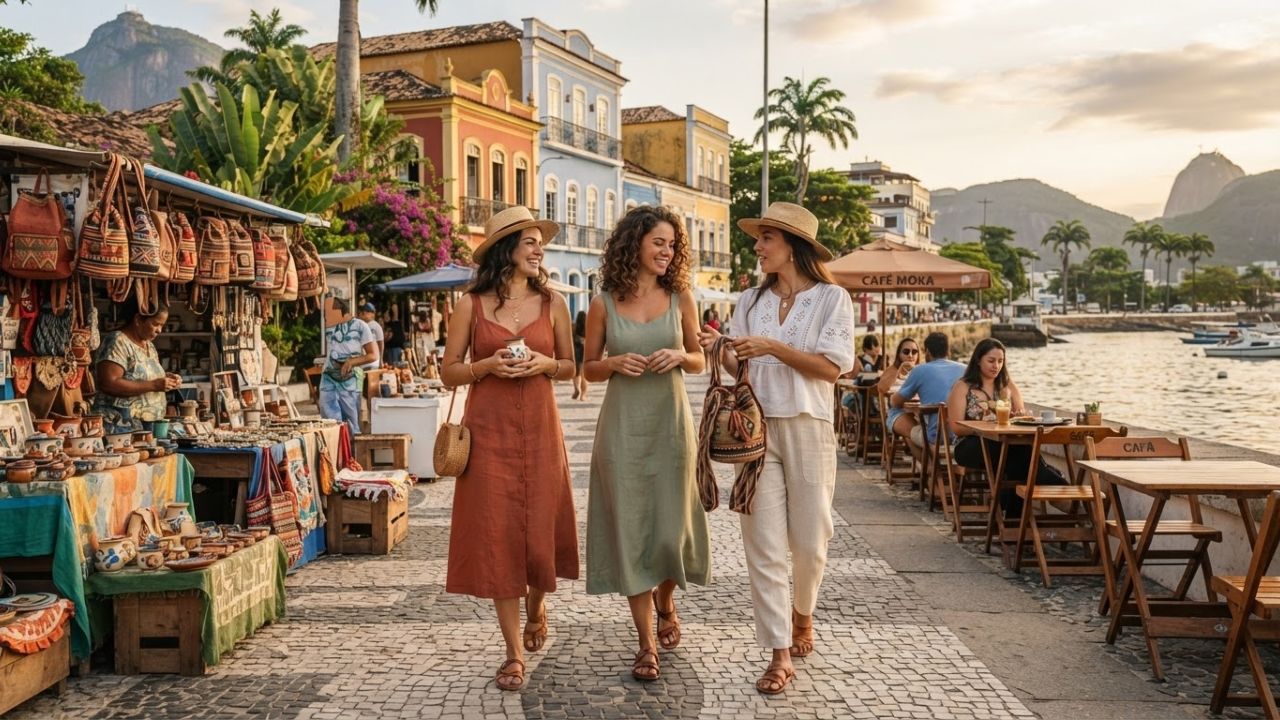
Image generated by AI
Foreign exchange earnings in Brazil surged 12 per cent to USD 5.60 billion in the first half of 2026, leading a continent-wide slow-travel trend that is boosting local service economies.
The Local Trend Revealed: High-Value Slow Travel
A primary transition in global traveler behavior is the shift toward "slow travel" and extended stays. Rather than opting for rapid, multi-city itineraries spanning multiple countries, remote professionals, digital nomads, and leisure tourists are choosing to anchor themselves for two to four weeks in a single region, such as Colombia's Coffee Triangle or Brazil's Bahian coast.
This behavior is driving a major tourism revenue and foreign currency surge across South America, offsetting regional economic challenges:
- Regional Inbound Metrics: The World Travel & Tourism Council (WTTC) forecasts international traveler spending across Central and South America to rise by 7.8 percent during 2026, outperforming the global average growth rate of 3.7 percent. This growth comes despite first-quarter regional arrivals dipping by 1 percent and the Economic Commission for Latin America and the Caribbean (ECLAC) estimating regional GDP growth at 2.4 percent for 2026.
- Brazil Net Capital Growth: Foreign visitors contributed USD 5.60 billion in Foreign Exchange Earnings (FEE) between January and June 2026, showing a 12.0 percent increase over the USD 5.00 billion recorded in the first half of 2025. June 2026 alone generated USD 809 million (a 17.8 percent year-on-year increase). Brazil welcomed 5.87 million foreign arrivals from January to July 2026 (with over 4 million entering via aviation). Long-haul growth markets were led by China (+64.5%), Colombia (+33%), and Peru (+18.8%).
- Colombia Flight Connectivity: Tourism is now Colombia's top non-subsurface export sector. The country recorded USD 3.146 billion in FEE during Q1 2026, representing a 9.4 percent year-on-year increase, supported by expanded direct flight corridors to Bogotá, Medellín, and Cartagena.
- Argentina Outbound Balance: Argentina collected USD 1.641 billion in inbound tourism revenue during Q1 2026. However, residents spent USD 4.825 billion on overseas travel (predominantly in Brazil, where Argentines spent USD 1.635 billion vs Brazilians spending USD 228 million in Argentina), creating a net travel balance deficit of USD 3.184 billion.
- Peru Revenue Resiliency: Peru generated USD 1.335 billion in FEE in Q1 2026 (up 12.7 percent year-on-year and 20.8 percent above 2019). Q1 arrivals grew 3.5 percent to 823,863 before experiencing temporary drops in April (-5.7%) and May (-1.3%) due to social demonstrations.
This high-yield travel trend is supported by direct transoceanic flight networks, fine-dining and culinary experiences, and the rapid modernization of local digital payment infrastructures (including contactless POS terminals and multi-currency mobile processors) that reduce spending friction in rural areas.
South American Tourism Yields & Arrivals Parameters (Q1-H1 2026)
| Target Destination / Market | Stated Foreign Earnings | Year-on-Year Growth Rate | Total International Arrivals | Key Financial / Transit Detail |
|---|---|---|---|---|
| Brazil (H1 2026) | USD 5.60 Billion | Up 12.0% (vs H1 2025) | 5.87 Million (Jan-Jul) | June FEE reached USD 809 million |
| Colombia (Q1 2026) | USD 3.146 Billion | Up 9.4% (vs Q1 2025) | Stated aviation arrivals | Top non-subsurface national export |
| Argentina (Q1 2026) | USD 1.641 Billion | Inbound revenue benchmark | Outbound: USD 4.825B | Net travel deficit: USD 3.184B |
| Peru (Q1 2026) | USD 1.335 Billion | Up 12.7% (vs Q1 2025) | 823,863 arrivals (Q1) | Q1 revenue stood 20.8% above 2019 |
| China to Brazil | Stated growth rate | Up 64.5% (Jan-Jul) | Aviation passenger entries | Fastest-growing long-haul market |
| Colombia to Brazil | Stated growth rate | Up 33.0% (Jan-Jul) | Regional passenger entries | Strong neighbor transit corridor |
Cultural & Environmental Value: Supporting Local Agriculture
For the traveler, the real impact of this slow-travel transition is the direct channel it creates for grassroots conservation and sustainable community support. Lingering in one location allows visitor spending to flow directly into local agricultural supply chains, neighborhood services, and family-owned lodges rather than multinational booking corporations.
Mapped in coordination with Embratur and Colombia's MINCIT, these slow-travel programs fund municipal sanitation systems, public beach protection, and indigenous cultural workshops. This ensures that tourism funds preserve regional heritage and protect local environments.
Destination Specialist Local Insider Tips
To help you prepare your itinerary and explore South American destinations comfortably, regional specialists suggest the following tips:
- Savor Ajiaco in Colombia: Experience regional Andean gastronomy. Warm up during cool afternoon mountain weather in Bogotá with a steaming bowl of Ajiaco (a rich soup made with chicken, three varieties of native potatoes, corn on the cob, and guascas herbs, served with heavy cream and capers).
- Leverage Digital POS Modernization: Skip long currency exchange lines. Since Brazil and Colombia have modernized merchant networks, pay for street-food snacks and regional taxi fares using contactless cards or mobile apps.
- Book Boutique Eco-Lodges Early: Remote professionals reserve properties in Bahia and the Coffee Triangle months in advance. Secure your bookings early to secure prime locations.
- Monitor Regional Exchange Fluctuations: When traversing borders between Brazil and Argentina, calculate local currency rate shifts to manage your purchasing power along premium travel corridors.
- Visit Historic Paraty: Take an under-the-radar detour. Skip the busy shorelines of Rio and explore the colonial stone lanes of Paraty, featuring coastal sailing tours and nearby Atlantic forest walks.
Long-Term Outlook: Digital Payments and Route Expansion
The long-term outlook for South America's visitor economy is positive, supported by the integration of digital payment networks and direct transoceanic flight route expansions. As regional ministries continue to deploy sustainable travel frameworks and invest in public infrastructure, international spending will remain high. By balancing high-density urban corridors with community-centered rural eco-tourism, local planners are building a resilient, long-term travel sector.
Related Travel Guides
Disclaimer
This article is for informational and educational purposes only. It does not constitute legal, financial, or professional advice. While we strive to provide accurate and up-to-date information, travel policies, regulations, and conditions change rapidly. Always verify information with official sources before making travel decisions. Nomad Lawyer makes no representations about the accuracy, reliability, completeness, or suitability of the information provided. Readers should consult qualified professionals for advice specific to their circumstances. The views expressed in this article are those of the author and do not necessarily reflect the views of Nomad Lawyer.
Preeti Gunjan
Contributor & Community Manager
A passionate traveller and community builder. Preeti helps grow the Nomad Lawyer community, fostering engagement and bringing the reader experience to life.
Learn more about our team →