
Massive Flight Chaos at Boston Logan: 253 Delays and 8 Cancellations Trigger Northeast Aviation Crisis, Disrupting Major Routes to London, New York, Chicago, and Toronto
Boston Logan International Airport hit by 253 flight delays and 8 cancellations on May 7, 2026, disrupting Delta, American, JetBlue, United and key routes to London, New York, Chicago, and Toronto.

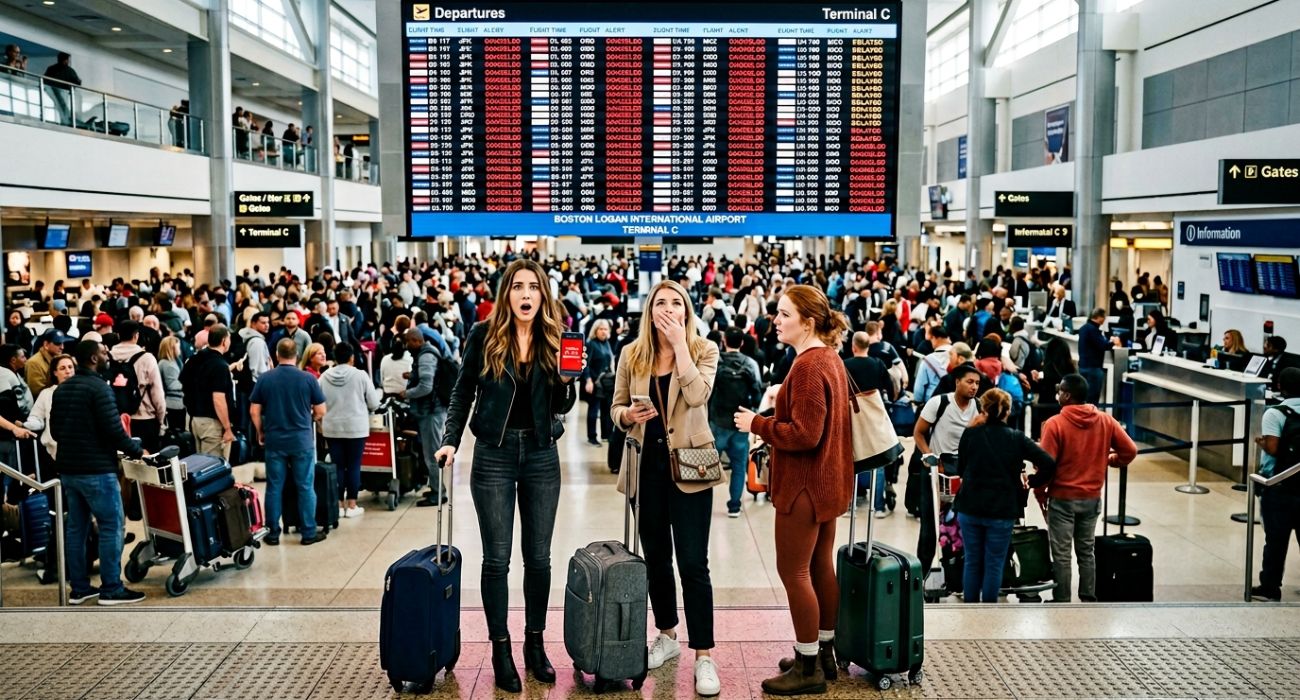
Image generated by AI
Severe Weather and FAA Traffic Restrictions Paralyze Boston Hub, Sending Ripple Effects Across US Domestic and International Air Corridors
BOSTON, MA — A wave of intense operational instability swept through Boston Logan International Airport (BOS) on May 7, 2026, leaving thousands of passengers stranded and throwing the Northeastern United States' aviation corridor into a state of high alert. The airport recorded a staggering 253 flight delays and 8 cancellations, a massive disruption that has sent shockwaves through the interconnected national airspace system, impacting major carriers including Delta Air Lines, American Airlines, JetBlue, and United Airlines.
The scale of the disruption at one of New England's most vital gateways has far-reaching implications. As the Federal Aviation Administration (FAA) implemented stringent air traffic flow management programs, the "ripple effect" began to manifest on critical routes connecting Boston to domestic powerhouses like New York and Chicago, as well as international arteries leading to London and Toronto.
An Expanded Overview: The Mechanics of the Shutdown
The crisis at Boston Logan was not a localized incident but a systemic failure triggered by a convergence of atmospheric volatility and capacity limitations. According to official reports from the Federal Aviation Administration, a combination of severe weather systems, low cloud ceilings, and aggressive traffic management protocols paralyzed the airport's ability to process inbound and outbound traffic efficiently.
The scale of the disruption was immense:
- 253 Flight Delays: Average delays for aircraft heading toward Logan exceeded one hour, with many passengers facing much longer wait times.
- 8 Total Cancellations: These cancellations forced immediate and complex rebooking efforts for passengers on long-haul and domestic routes.
The disruption essentially forced the FAA to implement "metering"—a process where aircraft are held on the ground or in airborne patterns to ensure that the number of planes entering the airspace does not exceed the capacity of the control towers and runways.
The Geopolitical and Economic Context of Aviation Stability
While the immediate trigger was meteorological, the broader context of this crisis lies in the extreme vulnerability of the modern, "just-in-time" aviation network. In an era of hyper-connectivity, an airport like Boston Logan functions as a critical gear in the global economic machine.
The disruption at BOS does not exist in a vacuum. The Northeastern US aviation corridor—encompassing Boston, New York (JFK/LGA), Philadelphia, and Washington D.C.—operates as a tightly coordinated, high-density ecosystem. When one node in this "megalopolis" of airspace fails, the entire system feels the strain. This interdependence means that a weather-related slowdown in Boston can lead to a shortage of aircraft and crew in Atlanta, Chicago, or even London, as the "rotation" of planes is broken.
Global Energy and Supply Chain Implications
While often viewed through the lens of passenger convenience, large-scale aviation disruptions carry subtle but significant implications for global logistics and energy consumption.
- Fuel Inefficiency: The widespread use of airborne holding patterns—where aircraft circle near the airport waiting for landing slots—results in massive, unplanned surges in jet fuel consumption. This contributes to localized spikes in operational costs for airlines and increases the carbon footprint of the flight.
- Supply Chain Risk: Beyond passengers, the delay of air cargo components and time-sensitive goods moving through the Boston hub can cause downstream delays in manufacturing and high-tech industries that rely on rapid air-freight replenishment.
Shipping, Trade, and the Tourism Economy
The economic impact of the Logan chaos extends deep into the regional economy. Boston serves as a primary gateway for the tourism and hospitality industries.
- Tourism Revenue at Risk: The disruption directly threatens hotel occupancy rates, restaurant activity, and transportation services in the Greater Boston area. For international travelers arriving from London or Toronto, the inability to make connections results in lost time and unexpected expenditures on lodging and meals.
- The "Stranded Traveler" Economy: While the airport's concession services may see a temporary surge in usage, the long-term outlook for the regional tourism industry is one of increased volatility and consumer anxiety.
Industry and Expert Analysis: The Fragility of the Spring Season
Aviation analysts warn that the current period—the busy spring travel season—is the most dangerous time for such disruptions. As passenger demand hits record highs, the "margin for error" in airport operations has effectively vanished.
"Modern air travel is a delicate balance of mathematics and meteorology," noted one industry specialist. "When you have high passenger volumes, any minor weather-related restriction forces the system into a state of rapid congestion. There is no 'buffer' left in the schedule. When 253 flights are delayed, you aren't just looking at a bad day in Boston; you are looking at a logistical nightmare for every airline hub connected to it."
The expertise at Massport (Massachusetts Port Authority) and other regional controllers suggests that as long as the "just-in-time" model of airline scheduling remains, the industry will remain highly susceptible to these types of systemic shocks.
Looking Ahead: The Resilience Challenge
As airlines and airport authorities move forward, the focus is shifting toward building more resilient infrastructure. This includes enhanced predictive weather modeling and more flexible scheduling protocols to absorb the impact of localized weather events without triggering a domino effect across the global aviation network.
Key Takeaways:
- Scale of Disruption: 253 flights impacted, including significant delays and cancellations.
- Primary Cause: Severe weather and FAA-mandated traffic management protocols.
- Economic Impact: High; affects regional tourism, global connectivity, and airline operational costs.
- Systemic Risk: Demonstrates the high vulnerability of modern, interconnected air travel networks to localized weather events.
Related Travel Guides
Disclaimer
This article is for informational and educational purposes only. It does not constitute legal, financial, or professional advice. While we strive to provide accurate and up-to-date information, travel policies, regulations, and conditions change rapidly. Always verify information with official sources before making travel decisions. Nomad Lawyer makes no representations about the accuracy, reliability, completeness, or suitability of the information provided. Readers should consult qualified professionals for advice specific to their circumstances. The views expressed in this article are those of the author and do not necessarily reflect the views of Nomad Lawyer.
Kunal K Choudhary
Co-Founder & Contributor
A passionate traveller and tech enthusiast. Kunal contributes to the vision and growth of Nomad Lawyer, bringing fresh perspectives and driving the community forward.
Learn more about our team →