
Boeing Landing Gear: Why 747-8 Main Tires Need 16 for Safety
The Boeing 747-8's nearly one million-pound weight demands 16 main landing gear tires to safely manage extreme ground forces during takeoff and landing operations in 2026.

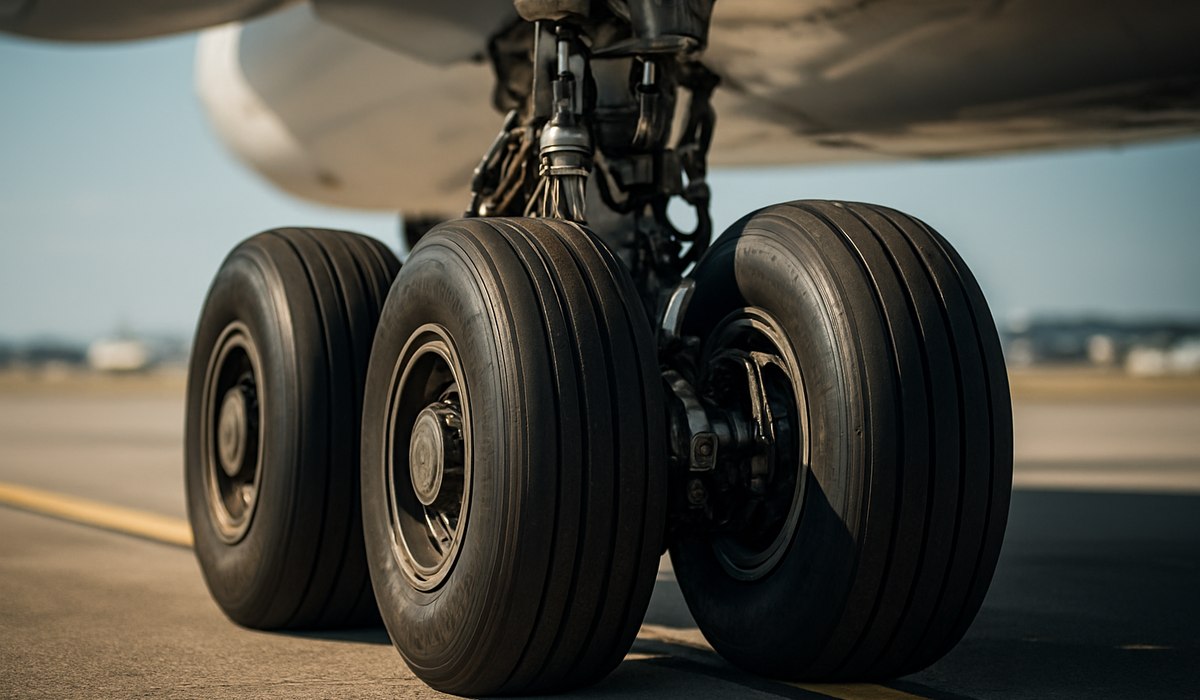
Image generated by AI
The Engineering Challenge Behind Ultra-Heavy Aircraft
The Boeing 747-8 requires 16 main landing gear tires to safely handle its colossal weight during ground operations. With a maximum takeoff weight approaching 987,000 pounds (447,000 kilograms), this iconic widebody aircraft represents the cutting edge of commercial aviation engineering. Unlike aircraft in flight, where aerodynamic lift distributes structural loads, all weight concentrates on the landing gear during critical ground phases. This fundamental physics challenge drives the design decision for multiple tire configurations across the 747-8 fleet.
Airport infrastructure worldwide depends on understanding these engineering specifications. Major hubs including Los Angeles International, London Heathrow, and Tokyo Narita regularly handle 747-8 operations. Airlines operating these aircraft—including Lufthansa Cargo, Atlas Air, and Cathay Pacific—depend on precise landing gear maintenance protocols to ensure passenger and crew safety on every rotation.
The Weight Challenge: Why 747-8 Landing Gear Demands Engineering Excellence
The 747-8's maximum structural weight creates unprecedented engineering demands. Engineers must distribute nearly one million pounds of force across multiple contact points on the tarmac. The aircraft's main landing gear configuration uses 16 tires in a complex wheel arrangement to prevent pavement damage and reduce point-load pressure on airport runways.
This design philosophy emerges from decades of Boeing's experience with heavy aircraft. Each tire carries a portion of the total weight, ensuring no single contact patch exceeds safe pressure thresholds. Modern tire compounds and reinforced sidewalls can withstand these repeated compression cycles during hundreds of takeoff and landing events annually.
The 747-8's landing gear system also includes advanced shock absorption mechanisms. Hydraulic dampers and structural isolation reduce transmitted vibrations to the fuselage during touchdown. This engineering sophistication extends aircraft service life and improves passenger comfort during ground operations. Maintenance crews at major hubs understand these systems intimately, as proper tire pressure and alignment directly impact fuel efficiency and runway longevity.
How 16 Tires Distribute Colossal Forces on the Tarmac
The main landing gear arrangement employs a four-wheel truck configuration on each main strut—creating eight wheels per main gear unit. With dual main gear assemblies, the 747-8 deploys 16 total main landing tires. This multi-wheel approach represents a fundamental engineering solution to the weight distribution challenge facing ultra-large aircraft designers.
Load distribution calculations determine tire specifications precisely. Engineers calculate that each tire supports approximately 61,700 pounds of weight during normal operations. This distributed load falls well within modern tire engineering limits, ensuring safety margins even under emergency braking scenarios. The tire compound selected for 747-8 operations must withstand temperature extremes, from cold northern climates to hot desert environments where these aircraft operate globally.
Tire pressure monitoring systems provide real-time data to maintenance technicians. Modern aircraft incorporate sensors that transmit pressure readings throughout flight operations. Ground crews inspect tires before each departure, checking for wear patterns, punctures, or thermal damage. A single underinflated tire across the fleet could compromise the carefully balanced load distribution, potentially requiring aircraft grounding until corrections occur.
Comparing Landing Gear Systems Across Commercial Aircraft Classes
The landing gear strategy varies dramatically across the commercial aircraft spectrum. The Boeing 737, carrying approximately 175,000 pounds maximum weight, requires only six main tires—two wheels on each main gear strut. The Airbus A380, competing with the 747-8 in the ultra-large category, similarly demands 16 main tires to manage its comparable 1.2-million-pound maximum weight.
Regional turboprops carrying 50-80 passengers utilize four main tires total. The Bombardier CRJ, operating regional routes, employs a simpler two-wheel truck configuration. This scalable engineering approach reveals how aircraft weight directly determines landing gear complexity. Airlines transitioning between aircraft types must train maintenance personnel on these substantial differences.
The FAA maintains detailed specifications for all commercial landing gear systems through rigorous certification processes. Each aircraft configuration undergoes extensive ground and flight testing before certification approval. Runway fatigue data collected from decades of operations informs these standards, ensuring that infrastructure investment aligns with actual operational demands.
Implications for Airport Infrastructure and Maintenance Costs
Landing gear design directly impacts airport maintenance budgets and runway longevity. The 747-8's distributed load system reduces pavement wear compared to hypothetical single-point loading scenarios. Modern runway surfaces, rated for specific weight classes, accommodate these aircraft through engineering specifications developed alongside aircraft certification.
Tire maintenance represents a substantial operational cost for cargo airlines and passenger carriers operating 747-8 aircraft. Major overhauls require tire removal, inspection, and potential replacement during scheduled maintenance events. A complete set of 16 replacement tires costs approximately $80,000-$120,000, making tire management a significant line item in aircraft operating budgets.
Specialized ground support equipment assists with landing gear servicing. Hydraulic jacks rated for half-million-pound lifting capacities raise the aircraft. Tire assemblies weighing over 1,100 pounds each require multiple technicians and proper safety procedures. Training programs certify maintenance personnel on these specialized procedures, ensuring that every airport handling 747-8 operations maintains qualified workforce capacity.
What This Means for Travelers
Frequent international travelers should understand how aircraft specifications influence operational reliability and safety. The Boeing 747-8's engineering robustness ensures predictable scheduling and minimal mechanical delays related to landing gear issues. When selecting flights for important connections, knowing that ultra-large aircraft have built-in redundancy and advanced monitoring systems provides confidence in safe operations.
Here are actionable steps for informed travel decisions:
-
Check aircraft type on your booking confirmation—Use FlightAware to identify whether your scheduled aircraft is a 747-8, A380, or narrowbody model before departure.
-
Monitor maintenance notices—The FAA Service Difficulty Reporting system tracks maintenance events; major carriers report landing gear issues transparently.
-
Understand passenger rights—The U.S. Department of Transportation protects passengers when mechanical issues cause cancellations or significant delays.
-
Book flights during peak maintenance windows—Airlines schedule heavy maintenance during off-peak seasons; booking during these periods may offer better reliability.
-
Register for airline notifications—Mechanical delays trigger automatic passenger communication from major carriers through text and email alerts.
FAQ
How often do 747-8 landing gear tires require replacement?
Boeing specifies landing gear tire replacement based on wear indicators rather than fixed time intervals. Depending on utilization rates, airlines typically replace main tires every 200-400 flight hours. High-utilization cargo operations may require more frequent replacement than international passenger routes with longer intervals between flights.
Why can't the 747-8 use fewer, larger tires instead of 16 small ones?
Aircraft tires have engineering limits on maximum diameter and load capacity. Using fewer, larger tires would exceed safe sidewall stress limits and compromise structural integrity. The 16-tire configuration optimizes modern tire technology's capabilities while maintaining safety margins required by aerospace regulations.
Do 747-8 landing gear failures happen frequently?
Landing gear failures remain extraordinarily rare due to redundant design systems and rigorous maintenance protocols. Modern 747-8 operations average fewer than two landing gear-related incidents per 100,000 flight operations globally. Comprehensive monitoring systems catch problems during maintenance, preventing failures during flight.
How does landing gear design impact airline operating costs?
Landing gear represents approximately 5-7% of total aircraft operating expenses when accounting for maintenance, inspections, tire replacements, and hydraulic servicing. Ultra-large aircraft like the 747-8 have proportionally higher maintenance costs, which airlines factor into ticket pricing for cargo operations and long-haul international routes.
Related Travel Guides
Disclaimer
This article is for informational and educational purposes only. It does not constitute legal, financial, or professional advice. While we strive to provide accurate and up-to-date information, travel policies, regulations, and conditions change rapidly. Always verify information with official sources before making travel decisions. Nomad Lawyer makes no representations about the accuracy, reliability, completeness, or suitability of the information provided. Readers should consult qualified professionals for advice specific to their circumstances. The views expressed in this article are those of the author and do not necessarily reflect the views of Nomad Lawyer.
Raushan Kumar
Founder & Lead Developer
Full-stack developer with 11+ years of experience and a passionate traveller. Raushan built Nomad Lawyer from the ground up with a vision to create the best travel and law experience on the web.
Learn more about our team →