
Cuenca Cliffside Town Emerges as Europe's Premier Medieval Destination in 2026
Spain's medieval Cuenca cliffside town captivates European travelers with dramatic gorge-perched architecture and preserved fortress layouts. The UNESCO-listed city attracts record visitors in 2026.

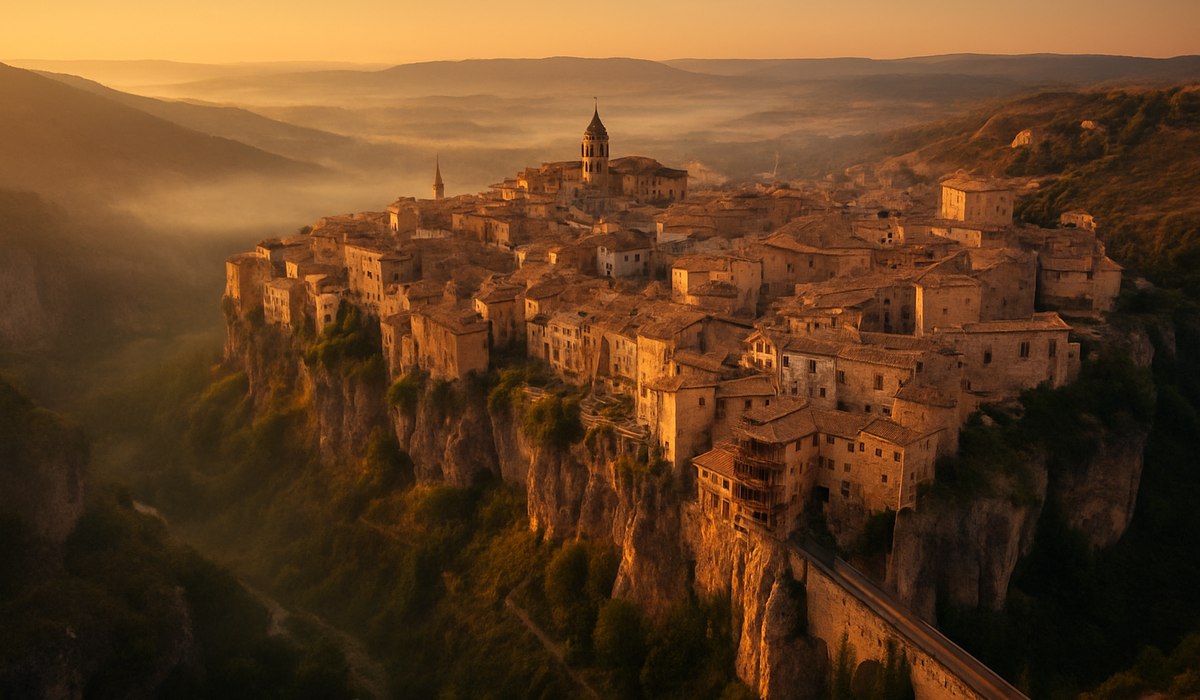
Image generated by AI
Cuenca Cliffside Town Draws Record European Travelers Seeking Medieval Architecture
Cuenca, a dramatic medieval fortress city perched on a limestone ridge between two Spanish river gorges, has become Europe's most sought-after heritage destination as travelers increasingly seek architecturally distinctive experiences. The UNESCO-listed old town, located in central Spain's Cuenca province, combines medieval street patterns with gravity-defying clifftop houses that have captivated international visitors throughout 2026. Tourism data reveals unprecedented interest in this cuenca cliffside town among European explorers prioritizing authentic heritage over mass-market destinations.
A Medieval Fortress City Shaped by Cliffs and Gorges
Cuenca's distinctive character stems from its improbable location atop a knife-edge plateau carved by the Huécar and Júcar rivers. The city first emerged as a fortified stronghold under the Caliphate of Córdoba, then expanded significantly after 12th and 13th-century incorporation into the Crown of Castile. Defensive walls, ancient gateways and steep streets still follow patterns established during both Muslim and Christian rule periods.
The narrow plateau forced medieval builders to construct vertically and project structures outward over sheer drops. Streets twist through tight switchbacks that abruptly terminate at dramatic viewpoints overlooking the gorges. This inseparable relationship between topography and urban design distinguishes cuenca cliffside town from typical European medieval centers. Heritage preservation organizations consistently cite this geography-driven town planning as exceptional among Spain's medieval walled cities. The result is a remarkably intact fortified ensemble where historic architecture remains functionally integrated into contemporary city life.
Hanging Houses: From Vernacular Necessity to Global Icon
The Casas Colgadas—or Hanging Houses—define visual perception of Cuenca cliffside town globally. These multistory dwellings extend dramatically over the Huécar gorge, appearing to float above the void via wooden galleries and timber-frame overhangs. Medieval builders developed this cliff-edge construction technique as a pragmatic response to severe land scarcity within the fortified plateau.
Surviving examples showcase stacked masonry bases anchored into bedrock, topped by timber frameworks that step outward progressively. This engineering solution maximized interior floor space while preserving street-level passage above. Only handful of these structures retain near-original form, yet they've evolved into international heritage symbols and architectural case studies.
Adaptive reuse has kept the Hanging Houses functionally alive. One historic clifftop residence now houses the Museo de Arte Abstracto Español, connecting medieval construction with postwar Spanish artistic movements. This repurposing strategy demonstrates how vernacular architecture can transition from utilitarian buildings into globally recognized cultural assets. Recent heritage conservation conferences specifically reference Cuenca's Hanging Houses as precedents for balancing structural safety, tourism access and architectural authenticity on precarious terrain.
UNESCO Recognition and Strategic Conservation Investment
Cuenca's old town earned UNESCO World Heritage status during the 1990s, recognized for exceptional preservation and landscape integration. The designation encompasses the walled historic core, monumental buildings and everyday street fabric linking architectural complexes together. Since inscription, regional and national authorities have implemented comprehensive conservation programs stabilizing geological slopes, restoring historic facades and protecting the distinctive skyline.
Recent restoration work has targeted medieval walls, historic towers and religious structures dominating the upper town, emphasizing traditional materials and construction techniques. The former Convent of San Pablo, a 16th-century complex perched on a rocky outcrop opposite the Hanging Houses, operates as a state-run parador hotel providing guests with panoramic gorge views and night-time illuminated perspectives of the cliffside.
Multi-million-euro restoration initiatives have focused on the convent's facades, cloisters and structural elements, positioning the property as both accommodation and heritage conservation showcase. This strategic investment signals ongoing commitment to maintaining cuenca cliffside town as Europe's premier destination for medieval architecture enthusiasts.
Why Cuenca Stands Apart Among European Heritage Destinations
Cuenca cliffside town distinguishes itself through unparalleled integration of geography and historic urban form. Unlike European medieval cities rebuilt across flat terrain, this destination showcases architecture fundamentally shaped by geological constraints. The gorge-carved plateau forced designers to create vertical streetscapes and innovative construction methods still visible today.
Tourist infrastructure has expanded significantly without compromising authentic character. Modern museums, restaurants and accommodations occupy historic structures, allowing visitors to experience medieval spaces as living environments rather than static exhibitions. The absence of modern construction within the walled old town preserves uninterrupted sightlines and architectural continuity. Transportation challenges—narrow streets accommodating only pedestrians—naturally limit visitor density compared to more accessible European medieval centers. This geographic limitation paradoxically protects authentic character while creating measurable tourism demand as travelers specifically seek less-commercialized heritage experiences.
Planning Your Visit to Spain's Most Striking Old Town
Access to Cuenca requires deliberate travel planning as the city isn't served by major European transportation hubs. The nearest airport is Valencia, approximately 160 kilometers away, requiring ground transportation through rural Spanish terrain. Direct rail connections link Cuenca to Madrid and Valencia, offering scenic alternatives to driving.
Within the old town, private vehicles cannot navigate medieval streets designed for medieval foot traffic. Visitors must park in modern areas surrounding the historic core and proceed on foot. Comfortable walking shoes prove essential as streets involve continuous elevation changes and cobblestone surfaces. Spring and autumn offer optimal climate conditions—mild temperatures and lower summer tourist volumes. Winter visits present reduced visibility in gorges and occasional icy street conditions. Summer heat can be intense, and July-August crowds significantly impact navigation through narrow passages.
Accommodation within the walled old town offers premium heritage experiences but commands correspondingly premium pricing. The parador hotel provides unmatched locations but requires advance reservations months ahead. Mid-range guesthouses operate within historic buildings, offering authentic medieval environments at moderate costs. Budget travelers may prefer staying in modern Cuenca neighborhoods outside the historic core, accepting brief commutes for cost savings.
| Category | Details |
|---|---|
| Location | Central Spain, Cuenca province; 160 km from Valencia |
| UNESCO Status | World Heritage Listed (1996); walled old town designation |
| Key Architecture | Casas Colgadas (Hanging Houses), medieval fortifications, Convent of San Pablo |
| Museums | Museo de Arte Abstracto Español, Cathedral Museum, Cuenca Science Museum |
| Best Visit Season | April-May, September-October for climate and crowds |
| Street Type | Exclusively pedestrian; cobblestone, steep elevation changes throughout |
| Avg. Daily Visitors | 2,000-3,000 (peak season), 500-1,000 (off-season) |
| Primary Attraction | Gorge views, medieval street experience, architectural photography |
What This Means for Travelers
Cuenca cliffside town represents a rare European destination where medieval urbanism remains functionally intact and geographically isolated from modernization pressures. Several actionable implications emerge for travelers planning visits:
-
Reserve accommodations early: Premium locations within the historic core fill 3-4 months ahead during peak seasons. Budget allocations should anticipate 25-40% premiums compared to other Spanish medieval towns.
-
Plan multi-day visits: Single-day excursions from nearby cities (Valencia, Madrid) limit meaningful exploration to 4-5 hours. Overnight stays enable morning street photography, evening gorge illumination viewing and unpressured architectural discovery.
-
Prioritize shoulder seasons: April-May and September-October provide optimal combinations of favorable climate, manageable crowds and accessible street conditions. Summer visits risk excessive heat; winter conditions reduce gorge visibility.
-
Engage guided services selectively: Professional historians leading specialized architecture tours add substantial value. Self-guided exploration using modern mapping applications provides adequate orientation for independent travelers.
-
**
Disclaimer
This article is for informational and educational purposes only. It does not constitute legal, financial, or professional advice. While we strive to provide accurate and up-to-date information, travel policies, regulations, and conditions change rapidly. Always verify information with official sources before making travel decisions. Nomad Lawyer makes no representations about the accuracy, reliability, completeness, or suitability of the information provided. Readers should consult qualified professionals for advice specific to their circumstances. The views expressed in this article are those of the author and do not necessarily reflect the views of Nomad Lawyer.
Kunal K Choudhary
Co-Founder & Contributor
A passionate traveller and tech enthusiast. Kunal contributes to the vision and growth of Nomad Lawyer, bringing fresh perspectives and driving the community forward.
Learn more about our team →