
Boeing Dreamliner Scrapped After Just 13 Flight Hours in 2026
A nearly-new Boeing 787-8 Dreamliner with minimal flight hours is being dismantled for high-demand components at Roswell International Air Center, revealing aircraft economics challenges in 2026.

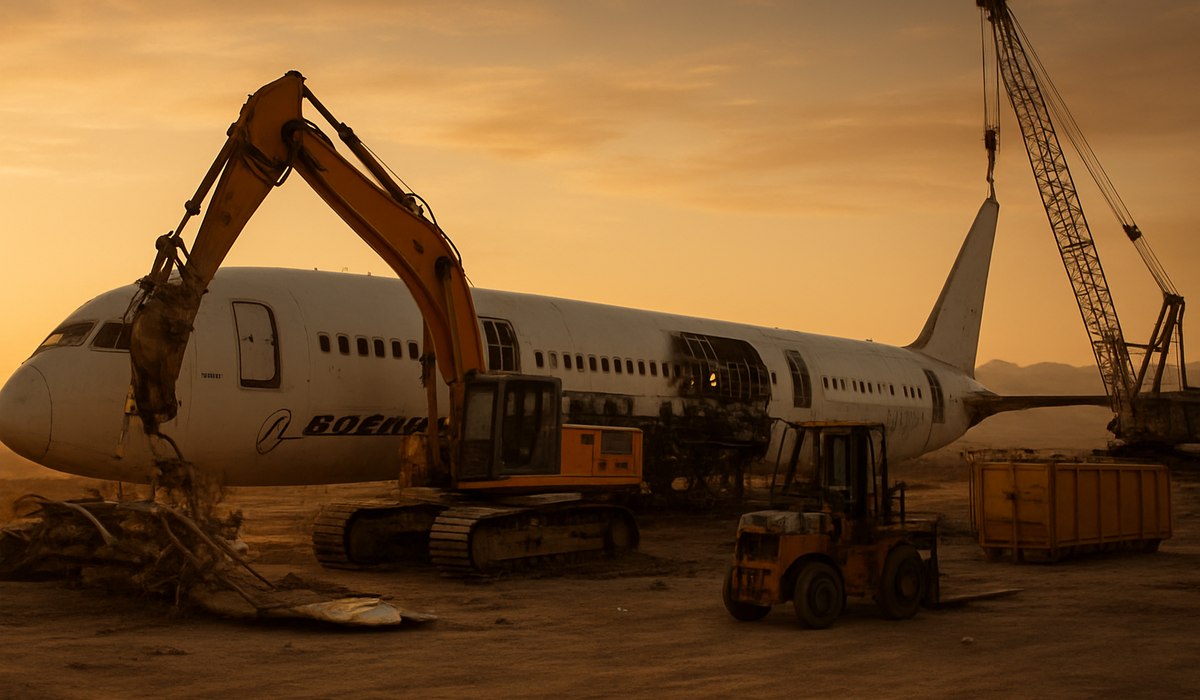
Image generated by AI
A Nearly-New Dreamliner Meets Unexpected Fate
A pristine Boeing 787-8 Dreamliner bearing registration N947BA is being dismantled for components at Roswell International Air Center in New Mexico, marking an unusual turn in the aerospace industry. The aircraft, the 17th Dreamliner produced at Boeing's Everett facility, completed only 13 ferry flights before arriving at the New Mexico facility for demolition. This remarkable outcome highlights the complex economics surrounding modern aircraft production, parts scarcity, and shifting market demands in commercial aviation.
The sight of brand-new aircraft being scrapped rather than entering passenger service illustrates broader challenges facing Boeing and airline operators worldwide. Unlike aging airliners approaching retirement, this relatively young Dreamliner never accumulated meaningful operational hours on commercial routes.
Why Is a New Dreamliner Being Scrapped?
The decision to dismantle an aircraft with minimal flight time reflects several interconnected factors in today's aviation landscape. Airlines face unprecedented demand for replacement parts, particularly high-value components found in modern widebody aircraft. The Boeing dreamliner scrapped situation demonstrates that sometimes the value of individual systems and components exceeds the worth of keeping the airframe intact for limited-capacity routes.
Supply chain constraints continue affecting global aviation. Airlines operating legacy narrow-body fleets sometimes find it more economical to source parts from surplus aircraft than waiting months for new components through manufacturer channels. The Dreamliner's advanced systems—including its composite fuselage, electrical architecture, and cabin pressurization equipment—contain sought-after parts applicable across multiple Boeing models.
Additionally, shifting travel patterns and route profitability calculations may have rendered this particular airframe economically unviable for certain operators. A widebody aircraft requires sufficient passenger demand to justify fuel consumption and operational costs.
The Economics of Aircraft Parts Demand
High-value aircraft demolition at dedicated facilities like Roswell International Air Center (ROW) has evolved into a sophisticated industry. Modern widebody aircraft contain thousands of reusable components, from avionics systems worth hundreds of thousands of dollars to cabin furnishings and structural elements. The Roswell facility specializes in extracting these materials systematically, following strict aviation maintenance standards.
The surplus aircraft market operates on clearly defined economic principles. A Boeing 787-8, even with minimal hours, loses value rapidly if no airline commits to purchasing it. Manufacturers and lessors face mounting storage costs, insurance, and tax obligations. Strategically dismantling the airframe becomes the financially rational decision. Parts harvesting generates revenue streams that offset demolition expenses, sometimes producing net positive returns.
Industry data shows replacement parts for modern aircraft carry significant premiums. Airlines cannot afford downtime waiting for components. A single aircraft engine overhaul can require months; purchasing certified used parts from a known-quality source like the Dreamliner accelerates maintenance schedules and keeps aircraft flying.
Boeing's Production and Market Challenges
The Boeing 787-8 represents the company's most advanced achievement in wide-body engineering, yet production economics remain challenging. The aircraft's complex manufacturing process involves numerous suppliers globally, creating schedule pressures and cost management difficulties. When demand doesn't materialize as projected, inventory builds without corresponding orders.
Supply chain disruptions since 2020 have created unusual market dynamics. Some airlines postponed deliveries or cancelled orders, while others became more selective about aircraft specifications and capabilities. A Dreamliner configured for specific routes or requiring customer modifications might face limited resale prospects if that particular order cancelled.
Boeing's MAX production recovery also influenced widebody market appetite. Airlines diverted capital and delivery slots toward narrow-body aircraft serving higher-frequency domestic routes. This shift reduced Dreamliner demand relative to production capacity, creating surplus inventory situations like N947BA's circumstances.
What Happens to Salvaged Aircraft Components?
When N947BA enters the aircraft demolition process at Roswell, technicians follow rigorous protocols ensuring parts maintain airworthiness certifications. Each component receives inspection, testing, and proper documentation before entering the aftermarket supply chain. High-integrity parts supply sources command premium prices among operators seeking reliable replacements.
The Dreamliner's advanced materials provide valuable recycling opportunities. Composite fuselage sections, aluminum structures, and titanium components have inherent material value beyond aviation applications. Secondary markets exist for reclaimed materials serving aerospace, automotive, and industrial manufacturing sectors.
Electronics, avionics, and hydraulic systems represent the most valuable salvage categories. A single flight management system or autopilot unit can serve multiple aircraft throughout its remaining service life. Airlines worldwide maintain standing requests with parts brokers for specific components, ensuring rapid placement of high-quality used equipment.
Environmental considerations increasingly influence demolition practices. Modern aircraft recycling recovers approximately 85-95% of materials by weight, reducing landfill impact compared to earlier disposal methods. Roswell and similar specialized facilities operate under strict environmental regulations governing fuel draining, hazardous material handling, and waste processing.
Key Data: Boeing 787-8 Scrapping Economics
| Metric | Details |
|---|---|
| Aircraft Registration | N947BA |
| Production Sequence | 17th Dreamliner produced |
| Manufacturing Location | Everett, Washington |
| Total Flight Hours | 13 hours (ferry flights only) |
| Demolition Facility | Roswell International Air Center, New Mexico |
| Aircraft Class | Wide-body, twin-engine |
| Typical Component Salvage Rate | 85-95% by weight |
| High-Value Parts | Engines, avionics, hydraulic systems |
| Industry Status | Contributing to 2026 parts scarcity solutions |
What This Means for Travelers
The Boeing dreamliner scrapped news carries important implications for passengers:
-
Expect continued flight availability: Airlines can maintain operations despite production challenges by accessing certified used parts, ensuring schedules remain stable.
-
Aircraft maintenance timelines may improve: Availability of quality salvaged components reduces aircraft downtime for repairs, potentially decreasing cancellation risks.
-
Ticket pricing reflects market realities: Aircraft surplus situations influence manufacturer pricing and airline capacity planning, affecting fare structures across various routes.
-
Fleet modernization continues strategically: Rather than disrupting service, component recycling ensures operators can maintain modern aircraft fleets economically.
-
Technological advances benefit older aircraft: Parts harvested from new airframes enable upgrades on existing aircraft, extending fleet utility and passenger comfort improvements.
-
Supply chain resilience increases: Salvage sources create redundancy in parts procurement, reducing airline dependency on manufacturer schedules.
Monitor flight status updates on FlightAware to track service continuity across your preferred routes. Check FAA maintenance advisories for specific aircraft type updates affecting your travel planning.
FAQ
Why would Boeing allow a new Dreamliner to be scrapped instead of selling it?
Boeing likely didn't "allow" N947BA's dismantling directly—lessors, trading companies, and investors make these decisions. When accumulated storage costs and carrying expenses exceed resale value, scrapping for parts becomes economically rational. The aircraft's specific configuration may have lacked buyer interest despite its pristine condition.
Could this Dreamliner have been sold to an airline instead?
Theoretically yes, but market conditions in early 2026 apparently rendered such sales unattractive. Airlines prioritized affordable narrow-body aircraft for high-frequency routes. A stored wide-body faces escalating carrying costs, making parts harvesting financially superior to holding inventory indefinitely.
How do salvaged Dreamliner components affect aircraft safety?
Salvaged parts must meet identical airworthiness standards as new components, including rigorous certification testing, documentation, and traceability requirements. The FAA maintains strict oversight of parts procurement channels, ensuring used components function equivalently to manufacturer replacements
Preeti Gunjan
Contributor & Community Manager
A passionate traveller and community builder. Preeti helps grow the Nomad Lawyer community, fostering engagement and bringing the reader experience to life.
Learn more about our team →