
Boeing Surges Past Production Milestones in May, Yet New Orders Signal Airline Caution
Breaking airline news and aviation industry updates for 2026.

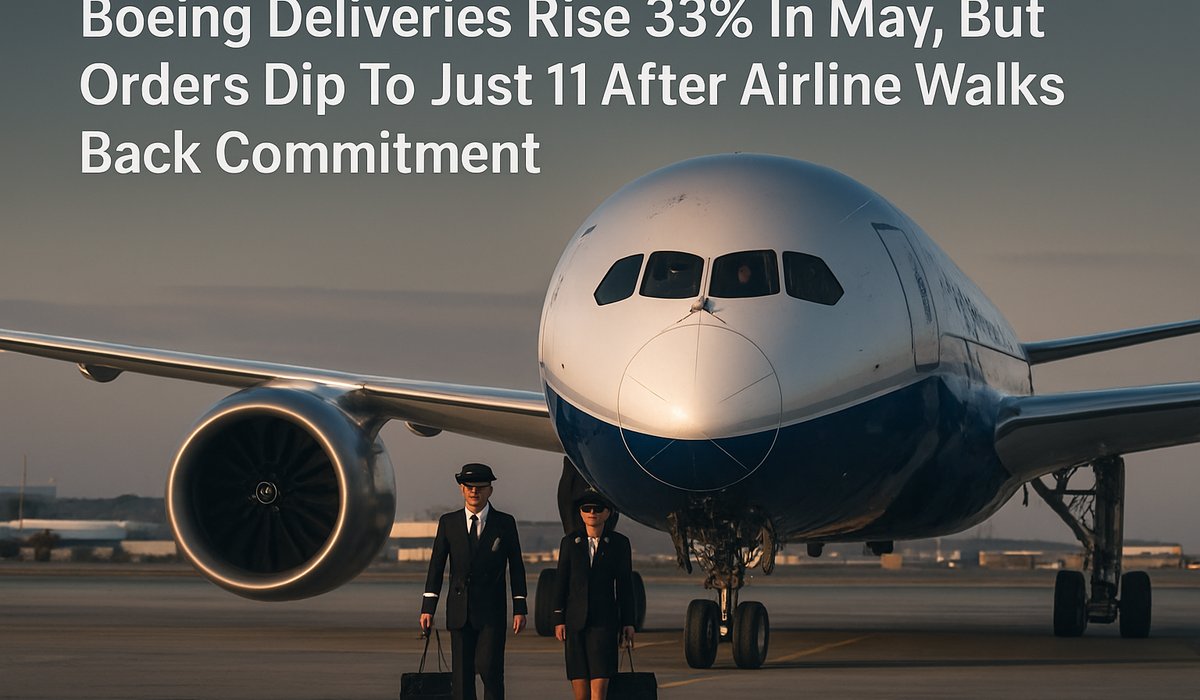
Image generated by AI
Boeing Surges Past Production Milestones in May, Yet New Orders Signal Airline Caution
Aircraft manufacturer delivers 60 jets in single month, but cancellations and weak order intake raise concerns about sustained demand
Production Recovery Gains Momentum
Boeing has achieved a significant manufacturing milestone, delivering 60 commercial aircraft during May—a robust 33% increase compared to the same period last year. The performance underscores the aerospace giant's continuing efforts to stabilize its production pipeline following months of operational challenges that disrupted the global aviation supply chain.
The May figures represent Boeing's strongest monthly output since resuming full-scale operations after labor strikes and production halts that plagued the manufacturer through late 2024. Among the deliveries, 51 aircraft were Boeing 737 MAX variants, marking the narrowbody jet's best single-month performance in recent memory and signaling accelerating momentum on the company's core commercial product line.
Order Intake Weakens Amid Industry Headwinds
Yet beneath these production gains lies a troubling indicator: Boeing's order book contracted sharply, with just 11 new commercial aircraft orders recorded during May. The weakness reflects broader hesitation within the airline industry, as carriers reassess capital spending amid elevated jet fuel prices, persistent labor cost pressures, and economic uncertainty across key markets.
The slowdown marks a departure from the robust order momentum Boeing had enjoyed in preceding months. Industry analysts attribute the pullback partly to one major carrier's decision to walk back a previously announced aircraft commitment, signaling potential shifts in airline procurement strategies as carriers weigh fleet expansion against operational cost management.
Implications for Aviation's Supply Chain
The divergence between strong deliveries and weak orders presents a mixed picture for Boeing and the broader aviation ecosystem. While improved delivery rates help the manufacturer clear its substantial backlog and generate critical cash flow, slowing order intake suggests airlines may be adopting a more measured approach to capital investments—a pattern closely tied to fuel costs, labor agreements, and macroeconomic conditions.
For the travel industry, sustained production recovery could eventually translate to increased flight capacity and competitive pricing as carriers refresh aging fleets. However, tepid future orders may constrain long-term supply growth, potentially supporting airline margins but limiting affordable travel expansion in subsequent years.
Boeing's May performance underscores the aviation sector's ongoing recovery narrative, even as uncertainties persist about demand sustainability in an environment of elevated operating costs and geopolitical volatility.
FAQ: Boeing Production, Airline Orders & Aviation Industry Trends
Q: Why did Boeing's aircraft deliveries increase 33% in May? A: Boeing ramped production following the resolution of labor disruptions in late 2024, with manufacturing processes stabilizing across its facilities. The 737 MAX variant, in particular, achieved peak output efficiency during the month.
Q: What does weak order intake mean for airlines and travelers? A: Low order numbers may signal that carriers are delaying fleet expansion due to high jet fuel prices, labor cost pressures, and economic uncertainty—potentially limiting future flight capacity growth and competition on certain routes.
Q: How do jet fuel prices influence airline purchasing decisions? A: Rising fuel costs reduce airline profitability, prompting carriers to defer capital expenditures like aircraft orders. Instead, airlines may prioritize operational efficiency with existing fleets, delaying modernization plans.
Q: Which airline walked back its Boeing commitment in May? A: The article references one major carrier's order cancellation but does not identify the specific airline, indicating the decision may have been part of broader portfolio adjustments within the industry.
Q: What's the outlook for Boeing's production in coming months? A: Continued delivery momentum is expected, but order growth remains dependent on airline confidence, which correlates closely with fuel costs, labor stability, and macroeconomic conditions affecting global air travel demand.
Related Travel Guides
External Resources
Disclaimer
This article is for informational and educational purposes only. It does not constitute legal, financial, or professional advice. While we strive to provide accurate and up-to-date information, travel policies, regulations, and conditions change rapidly. Always verify information with official sources before making travel decisions. Nomad Lawyer makes no representations about the accuracy, reliability, completeness, or suitability of the information provided. Readers should consult qualified professionals for advice specific to their circumstances. The views expressed in this article are those of the author and do not necessarily reflect the views of Nomad Lawyer.
Raushan Kumar
Founder & Lead Developer
Full-stack developer with 11+ years of experience and a passionate traveller. Raushan built Nomad Lawyer from the ground up with a vision to create the best travel and law experience on the web.
Learn more about our team →