
Boeing 787 vs. Airbus A330neo: 2026 Aircraft Pricing Breakdown
Boeing and Airbus dominate mid-sized widebody procurement in 2026. Compare Boeing 787 Dreamliner and Airbus A330neo pricing, specifications, and what airlines should consider when selecting next-generation aircraft for their fleets.

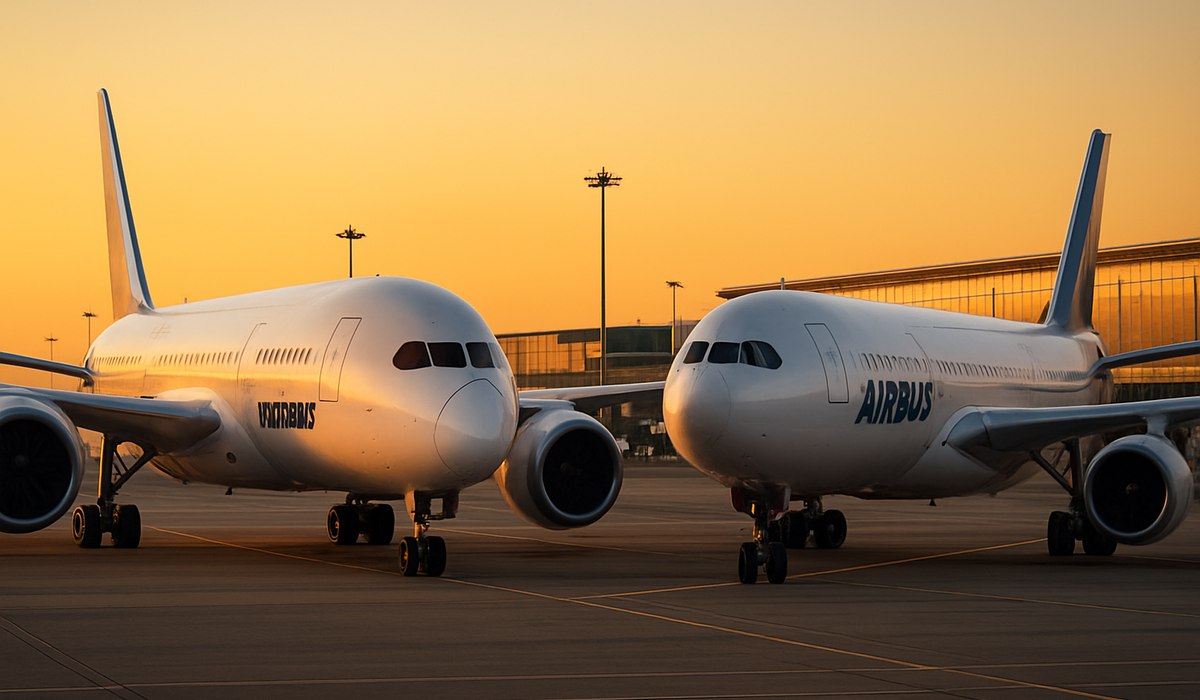
Image generated by AI
Boeing and Airbus Dominate Mid-Sized Widebody Competition
Boeing and Airbus maintain a commanding duopoly in commercial aviation, with their mid-sized widebody aircraft defining the competitive landscape for international carriers. The Boeing 787 Airbus A330neo cost comparison reveals significant price divergence between these two market leaders in 2026. Airlines worldwide face critical procurement decisions as both manufacturers offer compelling but distinctly different value propositions for routes requiring capacity between narrow-body and large-scale widebody operations.
The competition between these aircraft families has intensified as global air travel recovery accelerates beyond pre-pandemic levels. Carriers evaluating fleet modernization strategies must carefully weigh acquisition costs, operational efficiency, and long-term maintenance projections.
Boeing 787 Dreamliner Pricing Overview
The Boeing 787 Dreamliner family commands list prices ranging from $242 million to $338 million depending on configuration. The 787-9, the most commonly ordered variant, typically carries a list price of approximately $290 million, though actual prices vary significantly based on negotiated discounts, purchase quantities, and delivery schedules.
Boeing's pricing strategy reflects the aircraft's advanced materials technology, fuel efficiency improvements, and passenger comfort features. The 787 incorporates composite fuselage construction, advanced avionics systems, and optimized cabin pressurization that reduce fatigue-related maintenance costs by up to 20 percent over traditional aluminum widebodies.
Dreamliner operators benefit from superior fuel economy margins. The aircraft burns approximately 20 percent less fuel than competing widebodies, translating to substantial savings across long-haul networks. Financing packages through Boeing Capital Corporation and partnership arrangements with major leasing companies affect true acquisition costs for airlines. For detailed specifications and current procurement information, visit Boeing's commercial aircraft division.
Airbus A330neo Cost Breakdown
The Airbus A330neo positions itself as a value-oriented alternative with list prices between $217 million and $265 million, depending on seating configuration and interior specifications. The A330-900neo, Airbus's primary offering in this category, typically carries a base list price of approximately $242 million.
Airbus emphasizes operational familiarity for carriers already operating A330-300 fleets. The A330neo leverages proven systems architecture while introducing modern Rolls-Royce engines and updated avionics. This approach reduces crew training requirements and simplifies maintenance logistics for existing Airbus operators.
The A330neo demonstrates competitive fuel efficiency gains of approximately 25 percent compared to previous-generation A330 variants. However, fuel consumption remains slightly higher than the 787 Dreamliner across equivalent mission profiles. Airbus's extensive global support network and parts availability advantages benefit operators with distributed route networks requiring rapid turnaround maintenance. Learn more about Airbus aircraft specifications.
Head-to-Head Comparison of Aircraft Pricing and Performance
| Factor | Boeing 787-9 | Airbus A330-900neo |
|---|---|---|
| List Price | ~$290 million | ~$242 million |
| Typical Seating (3-class) | 242-254 passengers | 260-280 passengers |
| Maximum Seating | 330+ passengers | 440+ passengers |
| Fuel Burn (per 100 seat-km) | 2.5 liters | 2.8 liters |
| Range (max payload) | 14,685 km | 14,600 km |
| Engine Manufacturers | Rolls-Royce, GE | Rolls-Royce (exclusive) |
| Composite Content | 50% | 15% |
| Cockpit Commonality | 777/787 family | A320/A350 family |
The pricing differential of approximately $48 million represents the Boeing 787 Airbus A330neo cost comparison at base configurations. However, total cost of ownership calculations must incorporate fuel savings, maintenance intervals, and crew training investments.
Boeing's higher acquisition price reflects advanced composite construction and next-generation systems architecture. The 787's 50 percent composite content delivers structural advantages, reduced weight, and extended cabin pressurization capabilities (8,000 feet equivalent versus 6,000 feet on competitors).
Airbus captures market share through lower initial capital requirements and operational familiarity for existing A330 operators. Airlines with established Airbus training programs and maintenance frameworks benefit from simplified fleet integration.
What Airlines Should Consider When Evaluating Widebody Procurement
Airlines selecting between these aircraft families must evaluate route networks, pilot commonality requirements, and financing availability. Carriers operating primarily on dense short-haul routes benefit from A330neo economics. Long-haul specialists find 787 efficiency advantages justify premium acquisition costs.
Financing considerations significantly impact true acquisition costs. Boeing Capital typically offers competitive terms for 787 transactions, while Airbus partnerships with major leasing platforms provide flexible A330neo acquisition structures. Airlines should request detailed lease versus purchase analyses from multiple sources.
Maintenance cost projections extend beyond initial acquisition. The 787's advanced systems require specialized technician training, though manufacturers provide comprehensive support programs. A330neo operators leverage extensive global support networks and aftermarket parts availability.
Crew commonality drives operational decisions for multi-aircraft operators. Airlines maintaining homogeneous cockpit configurations reduce training costs and improve scheduling flexibility. The 787 aligns with 777 family procedures, while the A330neo integrates with A320 and A350 family training protocols.
Environmental considerations increasingly influence procurement. The 787's superior fuel efficiency translates to lower carbon emissions per available seat-kilometer, supporting corporate sustainability commitments. Many carriers cite emissions reduction targets when justifying 787 premium pricing to shareholders and regulators.
What This Means for Travelers
The Boeing 787 Airbus A330neo cost comparison directly influences travel experiences across global networks. Aircraft procurement decisions made today determine which aircraft passengers will occupy over the next 20 years.
Travelers benefit from improved cabin environments regardless of aircraft selection. Both families incorporate modern pressure and humidity systems, advanced connectivity options, and ergonomic seating configurations. The 787's superior cabin pressurization (8,000 feet equivalent) reduces jet lag symptoms on ultra-long-haul flights.
Fuel efficiency advantages ultimately support airline profitability, enabling competitive ticket pricing and service investments. Airlines operating efficient fleets maintain financial stability, supporting route expansion and improved schedules.
Traveler Action Checklist
- Review aircraft types before booking international flights—check seatguru.com or airline specifications to identify cabin features
- Compare fuel-efficient operators known for modern widebody fleets, as they typically invest in updated cabin amenities
- Monitor airline earnings reports discussing fleet modernization timelines to anticipate new aircraft rollouts on priority routes
- Verify seat pitch and configuration when booking, as aircraft selection affects available cabin classes and seat widths
- Contact airlines directly requesting specific aircraft assignments for premium cabin bookings on long-haul routes
- Track fleet announcements from your preferred carriers through their investor relations pages to time bookings on newer aircraft
Frequently Asked Questions
What is the primary price difference between 787 and A330neo?
The Boeing 787 carries approximately $48 million higher list price than the Airbus A330neo at base configurations. However, actual purchase prices involve significant negotiated discounts. Total cost of ownership must include fuel, maintenance, and financing factors over 20-30 year aircraft lifecycles.
Which aircraft offers better fuel efficiency for airlines?
The Boeing 787 Dreamliner demonstrates approximately 20 percent
Disclaimer
This article is for informational and educational purposes only. It does not constitute legal, financial, or professional advice. While we strive to provide accurate and up-to-date information, travel policies, regulations, and conditions change rapidly. Always verify information with official sources before making travel decisions. Nomad Lawyer makes no representations about the accuracy, reliability, completeness, or suitability of the information provided. Readers should consult qualified professionals for advice specific to their circumstances. The views expressed in this article are those of the author and do not necessarily reflect the views of Nomad Lawyer.
Raushan Kumar
Founder & Lead Developer
Full-stack developer with 11+ years of experience and a passionate traveller. Raushan built Nomad Lawyer from the ground up with a vision to create the best travel and law experience on the web.
Learn more about our team →