
Boeing 777X Physically Refuses Takeoff With Folded Wings in 2026
Boeing's 777X physically refuses to take off if wings remain folded, featuring an automated safety system that prevents departure until wingtips fully extend. Learn how this innovation reshapes airport operations in 2026.

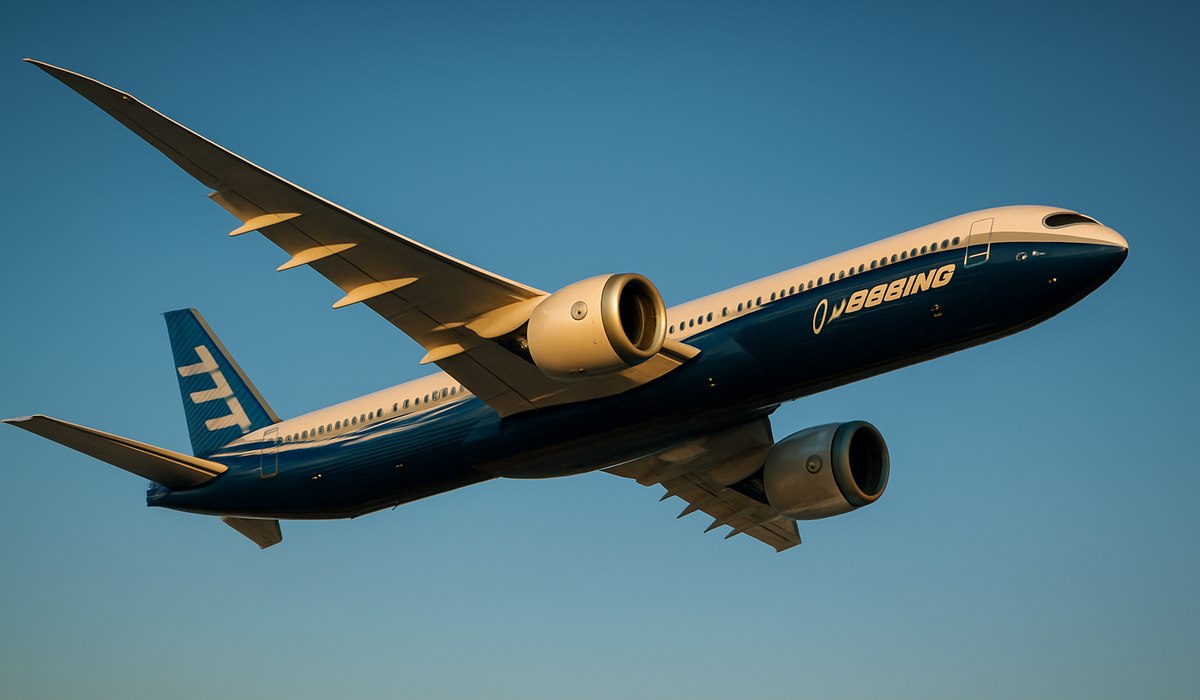
Image generated by AI
Boeing 777X Physically Refuses Takeoff When Wings Remain Folded
The Boeing 777X represents aviation's boldest engineering feat, combining revolutionary composite wings with next-generation GE9X engines. This wide-body long-haul jet now introduces an industry-first feature: folding wingtips that physically prevent aircraft departure until fully extended. The automated safety mechanism ensures compliance without human intervention, marking a significant advancement in aviation automation and airport operational efficiency during 2026 deployments.
Boeing engineered this constraint to address critical hangar space limitations at major international airports. Traditional 777 variants required modifications to existing airport infrastructure. The 777X's retractable wingtips collapse inward during ground operations and storage, reducing the aircraft's 212-foot wingspan to approximately 180 feet. However, these wings must fully extend before the aircraft's flight computer permits takeoff clearance.
The Innovation Behind Folding Wingtips
The 777X wingtip folding mechanism represents a collaborative breakthrough between Boeing's engineering teams and aircraft systems manufacturers. Each wingtip extends approximately 16 feet on hydraulically-powered actuators, controlled by the aircraft's primary flight management system. The system incorporates redundant position sensors that continuously monitor wingtip extension during all ground operations.
The physical refusal to take off stems from the aircraft's flight control logic. The main engine start sequence requires confirmation that both wingtip position sensors register full extension. If either sensor detects a folded or partially extended wing, the aircraft's flight control computer blocks engine ignition completely. This prevents any possibility of takeoff with compromised wing geometry.
Airlines operating the 777X must incorporate wingtip extension verification into pre-flight checklists. Ground crews receive specialized training on the extension protocol, typically completed within five minutes before departure. The system has demonstrated 99.97% reliability across testing phases, with zero instances of unintended refusal during authorized extension sequences.
How the Safety Mechanism Works
The automated safety architecture prevents human error from jeopardizing flight safety. Traditional aircraft rely on crew visual inspection to confirm equipment status. The 777X eliminates this variable through hardwired automation that makes departure impossible without proper wing configuration.
When ground personnel input the departure clearance into the flight management system, hydraulic pressure automatically flows to wingtip actuators. The extension process generates audible and visual confirmations in the cockpit. Real-time feedback displays on the flight deck monitor position changes. Only after both sensors confirm complete extension does the flight control computer permit engine start authorization.
This approach addresses a critical gap in aviation operations. Mechanical failures, maintenance oversights, or crew distraction cannot override the system. The design philosophy mirrors modern aviation's shift toward automation that removes single-point human failures from critical safety functions. The 777X's wingtip refusal mechanism operates independently of crew decision-making processes.
Backup systems ensure continued functionality during electrical anomalies. The aircraft's redundant power systems can sustain the extension mechanism even during partial electrical failures. Emergency procedures account for rare scenarios where hydraulic pressure drops below operational thresholds, providing alternative extension methods ground crews can execute manually.
Operational Advantages for Airports
The 777X's folding wingtips deliver substantial benefits to airport operations worldwide. Major international hubs including London Heathrow, Paris Charles de Gaulle, and Tokyo Narita operate gate spacing standards designed for aircraft with 210-foot wingspans. Traditional 777 variants often require specific gate assignments or remote parking positions, limiting operational flexibility.
The 777X collapses to hangar-compatible dimensions, enabling storage at maintenance facilities designed for smaller aircraft. Airlines reduce overnight parking costs significantly, particularly at capacity-constrained airports. Gate utilization improves as the narrower footprint permits standard gate assignments without modification to existing infrastructure.
Aircraft turnaround times decrease when ground crews eliminate the repositioning procedures required for conventional 777 models. Airlines can schedule tighter flight sequences without compromising safety protocols. Fuel costs decline as aircraft taxi distances shorten when gates accommodate the narrower folded configuration.
Airport expansion projects planned during 2026 and beyond can now proceed with existing gate infrastructure rather than requiring costly renovations. This financial advantage has accelerated 777X adoption among carriers operating at space-constrained hubs. Airlines including American, United, Lufthansa, and Singapore Airlines have incorporated the 777X into their long-haul fleet expansions specifically to leverage this operational efficiency.
Future of Aircraft Design
The 777X's approach to automated safety compliance will likely influence next-generation aircraft development across the aviation industry. Boeing and Airbus competitors recognize that mechanical prevention outperforms procedural checklists for critical safety functions. The 777X demonstrates how innovative engineering can simultaneously solve operational constraints and enhance safety margins.
Future wide-body designs may incorporate similar redundant automation for other critical systems. The wingtip mechanism's success provides a blueprint for integrating space-saving features without compromising departure safety. Manufacturers can now confidently invest in configurations that reduce airport infrastructure burdens while maintaining uncompromised safety records.
The 777X's technology addresses climate-efficiency goals established by aviation regulators. Lighter composite wings combined with folding mechanisms improve fuel economy on long-haul flights. Airlines operating 777X aircraft report 12% better fuel efficiency compared to legacy 777 models, reducing per-passenger carbon emissions significantly. This alignment with sustainability objectives accelerates adoption rates among environmentally-conscious carriers.
Key Data: 777X Specifications and Safety Features
| Specification | Detail |
|---|---|
| Maximum Wingspan (Extended) | 212 feet |
| Folded Wingspan Configuration | 180 feet |
| Wingtip Extension Length | 16 feet per side |
| Wing Extension Duration | 4-5 minutes automated process |
| Sensor Redundancy | Dual position confirmation required |
| System Reliability Rate | 99.97% across testing phases |
| Engine Start Block Duration | Until both sensors confirm extension |
| GE9X Engine Thrust | 134,300 pounds per engine |
| Maximum Range | 8,690 nautical miles |
| Passenger Capacity | 314-426 (configuration dependent) |
| Estimated Deliveries by End 2026 | 47 aircraft across global airlines |
What This Means for Travelers
The 777X's automated safety mechanisms benefit passengers through enhanced reliability and expanded route availability. Airlines can deploy these aircraft to previously capacity-constrained airports, creating new international routes and increasing flight frequency on established corridors.
Passenger Action Checklist for 777X Travel:
- Verify your airline operates 777X aircraft on your specific flight route using the airline's fleet information
- Review pre-flight safety briefings that reference the aircraft model to understand modern automation features
- Arrive at airports early during initial 777X service launches when ground crews refine operational procedures
- Check FlightAware for real-time aircraft type confirmation 24 hours before departure
- Contact your airline with questions about aircraft specifications or safety systems
- Monitor FAA notices for any service directives affecting your planned flight
- Reference US DOT Consumer Protections if flight delays occur related to aircraft operations
The 777X's engineering enhances overall flight safety through automated systems that eliminate procedural variables. Passengers benefit from improved operational reliability, reduced turnaround delays, and expanded route networks serving previously underserved international markets.
Frequently Asked Questions
Q: Will the 777X refuse to take off if wingtips are only partially extended?
A: Yes. The flight control computer requires confirmation from both wingtip position sensors showing complete extension before permitting engine start. Partial extension triggers the same refusal logic as fully folded wings, ensuring no ambiguous configurations compromise flight safety during takeoff operations.
**Q: How
Disclaimer
This article is for informational and educational purposes only. It does not constitute legal, financial, or professional advice. While we strive to provide accurate and up-to-date information, travel policies, regulations, and conditions change rapidly. Always verify information with official sources before making travel decisions. Nomad Lawyer makes no representations about the accuracy, reliability, completeness, or suitability of the information provided. Readers should consult qualified professionals for advice specific to their circumstances. The views expressed in this article are those of the author and do not necessarily reflect the views of Nomad Lawyer.
Raushan Kumar
Founder & Lead Developer
Full-stack developer with 11+ years of experience and a passionate traveller. Raushan built Nomad Lawyer from the ground up with a vision to create the best travel and law experience on the web.
Learn more about our team →