
Turbulence in the Cabin: What the Biman Bangladesh BG201 In-Flight Brawl Reveals About Air Rage Jurisdictions

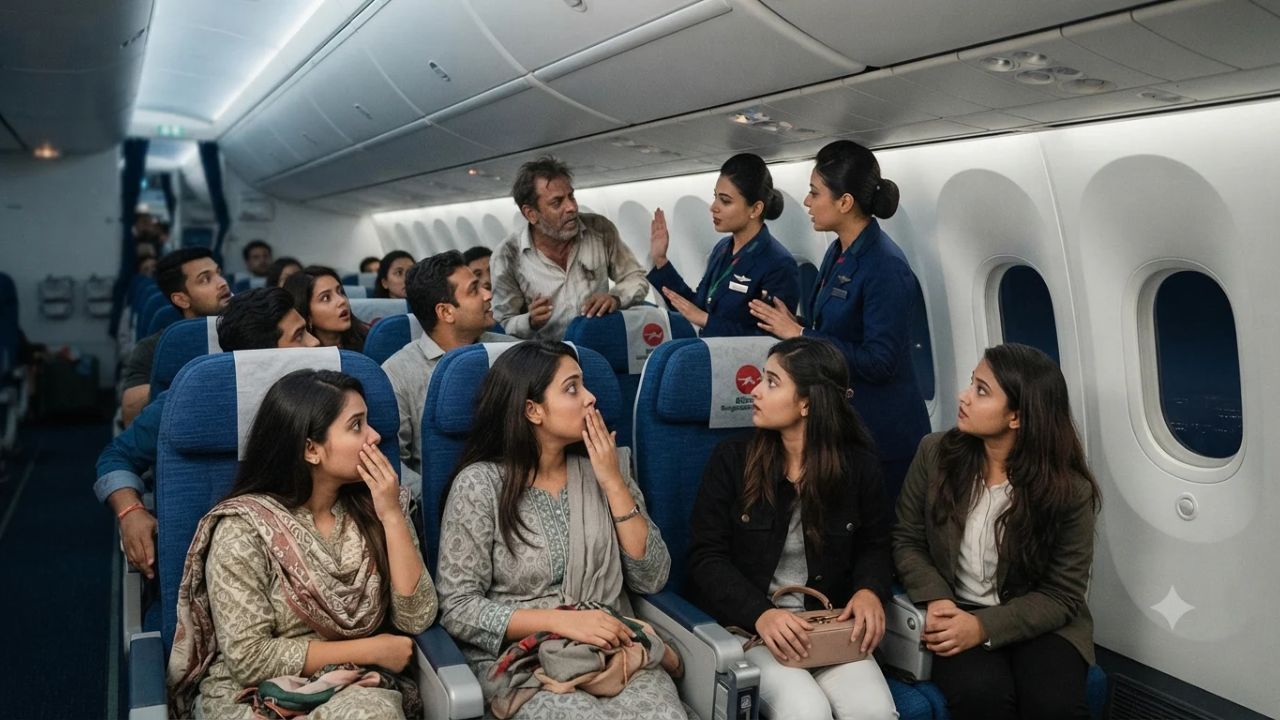
With unscheduled widebody emergency diversions routinely inflicting between $50,000 and $200,000 in fuel jettison, unscheduled landing tariffs, and passenger re-accommodation expenses, Biman Bangladesh Airlines flight BG201 narrowly avoided an economic and operational catastrophe on September 16, 2026, when a violent brawl erupted between two passengers at cruising altitude. Cruising between Osmani International Airport (ZYL) in Sylhet, Bangladesh, and London Heathrow Airport (LHR) in the United Kingdom, the long-haul flight became a theater of mid-air chaos when a verbal dispute deteriorated into a physical fistfight inside a confined passenger cabin occupied by families, young children, and elderly travelers.
Video documentation captured by fellow passengers depicted the two combatants trading blows in the center aisle, tearing clothing and triggering panic among seated passengers before cabin crew members and bystanders physically intervened to separate the pair. Despite the severity of the altercation, flight deck officers elected not to execute an emergency diversion into an intermediate Eurasian hub, instead keeping the aircraft on its scheduled heading to London Heathrow, where the flight arrived without reported physical injuries. For international aviation regulators, airline legal counsel, and long-haul travelers, the BG201 incident exposes the fragile operational boundaries of in-flight security and the jurisdictional complexities governing mid-air passenger assaults.
Anatomy of an In-Flight Crisis: The September 16 BG201 Incident
Operating as a primary air link connecting the extensive Bangladeshi diaspora in the United Kingdom with their ancestral homeland in northeastern Bangladesh, Biman Bangladesh flight BG201 operates under high seat utilization and dense cabin configurations. In such high-density, multi-generational environments, interpersonal friction can escalate rapidly. While the originating trigger of the confrontation remains unconfirmed by carrier authorities, witness reports indicate an escalating verbal dispute that crossed into physical violence within seconds.
The response from the flight attendants followed standard de-escalation and containment procedures certified under international civil aviation guidelines. Flight attendants must evaluate physical confrontations not merely as civil assaults, but as active threats to the safety of the aircraft. A physical fight in a narrow aircraft aisle can damage delicate cabin fixtures, breach emergency medical equipment, or trigger mass passenger panic that shifts the aircraft's center of gravity during critical phases of flight.
By subduing the combatants without necessitating physical restraints or emergency descent, the flight crew prevented an immense logistical disruption. However, the subsequent arrival at London Heathrow demonstrated the persistent ambiguity surrounding post-flight enforcement. While police and border security authorities met the aircraft upon gate arrival, no immediate formal arrests were publicly confirmed. This legal inertia highlights a persistent challenge in global air transport: prosecuting offenses committed aboard foreign-registered aircraft navigating international airspace.
Legal and Enforcement Protocol Matrix: From Tokyo 1963 to Montreal Protocol 2014
Understanding why unruly passengers often escape immediate criminal detention upon landing requires examining the evolution of international treaty law governing airborne offenses:
| International Convention / Regulation | Governing Scope & Authority | Jurisdictional Mandate | Practical Enforcement Limitations |
|---|---|---|---|
| Tokyo Convention 1963 | Offenses committed on board aircraft in flight | State of Registration holds primary jurisdiction | Landing states often lack statutory authority to prosecute foreign aircraft offenses |
| Montreal Protocol 2014 (MP14) | Modernized unruly passenger legal framework | Extends jurisdiction to the State of Landing | Requires explicit national ratification; patchy global enforcement coverage |
| ICAO Annex 17 (Security) | Global aviation security standards | Mandates airline unruly passenger procedures | Establishes containment rules, but does not prescribe local criminal penalties |
| UK Air Navigation Order | UK Civil Aviation Authority domestic law | Governs disruptive conduct on UK-bound flights | Strict penalties apply, but evidentiary handoffs from foreign crews create hurdles |
| Airline Conditions of Carriage | Private contractual agreement | Blacklisting, cost recovery, and ticket forfeiture | Enforcement limited to civil bans and financial indemnification lawsuits |
Historically, under the Tokyo Convention of 1963, the state where an aircraft is registered held exclusive criminal jurisdiction over crimes committed aboard the plane in international airspace. If a fight occurred aboard a Bangladeshi-registered aircraft flying over Central Europe en route to England, British police landing officers previously lacked unambiguous statutory authority to prosecute the offenders unless the acts directly violated UK aviation security laws.
To close this dangerous jurisdictional gap, the International Civil Aviation Organization (ICAO) established the Montreal Protocol 2014 (MP14), which explicitly empowers the "State of Landing" to arrest, charge, and prosecute unruly individuals regardless of the airframe's nationality. In the United Kingdom, statutory frameworks enforced alongside the UK Civil Aviation Authority (CAA) allow authorities to levy criminal penalties and prison sentences for actions that endanger an aircraft. However, when cabin crews fail to preserve formal witness depositions or secure forensic evidence before disembarkation, local prosecutors often face insufficient evidentiary basis to sustain immediate criminal charges.
Expert Analysis: The Economics of Diversion, Restraint Procedures, and Extradition Loopholes
From an airline operations and financial risk perspective, the pilot-in-command's decision to continue flying to London rather than diverting into an intermediate airport in Central Asia or Eastern Europe represents a multi-thousand-dollar risk calculation.
The pricing pressure this creates means commercial airlines bear immense financial incentives to avoid divert maneuvers whenever physically possible. When a twin-aisle widebody aircraft declares an emergency and diverts, the carrier incurs immediate costs: dumping thousands of pounds of costly jet fuel to reach maximum landing weight, paying unscheduled air traffic control and ground handling tariffs, funding hotel accommodation and meal vouchers for hundreds of delayed passengers, and paying steep positioning costs for replacement flight crews once the primary crew times out under statutory duty limitations.
For travelers booking this route, the direct consequence is that airlines are taking an increasingly zero-tolerance stance toward disruptive behavior to protect operational margins. In the United States and Europe, major carrier alliances are lobbying for shared, cross-carrier no-fly registries to bar repeat offenders from commercial air travel entirely. Under global standards advocated by the International Air Transport Association (IATA), airlines are training cabin staff in advanced hand-to-hand tactical containment, equipping galleys with standardized non-lethal physical restraints (such as flex-cuffs), and aggressively pursuing civil litigation against disruptive passengers to recover the entire six-figure cost of unscheduled diversions.
Additionally, passengers witnessing cabin violence must recognize their legal obligations and safety risks. Intervening in a mid-air brawl carries severe physical risk in an unstable cabin environment. The primary duty of passengers is to remain seated with seatbelts fastened, follow flight attendant instructions, keep aisle ways clear, and protect vulnerable travelers from falling debris. As global travel volumes climb and cabin densities remain compressed, airline crews and civil aviation prosecutors must demonstrate unwavering enforcement to ensure that airborne violence meets swift, uncompromising criminal justice on the ground.
Key Takeaways
- BG201 avoids costly mid-air diversion: Biman Bangladesh flight BG201 from Sylhet to London Heathrow completed its scheduled journey after crew members and passengers quelled an in-flight fistfight.
- Unscheduled diversions cost up to $200,000: Fuel dumping, emergency landing tariffs, hotel rooms, and crew scheduling timeouts make diverting an immense financial liability for airlines.
- Montreal Protocol 2014 closes legal gaps: MP14 gives landing nations legal jurisdiction to arrest and prosecute unruly flyers who commit crimes aboard foreign-registered aircraft.
- Airlines expanding civil recovery suits: Carriers are increasingly using civil litigation to force convicted unruly passengers to reimburse the full financial costs of flight disruptions.
- Passenger safety protocols emphasize de-escalation: Travelers encountering in-flight violence should notify cabin crew immediately and avoid physical intervention unless directed by crew members.
FAQ: Unruly Passenger Laws and In-Flight Disturbances 2026
What legal authority does the cabin crew have to stop a mid-air fight?
Under the Tokyo Convention and international aviation regulations, the pilot-in-command and crew have the legal authority to use reasonable force, including physical restraints, to protect the safety of the aircraft and passengers.
Can passengers be arrested in a foreign country for a fight on an airplane?
Yes. Under the Montreal Protocol 2014 (MP14), the country where the aircraft lands has legal jurisdiction to arrest, investigate, and prosecute disruptive passengers regardless of the aircraft's home country.
Who pays for the cost of an emergency airline diversion?
While the operating airline initially absorbs the costs, courts and civil aviation authorities increasingly order disruptive passengers to pay full restitution, which can exceed $100,000 in fuel and operational expenses.
What should a traveler do if an altercation breaks out in the cabin?
Remain seated with your seatbelt buckled, press the flight attendant call button, protect surrounding children or elderly passengers, and allow trained cabin crew members to execute containment protocols.
At 35,000 feet, the aircraft cabin is a shared sanctuary where civilized restraint is not merely a social courtesy, but a non-negotiable condition of safe passage.
Related Travel Guides
Disclaimer
This article is for informational and educational purposes only. It does not constitute legal, financial, or professional advice. While we strive to provide accurate and up-to-date information, travel policies, regulations, and conditions change rapidly. Always verify information with official sources before making travel decisions. Nomad Lawyer makes no representations about the accuracy, reliability, completeness, or suitability of the information provided. Readers should consult qualified professionals for advice specific to their circumstances. The views expressed in this article are those of the author and do not necessarily reflect the views of Nomad Lawyer.
Raushan Kumar
Founder & Lead Developer
Full-stack developer with 11+ years of experience and a passionate traveller. Raushan built Nomad Lawyer from the ground up with a vision to create the best travel and law experience on the web.
Learn more about our team →