
Bihar's Ambitious Green Transformation: 100,000 Saplings to Revive Gaya's Barren Hills for Eco-Tourism in 2026
Bihar launches massive reforestation initiative planting over one lakh saplings across Gaya and Bodh Gaya to create 24 new eco-tourism destinations and restore wildlife habitats by 2026.

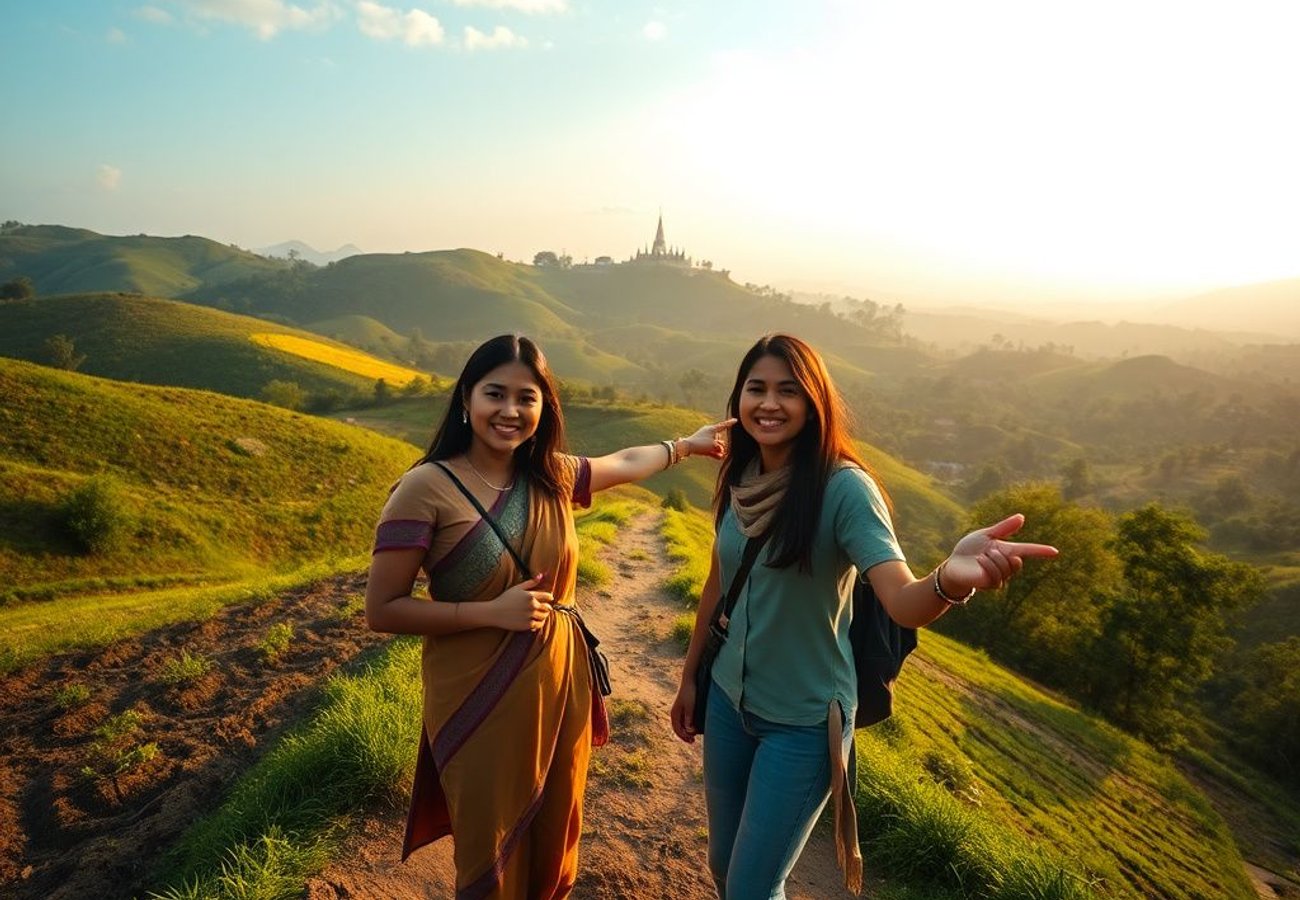
Image generated by AI
Bihar's Bold Bet on Green Tourism: A 100,000-Sapling Gamble
Bihar is making headlines with an aggressive environmental pivot. The state's tourism and forest departments have jointly announced a sweeping reforestation initiative targeting barren hillsides across Gaya, Bodh Gaya, and seven other regions. The mission? Plant over one lakh saplings using innovative seed ball techniques to birth an entirely new eco-tourism circuit.
This isn't just another government greening campaign. It's a calculated strategy to simultaneously restore degraded ecosystems while positioning Bihar as a major sustainable travel destination.
The Sacred Hills Get Their Green Back
The initiative zeroes in on hills of profound religious and historical significance. Dungeshwari, Brahmayoni, Pretshila, Ramshila, Gurupa, and Barabar hills dominate the priority list—each a pilgrimage destination attracting Buddhist and Hindu devotees from across the globe.
What makes this newsworthy? The twin cities of Gaya and Bodh Gaya already draw international religious tourism. Adding lush, restored landscapes around sacred sites transforms the visitor experience entirely. The UNESCO-listed Mahabodhi Mahavihara in Bodh Gaya will now be framed by verdant hillsides instead of eroded terrain.
Reddit: "I've traveled to Bodh Gaya three times. If they actually restore those hills, it'll be the pilgrimage destination to visit in Asia." — r/travel
24 Eco-Tourism Destinations: The Ambitious Blueprint
Here's where the plan scales dramatically. The state proposes developing over 24 interconnected eco-tourism locations, creating what officials call a comprehensive "wildlife and nature circuit."
The roster includes heavyweight attractions:
- Valmiki Tiger Reserve (West Champaran)
- Gautam Buddha Wildlife Sanctuary (Gaya)
- Vikramshila Gangetic Dolphin Sanctuary (Bhagalpur)
- Kaimur Wildlife Sanctuary
- Kanwar Lake Bird Sanctuary (Begusarai)
- Rajgir Hills and thermal hot springs
- Kakolat waterfall (Nawada)
- Patna Zoo
This isn't fragmented tourism. It's a deliberate network designed to distribute visitor flow, generate employment across multiple districts, and create a sustained revenue model for Bihar's tourism sector.
The Seed Ball Technique: Low-Tech, High-Impact
The methodology deserves attention. Rather than conventional nursery-based plantation (expensive, labor-intensive, often unsuccessful), Bihar is employing the seed ball technique—clay-packed seeds that survive harsh conditions and germinate when monsoon rains arrive.
Why this matters for travelers? It signals commitment to legitimate restoration rather than theatrical greening projects that collapse post-inauguration. Seed balls have proven efficacy in arid and degraded landscapes, particularly in regions experiencing erratic rainfall patterns.
Employment and Economic Multipliers
The tourism department isn't framing this as environmental charity. The initiative explicitly targets local employment generation. Plantation, maintenance, hospitality development, and guide services create tangible income opportunities for communities in Rajgir, Nawada, Kaimur, Bhagalpur, Munger, Begusarai, and West Champaran.
For nomadic professionals and remote workers, this translates to emerging destinations with developing hospitality infrastructure and lower cost-of-living compared to India's established eco-tourism hubs.
The Pilgrimage + Wildlife Hybrid Model
What distinguishes Bihar's approach from standard eco-tourism initiatives is its fusion strategy. The state isn't separating religious tourism from wildlife tourism—it's architecturally integrating them.
A Buddhist pilgrim visiting Bodh Gaya gains access to restored hillside trails. A wildlife enthusiast exploring the Valmiki Tiger Reserve can incorporate spiritual sites into their itinerary. This hybrid positioning opens demographics beyond traditional eco-tourists.
The Mahabodhi Mahavihara and surrounding sacred sites become anchors within a larger biodiversity corridor—not isolated destinations competing for visitor attention.
Timeline and Implementation Reality
The action plan was formally prepared in June 2026. No explicit completion deadline appears in the official documentation, though plantation typically aligns with monsoon seasons. Success hinges on sustained funding, bureaucratic coordination between tourism and forest departments, and community participation across multiple districts.
Skeptics rightfully note that Indian eco-tourism infrastructure projects often face implementation delays. However, Bihar's multi-district approach reduces single-point failure risk compared to concentrated initiatives.
What This Means for Travelers in 2026-2027
If execution proceeds on schedule, the window for experiencing Gaya and Bodh Gaya during landscape transformation presents a unique opportunity. You'll witness sustainable tourism development in real-time—documenting ecosystem restoration alongside pilgrimage and wildlife exploration.
Accommodation will likely remain affordable while infrastructure upgrades roll out. The eco-tourism circuit, once complete, positions Bihar competitively against established destinations like Rajasthan and Kerala in India's sustainable travel hierarchy.
The Broader Significance
This initiative reflects a shift in how Indian states approach tourism post-pandemic. Environmental restoration isn't peripheral—it's the core product. Bihar's positioning of barren hills as conversion opportunities rather than permanent liabilities signals pragmatic governance aligned with global sustainable travel trends.
For digital nomads and location-independent professionals, this represents an emerging hub where environmental consciousness, affordable living, spiritual infrastructure, and wildlife access converge.
Bihar's green gamble could rewrite the rules for religious tourism in Asia—if the saplings survive.
Related Travel Guides
Disclaimer
This article is for informational and educational purposes only. It does not constitute legal, financial, or professional advice. While we strive to provide accurate and up-to-date information, travel policies, regulations, and conditions change rapidly. Always verify information with official sources before making travel decisions. Nomad Lawyer makes no representations about the accuracy, reliability, completeness, or suitability of the information provided. Readers should consult qualified professionals for advice specific to their circumstances. The views expressed in this article are those of the author and do not necessarily reflect the views of Nomad Lawyer.
Kunal K Choudhary
Co-Founder & Contributor
A passionate traveller and tech enthusiast. Kunal contributes to the vision and growth of Nomad Lawyer, bringing fresh perspectives and driving the community forward.
Learn more about our team →