
Bhutan Unveiled $6.2 Billion Gross Ecosystem Valuation to Transform High-Value Sustainable Tourism and Protect Himalayan Transit Corridors

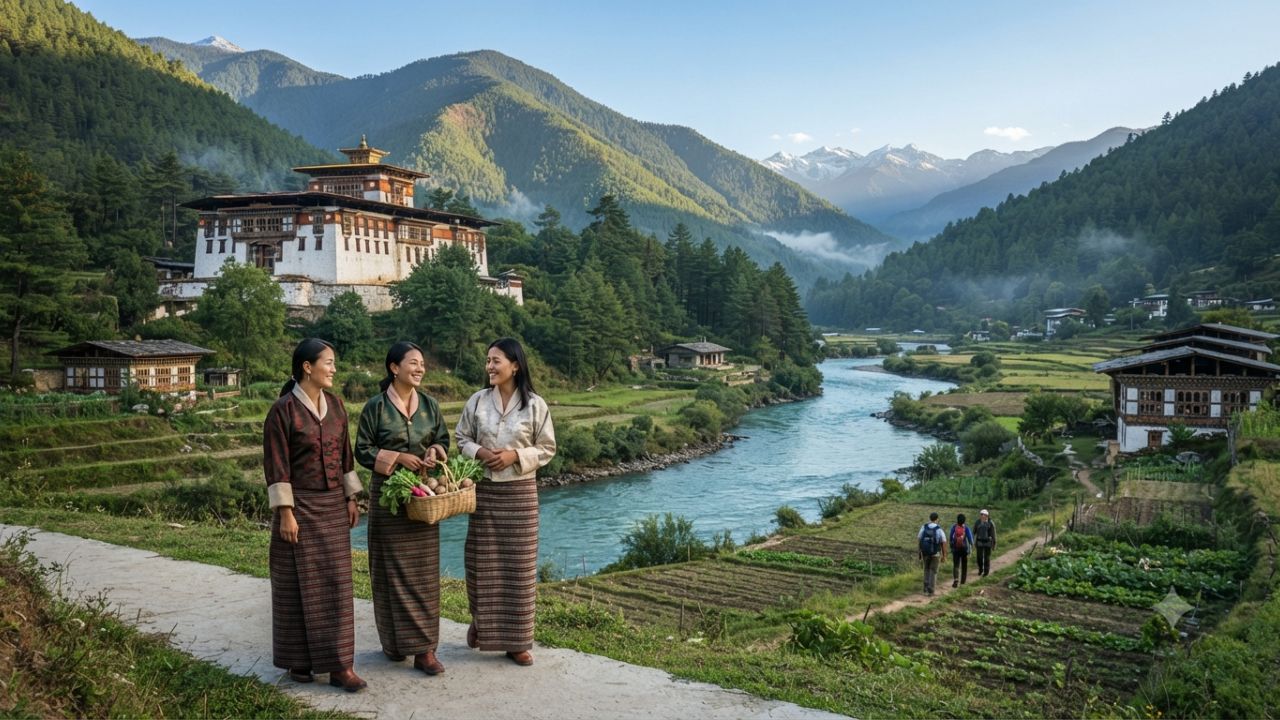
Bhutan has formally integrated a US$6.2 billion Gross Ecosystem Product (GEP) valuation into national economic planning, establishing a pioneer framework that directly links natural capital protection to high-value, low-volume international tourism.
The valuation, calculated for 2024 and officially presented during international proceedings in New York, values Bhutan's natural assets—including its carbon-absorbing forests, glacial river systems, and protected wilderness zones—at double the nation's traditional Gross Domestic Product (GDP). By assigning explicit monetary value to nature alongside Gross National Happiness (GNH), the Himalayan kingdom reinforces its carbon-negative tourism policy, funded by a mandatory US$65 daily Sustainable Development Fee (SDF) for international visitors.
BHUTAN GROSS ECOSYSTEM PRODUCT (GEP) ARCHITECTURE 2026
| Column 1 |
|---|
| 1. NATURAL CAPITAL VALUATION ($6.2 BILLION TOTAL) |
| - Forest carbon sequestration, river basin hydrology, soil integrity |
| 2. ATMOSPHERIC & FOREST METRICS |
| - CO2 Absorption: >9 million tonnes/year vs. 2.5 million tonnes emitted |
| - Forest Canopy Cover: >72% national territory coverage |
| 3. PROTECTED LAND & BIODIVERSITY RESERVES |
| - 42.7% land area (16,396 sq km) in 5 National Parks & 4 Wildlife Sanctuaries |
| 4. SUSTAINABLE TOURISM FUNDING |
| - US$65/day Sustainable Development Fee (SDF) direct conservation levy |
Natural Capital Accounting Doubles GDP Value to Shield Carbon-Negative Sanctuary
The integration of Gross Ecosystem Product tracking marks a structural evolution in global environmental economics. Developed in technical collaboration with institutions like the Stanford Natural Capital Project and supported by green finance grants from the Enlight Foundation, GEP measures the tangible financial benefits delivered by intact ecosystems—such as carbon storage, water regulation, and clean air filtration.
Bhutan's environmental data reveals that its sprawling forests absorb over 9 million metric tonnes of carbon dioxide annually, while national human emissions remain near 2.5 million tonnes. This maintains a strict net-carbon-negative profile. Under policy directives from the Department of Tourism, Royal Government of Bhutan, revenues generated by the daily US$65 SDF levy directly fund forest conservation, carbon-sink management, and free healthcare and education for local host communities.
In addition to ecological services, Bhutan's tangible cultural heritage assets—including ancient dzongs (fortress-monasteries), sacred Buddhist sites, and traditional weaving arts—contribute an estimated US$400 million annually to rural community livelihoods.
Bhutan GEP Accounting Specifications & Conservation Parameters
The table below outlines the core economic, geographical, and environmental parameters governing Bhutan's sustainable tourism framework.
| Metric / Parameter | Official Value | Policy & Operational Impact | Target Travel Experience |
|---|---|---|---|
| Gross Ecosystem Valuation | US$6.2 Billion (2024 Data) | Assigns economic value to clean water, air, and soil | Regenerative & eco-luxury travel |
| Net Carbon Balance | 9M Tonnes Absorbed vs. 2.5M Emitted | Maintains net-negative carbon atmospheric status | Low-impact carbon-neutral stays |
| Sustainable Development Fee | US$65 / Day per Visitor | Direct levy for conservation & local infrastructure | High-value, low-volume tourism |
| Protected Territory | 42.7% (16,396 sq km) | 5 National Parks, 4 Wildlife Sanctuaries, 1 Nature Reserve | Guided wildlife safaris & trekking |
| Forest Canopy Coverage | >72% of Land Mass | Maintains PM2.5 levels well below WHO limits | Alpine wellness & forest retreats |
| Hydropower Energy Share | >30% National Revenues | Powers 100% of eco-lodges via zero-emission grids | Clean energy adventure travel |
| Organic Agriculture Goal | 100% Organic Transition | Bans synthetic fertilizers across mountain farms | Farm-to-table culinary travel |
Passenger Logistics & Strategic Travel Guide for Bhutan Exploration
Traveling to Bhutan requires specialized flight booking, mandatory visa clearance through licensed tour operators, and adherence to national environmental regulations.
Paro International Airport Flight Corridors (PBH)
Paro International Airport (PBH), nestled in a steep valley at an elevation of 2,235 meters (7,332 feet), serves as Bhutan's sole international aviation gateway. Flights are operated exclusively by national flag carrier Drukair (Royal Bhutan Airlines) and Bhutan Airlines:
- Key Gateway Transit Hubs: International travelers connect to Paro via direct flights from Bangkok Suvarnabhumi (BKK), New Delhi (DEL), Kolkata (CCU), Singapore Changi (SIN), and Kathmandu (KTM).
- Navigational Requirements: Because Paro requires manual visual approach piloting restricted to daylight hours, flight schedules are subject to weather adjustments. Travelers should maintain flexible 3-hour connection buffers at transit hubs.
[International Gateway Hubs: BKK / DEL / SIN / KTM]
                         |
                         v
  [Visual Daylight Approach: Paro Airport (PBH)]
                         |
                         v
     [Mandatory Digital Visa & US$65/day SDF Approval]
       /                                       \
      v                                         v
[Western Circuit: Paro/Thimphu/Punakha]   [Central Trekking: Bumthang/Gangtey]
Digital Visa Authorization & SDF Payment Processing
- Department of Tourism Portal: All international visitors (excluding citizens of India, Bangladesh, and the Maldives, who have specific registration protocols) must obtain an electronic visa online prior to arrival.
- SDF Payment Integration: The daily US$65 Sustainable Development Fee is calculated and paid directly during the online visa application process. Visa approval requires proof of full SDF settlement.
- Licensed Guide Mandate: All international travelers must be accompanied by a licensed Bhutanese tour guide for journeys beyond Thimphu and Paro, ensuring cultural respect and safety across mountain passes.
Ground Transit & Acclimatization Guidance
- Mountain Highway Connectivity: Ground transport across Bhutan relies on the lateral East-West Highway connecting Paro to Thimphu (1 hour), Punakha (3 hours via the 3,100-meter Dochula Pass), and Bumthang (8 hours). Private 4WD vehicles are recommended.
- Elevation & Acclimatization: With terrain ranging from 100 meters in the southern foothills to over 7,500 meters along northern Himalayan peaks, travelers undertaking high-altitude treks (such as the Druk Path or Snowman Trek) should allow 48 hours in Thimphu or Paro for acclimatization.
- Cultural & Dress Etiquette: Visiting sacred dzongs and monasteries requires long sleeves, full-length trousers or skirts, and the removal of shoes. Photography inside temple sanctums is strictly prohibited.
Long-Term Global Impact of Ecosystem Accounting on Future Travel
Bhutan's pioneering integration of Gross Ecosystem Product demonstrates how sovereign nations can monetize environmental preservation without resorting to industrial exploitation or mass tourism. By pricing nature's services directly into national policy, the kingdom provides a working model for destination management worldwide.
For global travelers, visiting Bhutan represents an investment in environmental stewardship, where every journey actively protects ancient forests, endangered wildlife, and mountain communities for generations to come.
Related Travel Guides
Bhutan and Laos Redraw Asia's Sustainable Tourism Map Through Gateway Preservation Strategy
India Temple Towns and Himalayan Destinations Surge as Travelers Seek Spiritual Escapes
Bhutan Paro Airport Flight Connections, Visa Processing, and Daily SDF Transit Guide
Disclaimer
This article is for informational and educational purposes only. It does not constitute legal, financial, or professional advice. While we strive to provide accurate and up-to-date information, travel policies, regulations, and conditions change rapidly. Always verify information with official sources before making travel decisions. Nomad Lawyer makes no representations about the accuracy, reliability, completeness, or suitability of the information provided. Readers should consult qualified professionals for advice specific to their circumstances. The views expressed in this article are those of the author and do not necessarily reflect the views of Nomad Lawyer.
Kunal K Choudhary
Co-Founder & Contributor
A passionate traveller and tech enthusiast. Kunal contributes to the vision and growth of Nomad Lawyer, bringing fresh perspectives and driving the community forward.
Learn more about our team →