
Ben-Gurion Airport Rail Station Evacuated After Power Line Blast Disrupts Israel Railways in 2026
An electrical malfunction causing a power line explosion forced the full evacuation of Ben-Gurion Airport's railway station on August 24, 2026, disrupting key corridors to Tel Aviv and Jerusalem.

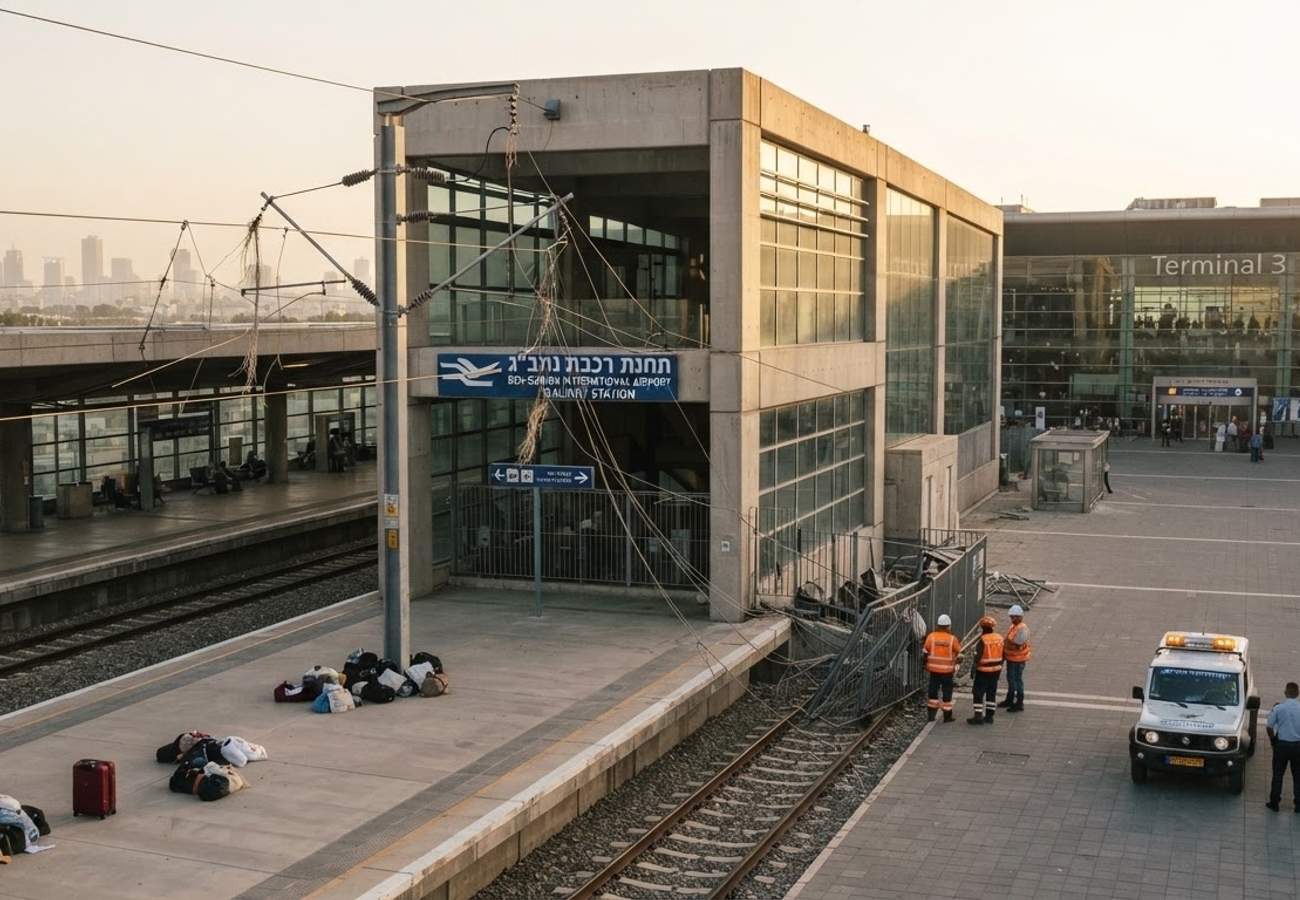
Image generated by AI
An electrical malfunction resulting in a power line explosion forced the total evacuation of the Ben-Gurion International Airport railway station on August 24, 2026. The incident paralyzed ground transit for passengers connecting to Tel Aviv and Jerusalem, highlighting vulnerabilities in the airport's landside infrastructure.
On Monday, August 24, 2026, a failure in an overhead power cable serving the Ben-Gurion Airport railway station triggered a loud explosion and visible damage. The station, located adjacent to Terminal 3, was immediately evacuated as a safety precaution. Railway staff and emergency teams cleared all platforms and concourses while technical crews conducted safety assessments to rule out secondary hazards.
While the blast caused significant alarm and confusion among travelers, official reports confirm that the malfunction was confined to the electrified rail infrastructure. There were no reported injuries, and the fire did not spread to the airport terminal itself.
Transit Disruption and Route Specifications
The malfunction caused immediate delays and partial suspensions across several high-traffic corridors. Trains on the Tel Aviv–Jerusalem and Tel Aviv–Modi’in lines were the most heavily impacted, with some services terminating early or bypassing the airport station entirely.
| Affected Route | Impact Status | Alternative Transit Option |
|---|---|---|
| Tel Aviv $\leftrightarrow$ Ben-Gurion | Significant Delays / Rerouted | Intercity Bus, Taxi, Road Shuttle |
| Jerusalem $\leftrightarrow$ Ben-Gurion | Partial Suspension | Intercity Bus, Private Hire |
| Modi'in $\leftrightarrow$ Ben-Gurion | Timetable Disruptions | Road Shuttles |
Despite the chaos at the rail node, flight operations remained unaffected. Terminal 3 processes, including security screening, check-in, and boarding, continued to operate on schedule.
Traveler Logistics Guide: Navigating Ben-Gurion Ground Transit
From a ground-level perspective, the best way to navigate disruptions at Ben-Gurion is to avoid total reliance on the rail link during peak holiday windows or suspected infrastructure instability.
Optimal Connection Strategies:
- Redundancy Planning: Always have a secondary transport app installed (such as local taxi aggregators or bus schedules) to avoid being stranded during "rare malfunctions" like the August 24 blast.
- Buffer Times: During high-season traffic or rail outages, increase your airport arrival buffer by at least 90 to 120 minutes. Route 1, the primary artery to Jerusalem, is prone to severe congestion when rail passengers shift to road transport.
- Navigating the Terminal: If the rail station is closed, move immediately from the arrivals hall to the designated road transport pick-up zones. Do not wait for rail updates if you have a tight connection to central Tel Aviv.
Infrastructure Impact Assessment
This incident occurs amidst a period of heightened operational strain at Ben-Gurion International Airport. Throughout the summer of 2026, the gateway has faced a combination of baggage-handling slowdowns, long departure hall queues, and labor actions that have already challenged passenger throughput.
The rail failure adds a critical layer of instability to the "landside" experience. As the station is a primary node connecting the airport to Israel's most populous cities, any failure in the electrified lines creates a ripple effect across the national transport network. The reliance on a single integrated rail point beneath Terminal 3 means that a localized electrical fault can effectively sever the fastest link between the airport and Jerusalem.
Technical teams from the national rail operator have since performed step-by-step safety clearances, focusing on the integrity of overhead lines and the removal of loose components. Service has begun to resume, initially at reduced speeds, as the operator works to restore full timetable stability.
Rapid response is essential, but network redundancy remains the primary requirement for Israel's busiest transit hub.
Related Travel Guides
Disclaimer
This article is for informational and educational purposes only. It does not constitute legal, financial, or professional advice. While we strive to provide accurate and up-to-date information, travel policies, regulations, and conditions change rapidly. Always verify information with official sources before making travel decisions. Nomad Lawyer makes no representations about the accuracy, reliability, completeness, or suitability of the information provided. Readers should consult qualified professionals for advice specific to their circumstances. The views expressed in this article are those of the author and do not necessarily reflect the views of Nomad Lawyer.
Raushan Kumar
Founder & Lead Developer
Full-stack developer with 11+ years of experience and a passionate traveller. Raushan built Nomad Lawyer from the ground up with a vision to create the best travel and law experience on the web.
Learn more about our team →